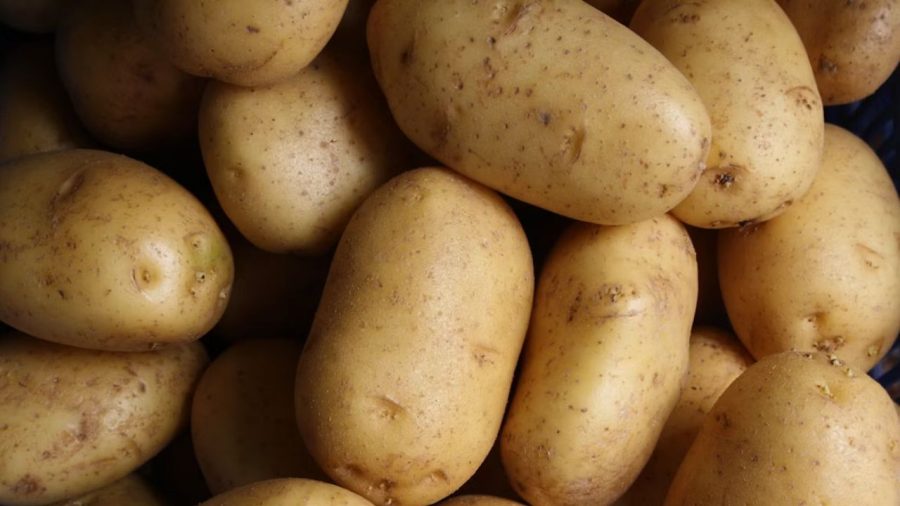

A bid to secure higher profits by holding back potatoes for a better market price has resulted in a major financial loss, with around 30,000 maunds of potatoes worth nearly Tk 3 crore rotting inside a cold storage facility in Madaripur.
The potatoes, stored at Madaripur Cold Storage in the BSCIC Industrial Area, had been kept at the facility since March 2025 in anticipation of a price rise.
Instead, prolonged storage severely deteriorated their quality, forcing authorities to distribute the rotten potatoes free of charge as cattle feed.
Cold storage manager Abdul Karim said that the stock belonged to the facility’s owner, Mir Habibur Rahman.
He explained that the potatoes were stored when market prices were low, with the expectation that market conditions would improve later in the year.

“However, the market did not recover as expected. As the potatoes remained stored for an extended period, their quality deteriorated, and a foul smell began emanating from the sacks,” he said.
According to facility management, around 20,000 sacks, each containing 60 kilograms of potatoes, were held in storage.
“Leaving the potatoes outside could have caused a public nuisance. That is why they are now being distributed among farmers and livestock owners,” Karim added.




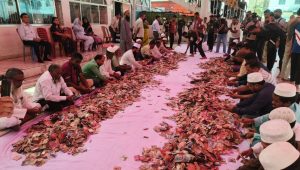
For the past two days, local farmers and livestock owners have been collecting the damaged produce, sorting through the sacks to salvage whatever remains usable as fodder.
Ali Ahmad, a resident of Rasti Union, noted, “These potatoes are completely unfit for human consumption. We are selecting whatever can still be fed to cattle.”
Cold storage owner Mir Habibur Rahman said he was yet to determine the exact cause of the damage, though he suspected a technical failure within the facility may have compromised the crop.
“We will bring experts from Dhaka to inspect the facility. The actual cause will be known after examination,” he stated.
Local potato traders have criticised the decision to hold such a large quantity of produce for an extended period.
They pointed out that despite massive local reserves, they were forced to source potatoes from other districts to meet demand, incurring higher transportation and procurement costs.
Wholesaler Khabruddin remarked that releasing the potatoes earlier could have helped stabilise the local market.
“If the potatoes had been sold while still in good condition, we would have required fewer truckloads from distant districts. They were held in the hope of higher profits, but it has turned into a complete loss,” he said, calling alongside other traders for stricter monitoring to prevent excessive stockpiling for speculative gains.
Madaripur Agricultural Marketing Officer Rubel Mia confirmed that the department would inspect the facility to investigate why such a large quantity remained stored for so long and what caused the spoilage.
The incident has sparked widespread discussion amongst local farmers and traders, leaving the owner facing substantial financial losses whilst highlighting how prolonged speculative storage failed to benefit the local market.