BNP is set to form the next government after winning 209 out of 297 seats in the 13th parliamentary election, but it now faces a complex political dilemma: how to reconcile its election manifesto with the public mandate delivered through the July referendum.
Voter turnout in the referendum stood at 60.26%, with 48,074,429 ballots cast in favour of “Yes” and 22,565,627 for “No”. The “Yes” vote secured a majority, giving public endorsement to the July National Charter.
As a signatory to the charter, BNP is expected to respect the outcome. However, the party has registered several notes of dissent on key provisions, creating tension between its manifesto commitments and the referendum-backed charter.
At the heart of the dispute is the proposal to establish a bicameral parliament.
The referendum question stipulated that the next parliament would include a 100-member upper house formed in proportion to the votes received by parties in the national election. It also proposed that constitutional amendments would require majority approval in the upper house.
BNP has dissented from this formula. In its pre-election manifesto, the party pledged that the upper house would be constituted in proportion to the number of seats held in the lower house, not by share of the popular vote.

The July Charter itself contains a clause stating that if a political party or alliance explicitly mentions a position in its election manifesto and secures a public mandate, it may implement that position accordingly. BNP leaders argue this protects their right to proceed with their own proposal.
On 11 November 2025, BNP Standing Committee member Salahuddin Ahmed said at a press conference at the party chief’s office in Gulshan that while various parties had entered notes of dissent on different points of the charter, the implementation recommendations submitted by the National Consensus Commission did not mention these dissents at all. He said BNP remained committed to the charter but stood by its dissenting positions.
A senior BNP Standing Committee member, speaking anonymously, told TIMES of Bangladesh that the party would first hold internal discussions and then consult others in parliament before making a final decision on the upper house issue.



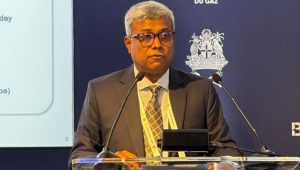
Ali Riaz, former vice-chairman of the National Consensus Commission and special assistant to the chief adviser of the interim government, said he expected parties that signed the charter to honour the expectations expressed by voters in the referendum.
The upper house is not the only point of contention. BNP has dissented from several other reform proposals contained in the July Charter.
While most parties agreed that constitutional amendments should require a two-thirds majority in the lower house and a simple majority in the upper house, BNP argued that the upper chamber should not have a voting role on amendments because its members would not be directly elected.
Except for BNP and its allies, parties also agreed that a party chief should not simultaneously serve as prime minister.
On parliamentary voting rules, most parties supported allowing lawmakers to vote against party lines, except on no-confidence motions and finance bills. BNP extended its dissent to include national security matters during war and constitutional amendments as additional exceptions.
The charter also outlines a detailed process for appointing the chief adviser of a caretaker government. It proposes a five-member panel comprising the prime minister, leader of the opposition, speaker of the lower house, deputy speaker from the opposition, and a representative of the second-largest opposition party. The panel would solicit one nominee each from parliamentary parties, Election Commission-registered parties and independent MPs, then deliberate to select a single eligible citizen.
If consensus cannot be reached, the ruling party and the main opposition would each nominate five names, and the second-largest opposition party two. Each side would select nominees from the other’s list, creating a shortlist from which four of five panel votes would suffice to choose a chief adviser.
If this process fails, two judges—one from the Appellate Division and one from the High Court Division—would join the panel, expanding it to seven members to vote on the shortlisted candidates.
BNP has dissented from including the two judges and from this fallback voting mechanism.
On key constitutional appointments, a majority of parties agreed that the president should appoint the heads of bodies such as the National Human Rights Commission, Information Commission, Bangladesh Press Council, Law Commission, Bangladesh Energy Regulatory Commission and the governor of Bangladesh Bank. BNP objected specifically to the inclusion of the energy regulatory commission and the central bank governor in this list.
Regarding the judiciary, most parties agreed that the most senior judge of the Appellate Division, determined by length of service, should become chief justice. BNP dissented, preferring its manifesto proposal that one of the two most senior judges be appointed.
The party has also dissented on appointment processes for the ombudsman, Public Service Commission and Comptroller and Auditor General, arguing that these posts should be regulated by law given the importance of the institutions.
With a strong parliamentary majority but bound by a referendum-backed charter, BNP’s incoming government must now decide whether to prioritise its manifesto promises or align fully with the reform framework endorsed by voters.