



“Earlier, when a girl was born, people thought about the cost of marrying her off. Now, we want her to study and build an identity of her own. But as she grows older, pressure from relatives and society brings marriage back into the conversation,” said Momenul Islam, a father of a daughter.
The way Bangladesh views daughters has changed significantly over the past few decades. A girl’s birth, once often associated with financial burden, is increasingly seen as a source of pride and hope.
Three decades ago, campaigns such as the government-backed cartoon character ‘Meena’ were introduced to encourage girls’ education and challenge social attitudes. Today, many parents actively invest in their daughters’ education and future.
Md Harun, an electrician from Nagua area of Kishoreganj, has one son but hopes his next child will be a daughter.
“Now, most people want daughters,” he told TIMES.
He believes changing family structures, concerns over raising sons, increased awareness and government support for girls’ education have contributed to this shift.
However, acceptance of daughters has not always translated into equal opportunities.

As girls grow older, concerns over safety, social restrictions, employment and independence often return.
“There is no longer regret that I have a daughter. Rather, I feel that I have to educate her even better than a son. But after a certain age, fear grows along with happiness — will she remain safe, will she be able to choose the life she wants?” said schoolteacher Naznin Sultana.
Safety remains one of the biggest concerns for families. According to the Human Rights Support Society, at least 238 children and adolescent girls were victims of rape in the first six months of the year.
During the same period, 88 women and girls were victims of gang rape, 17 were killed after rape and 173 faced sexual harassment.
The figures are based only on incidents reported in the media, meaning many cases may remain unreported.




Dhaka University Women and Gender Studies Department professor Tania Haque said insecurity and sexual harassment continue to restrict girls’ progress.
“Many women still have to consider safety in every decision they make — from travelling outside to choosing their clothing and behaviour,” said Dhaka University student Subah Jahwa Purba.
She said social judgement often forces women to remain cautious even when speaking against injustice or defending their rights.
Education gains, employment gaps
Bangladesh has made notable progress in girls’ education. According to the Bangladesh Multiple Indicator Cluster Survey (MICS) 2025, female students outnumber male students at primary and secondary levels, and girls also perform better academically.
However, progress slows after school. Women’s enrolment in higher education stands at 46.2 per cent, while their participation in the workforce remains far below men.
According to the World Bank’s Gender Data Portal, women’s workforce participation was 38.6 per cent in 2025, compared with 80.4 per cent for men.
A similar gap exists in competitive government recruitment. In the 43rd Bangladesh Civil Service (BCS) examination, women represented 19.46 per cent of final recommendations, with 421 women selected out of 2,163 candidates.
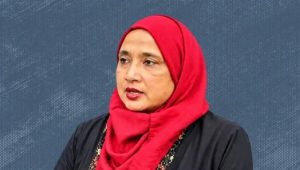
Bangladesh Public Service Commission member Ferdous Arfina Osman said women’s participation in government administration is on a “declining order”.
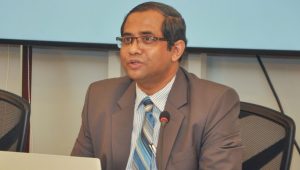
Jahangirnagar University Associate Professor Rezwana Karim Snigdha said many talented women lose opportunities because they do not receive enough uninterrupted time and support due to family responsibilities.
Women remain underrepresented in higher education as well. According to Education Statistics 2023, women account for only 29.11 per cent of university teachers.
Rights beyond recognition
Despite greater acceptance of daughters within families, equal rights in property ownership remain a challenge.
According to the World Bank’s Women, Business and the Law 2024, 62 per cent of land owned by women in Bangladesh is inherited from their husbands’ families, indicating continued inequality in parental inheritance.
Supreme Court lawyer Jannatul Ferdous said social acceptance of daughters has improved, but that progress has not fully extended to property rights.
While the Constitution guarantees equality before the law and equal opportunities for men and women, inheritance remains largely governed by religious laws.
Muslim women receive, under inheritance rules, a share that is half that of their brothers, while Hindu women do not have rights to ancestral family property.
Economic independence also remains limited. According to Global Findex 2024, 33.3 per cent of women had a bank account, financial institution account or mobile money account, compared with 53.5 per cent of men.
Bangladesh’s daughters are increasingly welcomed, educated and celebrated. But the journey from acceptance to equality remains unfinished.