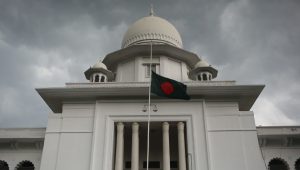
Rafiqul Islam arrived at the Supreme Court premises in 2023 seeking bail for a relative accused in a murder case. Unfamiliar with the complexities of legal procedures, he soon found himself overwhelmed.
It was then that a man approached him, introducing himself as an assistant to an experienced High Court lawyer. His confident manner and ease of movement within the court compound made him appear credible.
The man promised swift bail through a “senior lawyer” he claimed to know. Initially, he asked for a small amount of money to “move the file”. Soon, further payments were demanded under various pretexts—court fees, document copies, and listing costs. Each time, Rafiqul was reassured that the bail would be granted “today” or “tomorrow”.
In reality, no bail petition had been filed. No lawyer had been engaged. After several days, Rafiqul realised he had fallen victim to a broker.
His experience is far from unique.
Across the Supreme Court and other courts in the country, the presence of middlemen—commonly referred to as “dalals” or touts—has become increasingly pervasive. These individuals lure litigants with promises of quick results, extract money in stages, and often disappear, leaving victims financially and legally stranded.
Legal observers warn that such practices are not only fraudulent but also pose a serious threat to the delivery of justice. Despite periodic crackdowns, the problem persists. Both litigants and even some lawyers now find themselves effectively held hostage by these networks.
Court orders, limited impact
In March 2020, the High Court issued a rule along with interim directives to remove brokers from court premises nationwide. Bangladesh Bar Council was instructed to identify and take action against fake lawyers, touts, and unauthorised clerks operating in the Supreme Court and lower courts.
The directive followed a writ petition filed on 17 February 2020 by Supreme Court lawyer Farhad Uddin Ahmed Bhuiyan. The petition named several respondents, including the law secretary, home secretary, Bar Council chairman and secretary, and the inspector general of police.

It cited Article 41 of the Bangladesh Legal Practitioners and Bar Council Order 1972, which requires all legal practitioners to hold valid Bar Council certification, with violations punishable by up to six months in prison.
Following the court order, the Bar Council issued letters to bar associations across all 64 districts, urging action against brokers.
Some drives were conducted, and a number of individuals were identified.
However, progress stalled.
Farhad Uddin Ahmed Bhuiyan later said that insufficient cooperation from bar associations hindered meaningful enforcement. He added that efforts are underway to bring the matter back before the High Court for further hearings.
A system exploited
Lawyers say brokers continue to operate openly within court premises, often posing as assistants, clerks, or even junior lawyers. In some cases, they accept case files directly from clients—an act that is entirely illegal.
Supreme Court lawyer Saiful Islam Saif warned that many such individuals have no affiliation with any lawyer but present themselves as authorised representatives.




He advised litigants to verify a lawyer’s Bar Council certificate and chamber address before making any payments.
Legally, only licensed lawyers are entitled to accept cases or fees. Even their assistants or clerks are not authorised to do so. Yet, brokers routinely bypass these rules, undermining professional standards and eroding trust in the legal system.
Lawyer M Ashraful Islam said the responsibility to eliminate brokers lies with the judiciary itself. He noted that victims of such fraud often lose confidence not just in individual lawyers but in the justice system as a whole.
“If someone is defrauded within court premises, it is not just a personal loss—it is a threat to public trust in justice,” he said, calling for stricter monitoring.
Real-life consequences
The impact can be devastating.
In 2021, Shahid Uddin travelled from Barishal to the Supreme Court seeking an urgent injunction in a land dispute. A man claiming to be a lawyer’s clerk assured him the matter would be resolved within three days.
Shahid paid Tk one lakh in two instalments. He was repeatedly told the file was being processed and that a judge had reviewed it. After a week, a legitimate lawyer informed him that no application had been filed.
By then, Shahid had lost both his money and possession of his land due to the delay.
Inside the broker network
Investigations reveal that brokers operate in various disguises—junior lawyers, clerks, relatives of clients, or even accused persons.
They can be found across court buildings, from bar association floors to bank areas, canteens, typing rooms, and sometimes even inside courtrooms.
Dressed in formal attire, they are often indistinguishable from legitimate legal professionals.
Lawyers report that brokers sometimes go as far as “snatching” cases by invoking the names of senior advocates. They promise faster outcomes, even offering to deliver bail orders directly to clients’ homes.
Fake receipts, forged assurances, and even counterfeit visiting cards bearing the names of well-known lawyers are commonly used.
As cases pass through multiple intermediaries, costs escalate significantly—often far beyond what would be required if clients approached lawyers directly.
Enforcement efforts continue
Authorities and legal bodies have taken steps, though challenges remain.
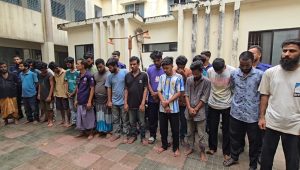
On 24 June 2020, the Bar Council again instructed bar associations nationwide to identify and act against brokers. Several operations led to arrests.
In 2019, a woman named Tanzim Taskin Aduri, who had been posing as a Supreme Court lawyer, was detained and handed over to Shahbagh police. Others were arrested in Feni and Kishoreganj on similar charges.
A group of lawyers has also launched a grassroots initiative. On 9 July 2020, they formed a 71-member committee under the banner “Movement to Eliminate Touts, Brokers, and Corruption in the Legal Arena”.
Convener Farhad Uddin Ahmed Bhuiyan said the group is conducting operations to remove brokers and ensure access to justice.
“We are committed to making court premises free from brokers so that ordinary people can receive justice,” he said.
Calls for stronger action
Legal experts stress that the issue has become too widespread to ignore.
Advocate Kazi Helal Uddin said the prominence of the problem—from the Supreme Court to lower courts—demands urgent attention. He emphasised that brokers are not only harmful to litigants but also obstruct justice in multiple ways.
When contacted, Supreme Court Registrar General Mohammad Habibur Rahman Siddiquee acknowledged awareness of the issue. He said steps are occasionally taken in coordination with bar associations, particularly in lower courts, and assured that necessary legal measures would also be considered for the Supreme Court.
A persistent threat
Despite court directives, enforcement efforts, and advocacy campaigns, brokers continue to thrive within the judicial system.
For litigants like Rafiqul Islam and Shahid Uddin, the consequences are immediate and personal. For the justice system, however, the damage runs deeper—eroding credibility, undermining fairness, and weakening public trust in the rule of law.