
Despite missing the deadline to phase out toxic burnt clay bricks, public construction projects remain mired in environmental failure, with illegal kilns emitting 15 to 20 million tonnes of carbon annually under virtually no official oversight.
Authorities openly admit they cannot say how much of the legally mandated transition has been implemented.
The government required all public construction projects, except roads, to switch to environmentally friendly non-fired concrete blocks by fiscal 2024-25.
Yet conventional bricks remain the dominant building material, no nationwide compliance assessment has been conducted and no agency can provide an official figure showing how many government projects have followed the directive.
The failure has prolonged Bangladesh’s dependence on one of its most polluting industries. In Greater Dhaka, brick kilns account for about 91 per cent of annual PM2.5 emissions and 84 per cent of annual PM10 emissions during the dry operating season, according to the National Strategy for Sustainable Brick Production in Bangladesh.
PM2.5 and PM10 are airborne particles measuring no more than 2.5 micrometres and 10 micrometres in diameter, respectively. PM10 can enter the respiratory system, while the smaller PM2.5 particles can penetrate deep into the lungs and bloodstream, increasing the risk of respiratory and cardiovascular diseases.
Environment experts estimate that industrial activities contribute about 30 to 35 per cent of Bangladesh’s air pollution, with brick kilns responsible for a significant share.
After five months in office, Prime Minister Tarique Rahman convened at meeting on environmental pollution on 18 July where he called for immediate action against air pollution from brick kilns. He emphasised transitioning the industry toward environmentally friendly alternative technologies.
Ahmad Kamruzzaman Majumder, founder and director of the Center for Atmospheric Pollution Studies, told TIMES of Bangladesh that brick kilns alone account for more than 20 per cent of the country’s overall air pollution when emissions are calculated in carbon dioxide equivalent.
Carbon dioxide equivalent, or CO₂e, combines the warming effects of different pollutants into a single measurement.
The environmental damage is also reflected in public health and economic losses.

A recent study by Jahangirnagar University researchers estimated that exposure to PM2.5 pollution causes about 242 premature deaths every day across six major cities, while health and productivity losses cost the economy nearly $23 billion annually.
Despite those consequences, burnt clay bricks remain the main construction material used in both public and private projects across Bangladesh.
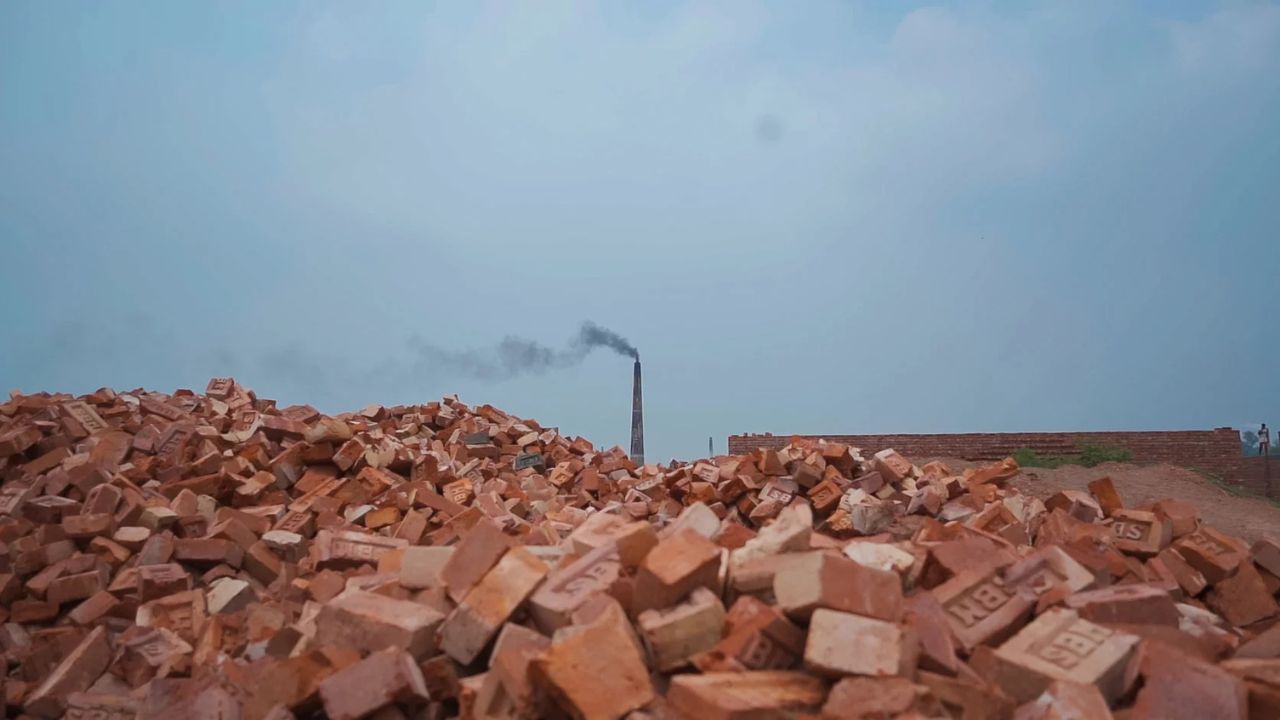
Most traditional kilns depend on topsoil collected from agricultural land, reducing soil fertility and degrading farmland. The burning process also releases smoke, carbon dioxide and fine particulate matter into the air.
According to the International Centre for Integrated Mountain Development, Bangladesh had about 7,000 to 7,200 brick kilns in 2019, producing between 23 billion and 32.4 billion bricks annually.
The sector consumed about 3.65 million tonnes of coal that year and also relied on natural gas, sawdust, bagasse, rice husk and firewood. The organisation estimated that nearly 1.9 million tonnes of wood, worth about Tk1,900 crore, were burned by the industry each year.
To curb pollution and reduce dependence on agricultural topsoil, the government introduced a policy to replace conventional fired bricks with non-fired concrete blocks in public construction.
The policy received legal backing in 2019, when the then Awami League government amended the Brick Manufacturing and Brick Kilns Establishment (Control) Act, making the use of blocks mandatory in government construction, repair and expansion projects.
Unlike conventional bricks, non-fired blocks are made from materials including sand, cement, fly ash and other industrial by-products. They do not require fertile topsoil or energy-intensive kiln firing.




On 24 November 2019, the Ministry of Environment, Forest and Climate Change issued a notification setting out a phased transition.
Government agencies were required to use blocks in 10 per cent of construction work in fiscal year 2019-20, 20 per cent in 2020-21, 30 per cent in 2021-22, 60 per cent in 2022-23 and 80 per cent in 2023-24.
The share was supposed to reach 100 per cent in fiscal year 2024-25.
The commitment was repeated during the interim government formed after the mass uprising that removed the Awami League administration. Before the February 2026 general election, then Environment Adviser Syeda Rizwana Hasan also announced that traditional burnt bricks would be phased out from government construction within 2025.
However, implementation has fallen far behind those promises.
More than a year after the deadline, there is still no official assessment showing what proportion of public construction has moved to blocks. The absence of data means the government cannot determine whether its own legally backed transition has made meaningful progress.
Md Ziaul Haque, additional director general at the Department of Environment, said the government’s target was to replace traditional bricks with non-fired blocks in all public construction projects except roads.
However, he acknowledged that no agency had precise figures showing how widely blocks were being used.
“We do not have exact statistics on what percentage of government construction work is now using blocks,” he told TIMES.
“Collecting that information is difficult, but we will soon start compiling the data.”
He said the government was currently prioritising the expansion of block use rather than measuring the level of implementation.
Authorities have reduced import duties on machinery used to manufacture blocks and are considering further incentives to encourage production, he added.
“We are trying to promote block manufacturing and increase its use in government projects. More incentives will come in the future. But it is difficult to say when we will achieve 100 per cent implementation,” Ziaul said.
Asked why the deadline remained unmet despite the legal obligation introduced in 2019, he pointed to limited availability, higher prices and resistance among engineers, contractors and masons.
Traditional bricks are available throughout the country, while block factories do not operate in every district, making it difficult for contractors to source alternatives near project sites.
“Block factories need to be established across the country so that builders can obtain the materials wherever projects are being implemented,” he said.
He also said blocks remain comparatively more expensive than conventional bricks, while misconceptions about their durability and suitability continue to discourage adoption.
Low demand has prevented manufacturers from expanding production, while limited production has restricted demand, creating a cycle of weak supply and slow transition.
“If demand increases, manufacturers say they will be able to expand production quickly,” he said.
Environmental experts, however, argue that the failure reflects deeper weaknesses in planning, monitoring and enforcement rather than supply constraints alone.
Kamruzzaman said successive phase-out announcements had been made without scientific assessments of whether earlier targets were practical or had been achieved.
“So far, there has been no scientific assessment,” he said.
“These have largely been bureaucratic declarations made without examining whether they are practical or feasible. The enforcement required to make the policy work has been absent.”
He said replacing burnt clay bricks required sufficient production capacity, technological readiness, strong enforcement and greater confidence among builders and engineers.
Kamruzzaman also questioned why a mandatory government directive had failed to produce meaningful results.
“The government itself declared that burnt bricks would be phased out from public construction. If it cannot implement its own decision, that reflects a major policy failure,” he said.
A large portion of public infrastructure is implemented through the Local Government Engineering Department, where enforcement of the block-use directive appears to have remained weak, he added.
Although no nationwide survey has been conducted, Kamruzzaman estimated that only five to 10 per cent of construction projects may have switched to blocks.
“From our experience, perhaps only five to 10 per cent of projects have shifted to blocks. But there is still no reliable data to measure the actual level of implementation,” he said.
The Department of Environment estimates that about 7,500 brick kilns are currently operating across Bangladesh, nearly 4,000 of them illegally.
Officials say that number has remained largely unchanged over the past several years.