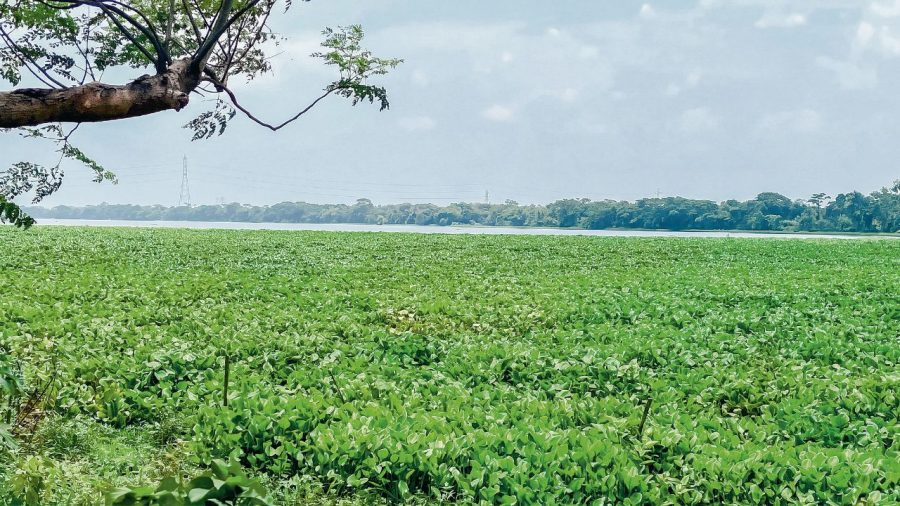



Once renowned for its rich fish stocks, with a reputation reaching as far as Kolkata, Gopalganj’s historic Borni Baor is struggling to survive as siltation, aquatic weeds and illegal fishing threaten its ecosystem.
Stretching across Gopalganj Sadar and Tungipara upazilas, the wetland is losing depth and natural breeding grounds, endangering indigenous fish, biodiversity and the livelihoods of hundreds of families who depend on it.
Residents say banned fishing nets and electric shock devices are destroying fish eggs, young fish and other aquatic life. Meanwhile, water hyacinth and accumulated silt are reducing fish habitats and disrupting natural breeding.
Authorities are establishing fish sanctuaries and conducting drives against illegal fishing, but residents want long-term action to restore water depth, remove weeds and stop illegal occupation of the wetland.
Once among southern Bangladesh’s richest natural fisheries, Borni Baor was home to numerous indigenous species, including rui, catla, mrigal, boal, shol, tengra, koi, punti, pabda, ayer and chital, as well as turtles.
Fishing provided food and income for surrounding communities, shaping their livelihoods, culture and traditions.

Today, large stretches are covered with water hyacinth, algae and other aquatic vegetation. Siltation has reduced water depth, leaving parts exposed during winter and restricting fish movement and breeding.
Local resident Selim Hossain Jamaddar said widespread fishing with banned Chinese nets and electric shock devices was accelerating the decline.
“Large fish, eggs, young fish and other aquatic animals are being destroyed,” he said, adding that indigenous fish were now far less abundant than before.
Sunil Sarkar, a fisherman aged around 60, said the baor had changed significantly over the years.




Recalling his childhood, he said fishermen regularly caught large rui, catla, mrigal, shol, boal, pabda, sarputi, ayer and chital using nets and traditional enclosed fishing areas known as katha.
The water was once so deep that boats required long oars to navigate.
“Even during the monsoon, water depth in some places is now only eight to ten cubits. Elsewhere, it has fallen to four or five cubits,” he said.
Many sections become exposed during winter.
Sunil blamed siltation, agricultural pesticides, chemical fertilisers and illegal fishing for damaging the wetland’s natural breeding environment.
“The condition of the baor is extremely poor. If this continues, there will eventually be no fish left here,” he warned.
Another resident, Jadir Hossain, alleged that influential individuals were using katha to catch fish, limiting opportunities for ordinary fishermen.
He said algae, aquatic weeds and water hyacinth covered large areas for much of the year, while jute retting, waste disposal and other pollution threatened biodiversity.
Jadir believes the baor could regain its former abundance if destructive practices stopped and its natural environment was restored.
Gopalganj District Fisheries Officer Md Kamrul Islam said the government had taken steps to protect the wetland, including establishing fish sanctuaries to provide safe breeding grounds and habitats.
Drives against banned nets and illegal fishing were also continuing, he said.
However, Kamrul said long-term plans were needed to protect fish and ensure fishermen could continue earning a living.
Residents are demanding a comprehensive restoration programme involving dredging, removal of water hyacinth and aquatic weeds, prevention of illegal occupation and stronger action against destructive fishing.
They say saving Borni Baor would protect not only its once-rich fish stocks but also an important aquatic ecosystem, local heritage and the livelihoods of hundreds of families.