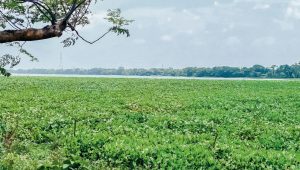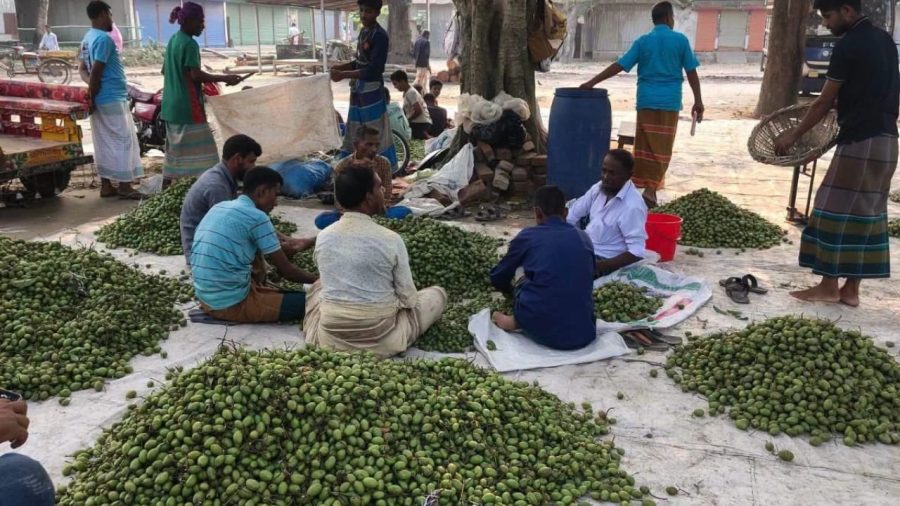



Bagbati Hat in Sirajganj Sadar Upazila has become a busy trading centre during the peak olive harvesting season. Around 30 to 35 metric tonnes of olives are traded there daily, attracting wholesale buyers from Faridpur, Madaripur, Bhanga, Tekerhat, Manikganj and Dhaka.
Despite a bumper harvest, low prices have left farmers and traders worried about recovering their production and labour costs.
Olive cultivation is a major source of income for residents of Ghorachara, Harina Bagbati, Khaga, Subarnagati and Phulkocha villages under Bagbati Union. Farmers harvest the fruit from Ashwin to Agrahayan.
Md Nasir Uddin, an olive trader from Ghorachara, told TIMES of Bangladesh that olives are selling for Tk8 to Tk12 per kilogram this year.

Traders have purchased standing olive trees worth around Tk27 lakh to Tk28 lakh across Sirajganj. Harvesting requires 80 to 90 workers daily, each earning Tk600 to Tk700, raising concerns about losses.
Nasir said olives are sorted into three sizes. Large and medium olives are sold in retail markets, while small ones go to commercial companies. Daily trading at Bagbati Hat is worth Tk80,000 to Tk1,00,000.



Labourer Faridul Islam said workers sort the olives by size, wash them with soap and shampoo, pack them into sacks and load them onto trucks for transport without drying them.
Fruit seller Abdur Rashid Bhuiyan said prices depend on size and quality. Good-quality olives sell for Tk500 to Tk600 per maund, medium-grade fruit for Tk400 to Tk450, and small olives for up to Tk300.
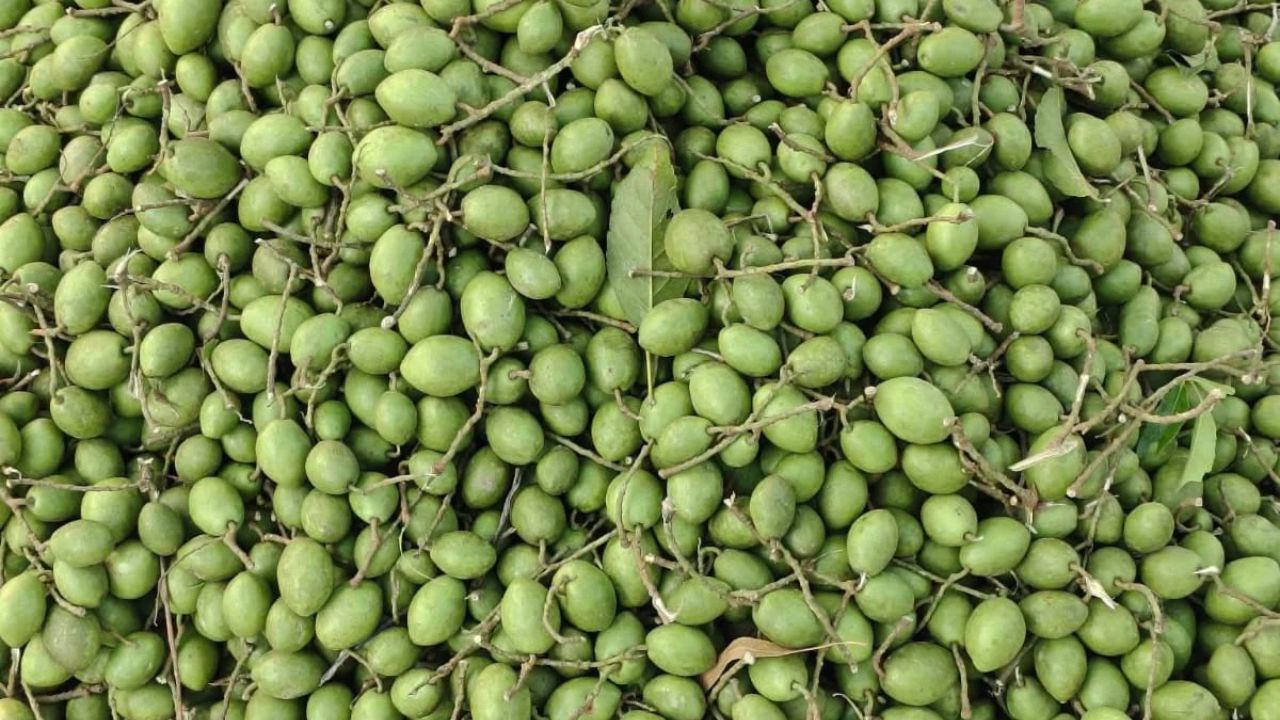
Farmer Nazrul Islam Mallick said adverse weather and rainfall reduced the size of some olives this year, lowering farmers’ returns. He urged the government to provide greater support to cultivators.
Sirajganj Sadar Upazila Agriculture Officer SM Nasim Hossain said olive cultivation covers 50 hectares in the upazila this year, with a production target of 110 metric tonnes. He added that olives contain vitamins, minerals and antioxidants.
AKM Monzure Mawla, deputy director of the Sirajganj District Department of Agricultural Extension (DAE), said the district has set a target of cultivating olives on 101 hectares this year, with an expected yield of 1,712 metric tonnes.
Mawla called for expanding commercial cultivation, training farmers in modern techniques and ensuring fair prices. He said improved post-harvest management, storage and marketing systems could increase farmers’ incomes and make olive cultivation more profitable.
Market stakeholders warned that persistently low prices could discourage farmers from growing olives. They called for fair prices and greater government assistance to protect the region’s olive economy.