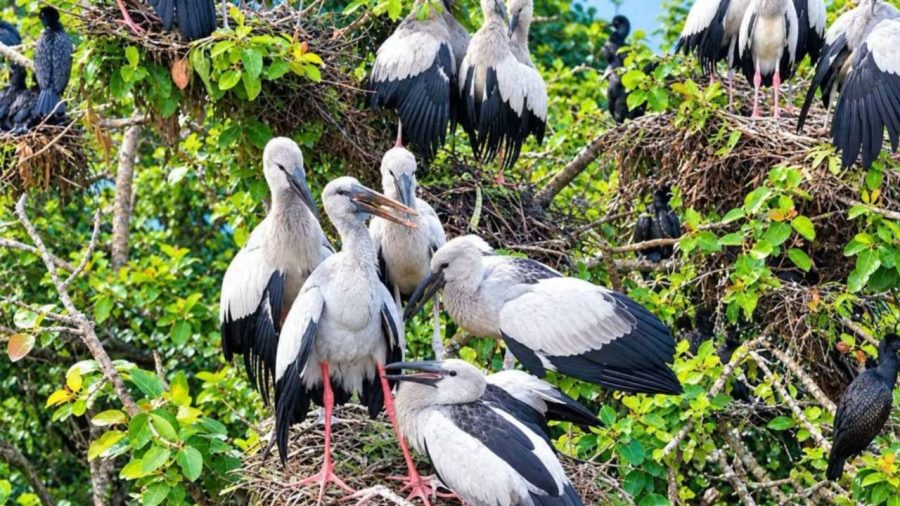



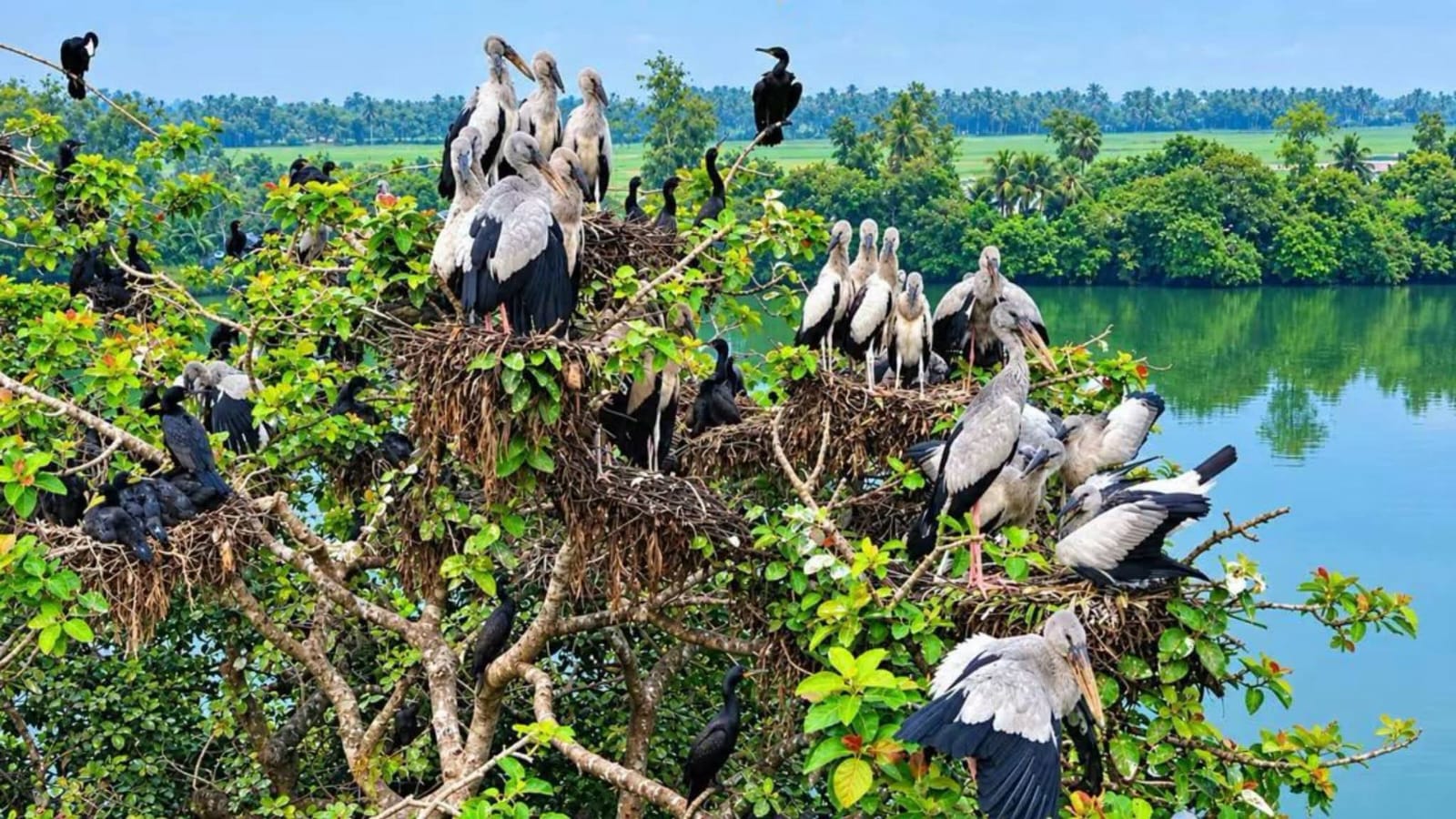
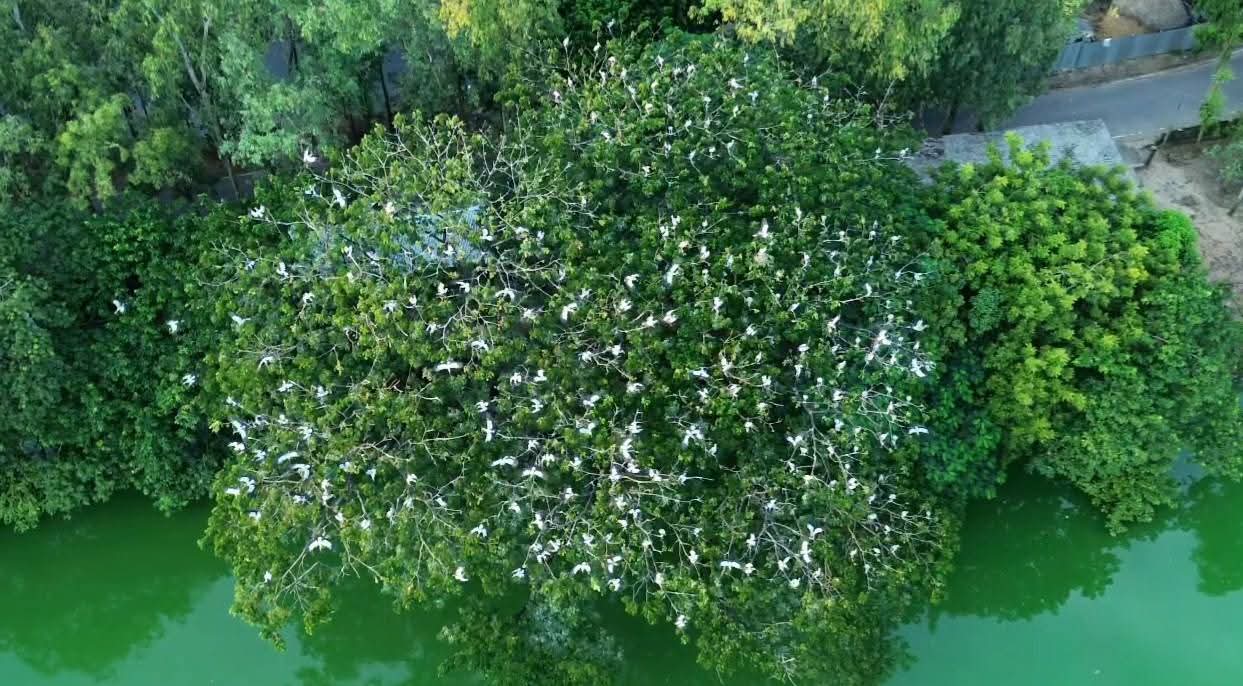
Birdsong fills the air as dawn breaks. Asian openbills perch on the branches of ancient banyan trees and other trees around a large pond.
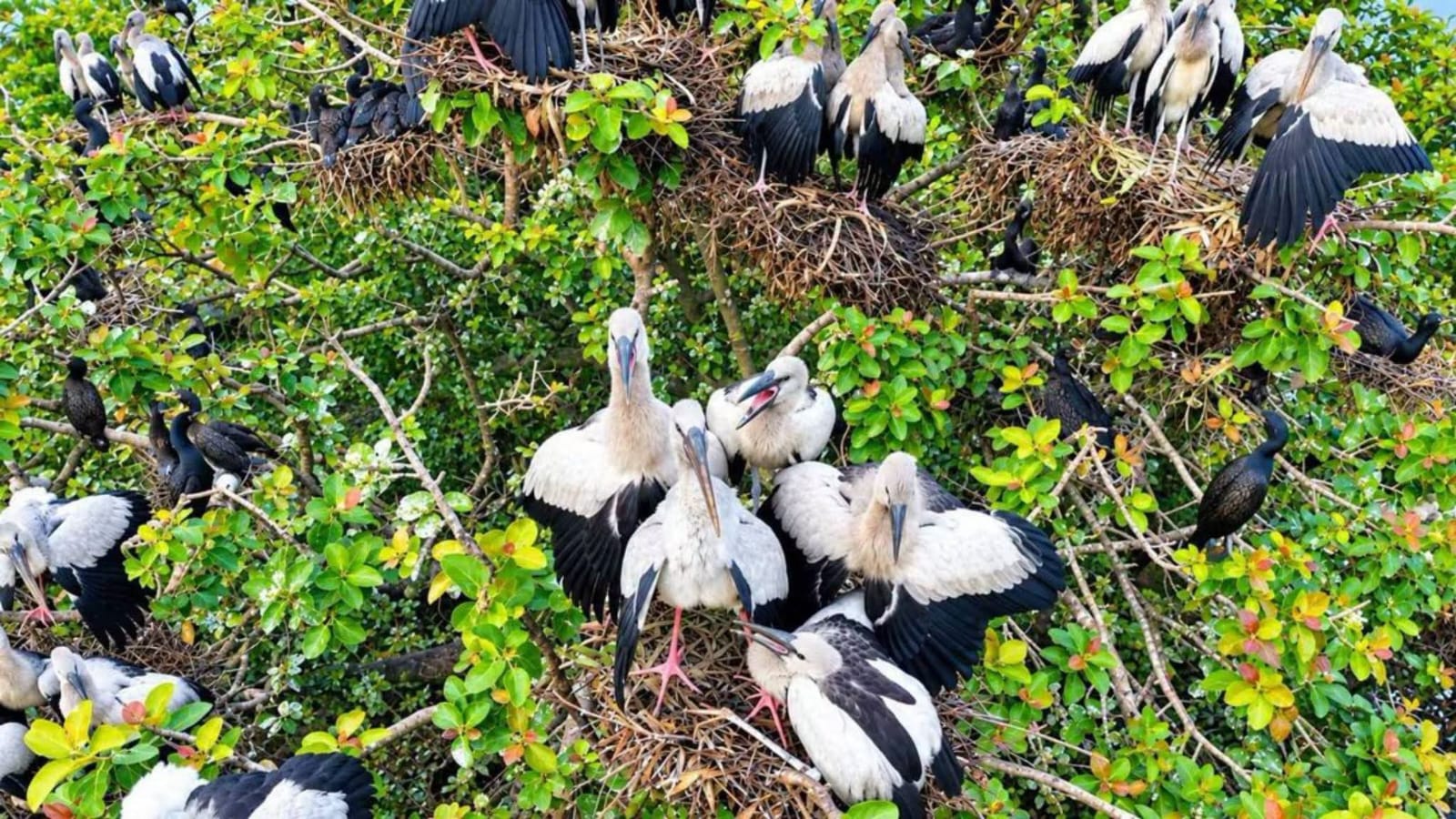
Some are busy feeding their chicks, while others spread their wings and fly off in search of food.
A few remain near their nests, keeping a watchful eye on their young.
The flutter of wings and constant chirping bring the entire village to life.
This picturesque scene can be found in Ulipur village, beside Chalan Beel wetland in Tarash upazila of Sirajganj.

The village has become a sanctuary for the birds, which have been nesting here for around a decade, thanks to the care and awareness of locals.
Centred around the centuries-old Ulipur Dighi, which covers nearly 100 bighas, the habitat attracts nature lovers and visitors who come daily to watch the birds move freely among the trees.
Located about three kilometres south of Tarash upazila headquarters, the pond is surrounded by trees, including an ancient banyan tree, where the Asian openbills have built their nests. Several other bird species, including cormorants, can also be seen in the area.
During a visit on Wednesday afternoon, the trees around the pond were alive with activity.
Some Asian openbills rested on branches, others tended to their chicks, while many flew from one tree to another.

Standing beneath the trees, visitors could see one bird after another flying overhead.
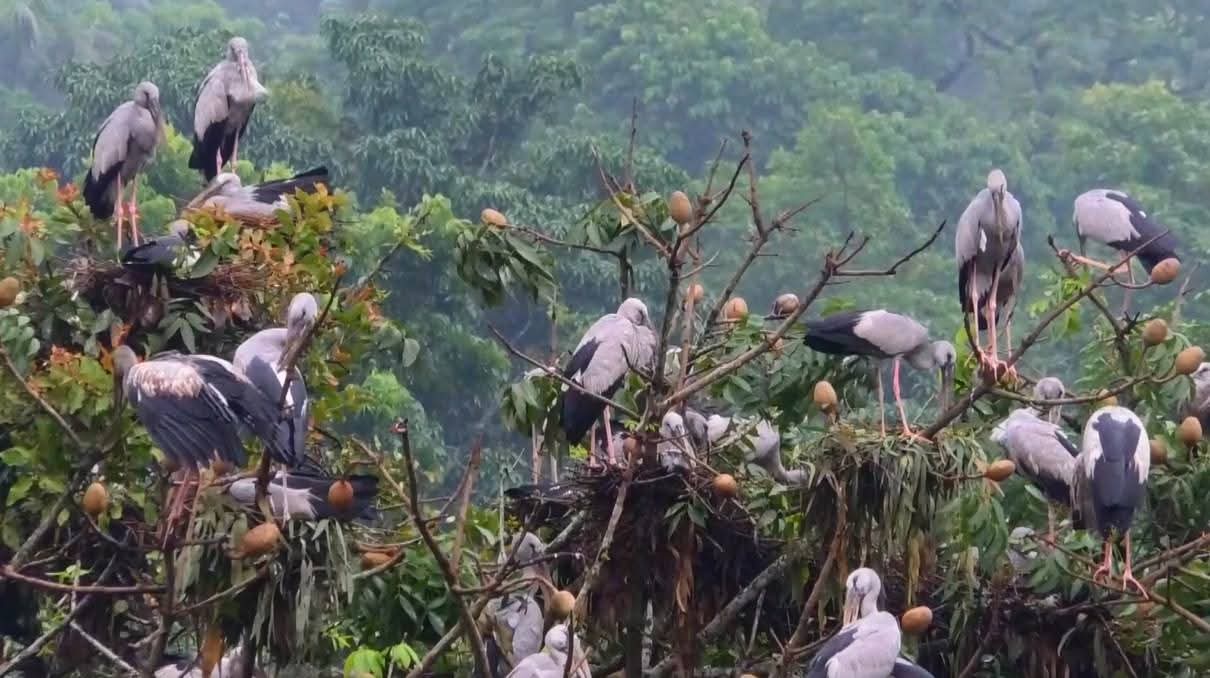
The tranquil water, lush greenery and birdsong created a peaceful natural setting.
Locals said the Asian openbills began arriving in the village around a decade ago and started building nests in the trees.
Since then, the birds have returned to breed each year, hatching chicks during the breeding season. They now live in the village regularly.
Locals said they remain conscious of the need to protect the birds and ensure that nobody disturbs or harms them.
Zakaria, a local shopkeeper, said villagers had prioritised the birds’ safety since they first arrived.




“Everyone is conscious of ensuring that the birds are not disturbed. When visitors come from outside to see them, we ask them not to disturb the birds. They are living safely here amid human habitation,” he said.
Faruk, another resident, said the village had previously received mainly visits from relatives and acquaintances. Now, people from different areas come to see the birds, bringing the village wider recognition.
He said fish, crabs, frogs and various aquatic creatures were the main food sources for the Asian openbills.
A suitable environment, an adequate food supply and a safe habitat had enabled the birds to settle there.
Tonmoy, a teacher who visited Ulipur to see the birds, said he had never seen so many Asian openbills together before.
“The birds’ free movement has fascinated me.
The efforts of the villagers have given them a safe haven here,” he said.
Belayet Hossain, a local employee, also praised the scene.
“The birds’ presence is truly captivating. The surroundings remain filled with their chirping, and it was a wonderful experience to see them. I will return with my friends,” he said.
Jibon, a college student from the village, said the trees around Ulipur Dighi had become a safe refuge for the birds.
He believes more birds could gather there in the future if the trees are protected and an undisturbed environment is maintained.
He also called on the local administration to take necessary steps to safeguard the birds’ habitat.
Tarash Upazila Nirbahi Officer (UNO) Nusrat Jahan said the administration was aware of bird sanctuaries at Ulipur Dighi and several other locations.
She added that the administration was giving importance to the birds’ safety.
Meanwhile, various species of migratory birds arrive at Chalan Beel and different ponds during the winter.
Local bird enthusiasts estimate that several hundred thousand migratory birds may currently be present in Chalan Beel and the surrounding ponds, although no official count is available.
Visitors come to these places in the morning and afternoon to enjoy the birdsong, with some capturing photographs of the birds spreading their wings and taking flight.
As temperatures fall and food becomes scarce in colder regions, many migratory bird species move to warmer areas in search of favourable conditions and food. Their arrival in Bangladesh generally increases during autumn and winter, when the country’s haors, beels, rivers and other wetlands become bustling habitats for migratory birds.
However, concerns remain over their safety. As winter eases, migratory birds return to their breeding grounds and natural habitats. Many, however, fall victim to hunters’ traps and lose their lives.
Rafiqul Islam, a forester at the Jamuna Bridge West Eco Park, said migratory birds began their return journeys to their homelands as the cold subsided.
“After spending time in Bangladesh, they once again travel thousands of miles to return to their native lands,” he said.
He added that the birds did not always receive the protection they sought when arriving in the country.
“Sadly, some unscrupulous people hunt and kill them at different times. The number of migratory birds is declining every year as they fall into hunters’ traps. If this continues, nature will lose its distinctive beauty and many bird species may become extinct. Everyone should therefore act humanely to ensure the safety of migratory birds,” he said.
Birds play an important role in maintaining ecological balance and conserving biodiversity. Their free movement is also a positive indicator of environmental health.
The Asian openbills of Ulipur have not only captivated nature lovers but have also become an example of local efforts to protect birds and their habitat.
Locals hope that continued public awareness, the preservation of trees and sustained administrative monitoring will help Ulipur Dighi remain a safe refuge for the birds. By ensuring that they can continue to move freely, they believe future generations will also be able to enjoy this remarkable natural spectacle.