


On the banks of the Old Brahmaputra in Mymensingh lies a green wonderland where Sundarbans mangroves grow alongside desert cacti, rare medicinal plants and colourful flowers from distant lands.
The Botanical Garden of Bangladesh Agricultural University (BAU) offers a glimpse of nature’s remarkable diversity, bringing together thousands of native and exotic plants and attracting hundreds of visitors from across the country every day.
Established in 1963 on 25 acres at the initiative of then vice-chancellor Osman Gani, it became the first botanical garden in Bangladesh to receive recognition from Botanic Gardens Conservation International (BGCI).
Today, the garden houses around 6,500 plants representing nearly 600 species across 30 specialised zones, including medicinal plants, flowers, fruits, orchids, palms, cycads, bamboo and spices.
One of its main attractions is the Sundarbans zone, where mangrove species such as sundari, goran, gewa and keora grow in an artificial wetland.
The area recreates conditions suitable for these plants, including their characteristic breathing roots, known as pneumatophores.

A striking contrast awaits visitors at the cactus house, established in 2010 along the garden’s eastern boundary.
It contains more than 60 cactus species collected from different parts of the world, offering a glimpse of vegetation typically found in arid regions.
Another attraction is the cannonball tree, locally known as Nagalingam.


Native to Central and South America, it can grow between 10 and 30 metres tall.
Its striking red flowers emerge directly from the trunk rather than the branches, while its unusual round fruits fascinate visitors.
The garden also preserves rare and endangered plants, including Raj Ashok, hing and papyrus, alongside a wide variety of medicinal species.
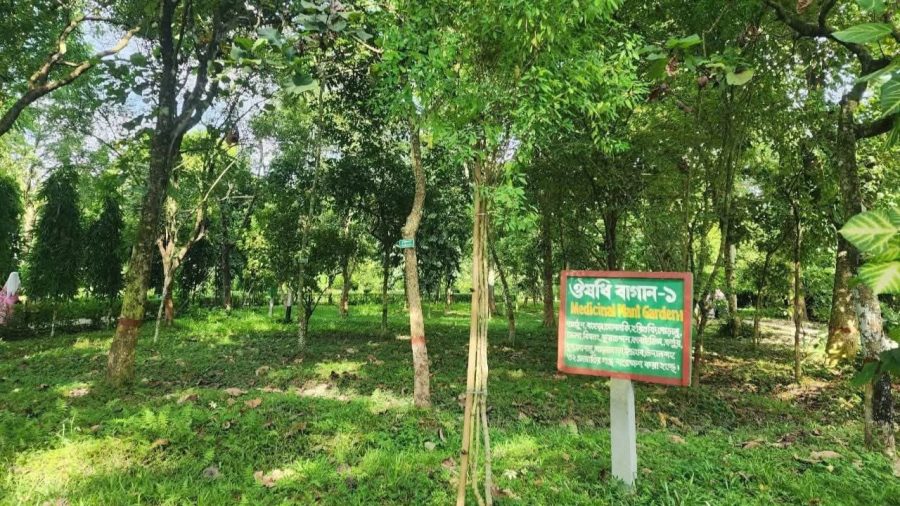
The medicinal plant zone features ashwagandha, sarpagandha, punarnava, kurchi and bach, among others, providing valuable resources for botanical and medicinal research.
Separate sections feature tea and coffee plants, including tea varieties BT-1, BT-2, BT-3, BT-7, TV-1 and TV-5.
Exotic flowering and fruit-bearing plants, including African tulips, camellias, star apples, American guavas and passion fruit, add to the collection.
Beyond its scenic appeal, the garden serves as an important centre for education and research.
Under the supervision of curator Alamgir Hossain, a professor in the Department of Crop Botany, around 30 employees maintain the collection.
Undergraduate, master’s and PhD students use the facilities for practical learning and research.
The garden is open from 9am to 5pm on Fridays and Saturdays and from 2pm to 5pm on other days.
Students enjoy free entry, while outside visitors pay Tk10.
Ticket sales generate approximately Tk30 lakh annually, which is spent on acquiring new plants and maintaining the collection.
With the Brahmaputra flowing beside it, the sprawling greenery offers visitors a peaceful retreat where conservation, education and recreation come together.