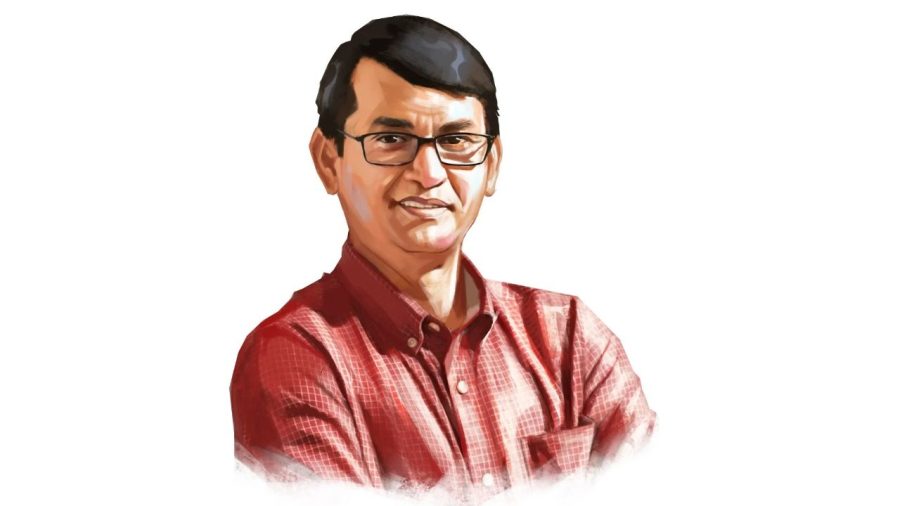



After five decades in acting, Azizul Hakim is still stepping outside his comfort zone. From his much-discussed performance in Pressure Cooker to his upcoming horror short Gondhokata Bhuter Golpo with director Vicky Zahed, the veteran actor remains eager to explore new characters and learn from younger filmmakers.
“There is a lot to learn from young people. They have studied, and they understand storytelling styles from around the world,” Hakim said in a TIMES exclusive interview.
“For a director, age is not the important thing. What matters is how they tell a story and present a character.”
His performance in Pressure Cooker drew both praise and criticism, as audiences encountered him outside his familiar screen image. Hakim, however, welcomes the discussion.
“When an actor steps outside that image, some viewers may initially find it unexpected. But playing different kinds of characters is part of an artist’s job,” he said. “The fact that audiences are watching the work and discussing it is a source of happiness for an actor.”
His approach reflects a long-standing belief that characters matter more than conventional stardom.
“My goal in films was never simply to become a hero. I have always prioritised the importance of the character,” he said.

Hakim had hoped to work with Zahed on Khalnayak but missed the opportunity because he was in the United States during filming.
“Vicky regretted that he could not work with me, and I felt bad about it too,” he said.
The setback did not affect their relationship, and they subsequently collaborated on Gondhokata Bhuter Golpo, scheduled for release around Halloween.
Hakim’s journey began in 1977 under playwright and director Mamunur Rashid. He later joined Aranyak Natyadal, performing in productions including Joyjoyonti and directing street and stage plays.




“If I close my eyes, it feels as though those days were only yesterday. Yet, when I do the maths, I realise five decades have passed. The stage shaped me into an actor,” he said.
His fascination with cinema began during childhood in Jashore, where he attended Jashore District School while his father worked in government service. He wondered how screen performers could speak like living people. His football-loving father, meanwhile, bought him sporting equipment and hoped he would play for the national team.
Acting won out. Hakim later attended Titumir College alongside actor Rubel. His friendship with director Salahuddin Lavlu, whom he knew from PTI School in Magura, has endured for five decades.
In 1981, Hakim joined Bangladesh Television’s roster of performers. Ekhane Nongor, written by Mamunur Rashid and directed by Abdullah Al Mamun, helped establish him among viewers. He later appeared in Kon Kanoner Phool, Songsoptok, Nokkhotrer Raat and Din Ratrir Khela, winning affection for his romantic roles.
“I will never forget the love I received from viewers for my romantic roles on television,” he said.
His film debut came with Shonkhonil Karagar, directed by Mostafizur Rahman and based on Humayun Ahmed’s novel. Cast as Montu after the director noticed his television performances, Hakim later earned praise for Padma Nadir Majhi, Joyjatra and Golui.
His 50-year milestone has brought further recognition. After holidaying in the US from 18 August to 18 September, he returned to Bangladesh and resumed shooting. Celebrations began the previous year. During the trip, New York-based Gemini newspaper honoured him at its 11th anniversary event, while he also received honours in Albany and Buffalo from Bangladeshi expatriates.
“For me, this is certainly a special occasion. It is the love of the audience that has brought me this far,” he said.
Back home, he resumed work on the third season of Deepto Television’s Bokulpur, which began on 19 September. His portrayal of Abbas Chairman has become popular with children who recognise him by the character’s name.
“Sometimes, when I meet young children, they call me by the character’s name,” he said.
Hakim also serves as a chief guest, award judge and jury chair, finding satisfaction in recognising good work and encouraging newcomers.
“Being able to hand awards to people who are doing good work and encourage newcomers makes me happy. But my primary identity is that of an actor,” he said.
A publishing house is gathering information about his dramas, films, characters and career for a proposed book. Hakim met the publisher before his US trip, with another meeting planned.
He credits his wife, playwright Zeenat Hakim, for standing beside him throughout his journey.
“Her contribution to bringing me to where I am today is 100 per cent. Without her, it would not have been possible,” he said.
With fresh projects and younger filmmakers offering new perspectives, Hakim continues to embrace change, convinced that experience is no substitute for curiosity.