


A village in Pirojpur has found an unusual source of prosperity: ducks.
In Durgapur, widely known as the “duck village”, more than 200 families have become financially self-reliant through duck farming, earning their livelihoods by selling eggs and ducklings.
One farmer makes several lakh taka a month, while abundant natural feeding grounds help reduce costs and boost profits.
Located about nine kilometres north of Pirojpur town, Durgapur is home to more than 200 farms of different sizes, with hundreds of residents depending on the business for their livelihoods.
The village is accessible from the Textile bus stop on the Pirojpur-Nazirpur road.
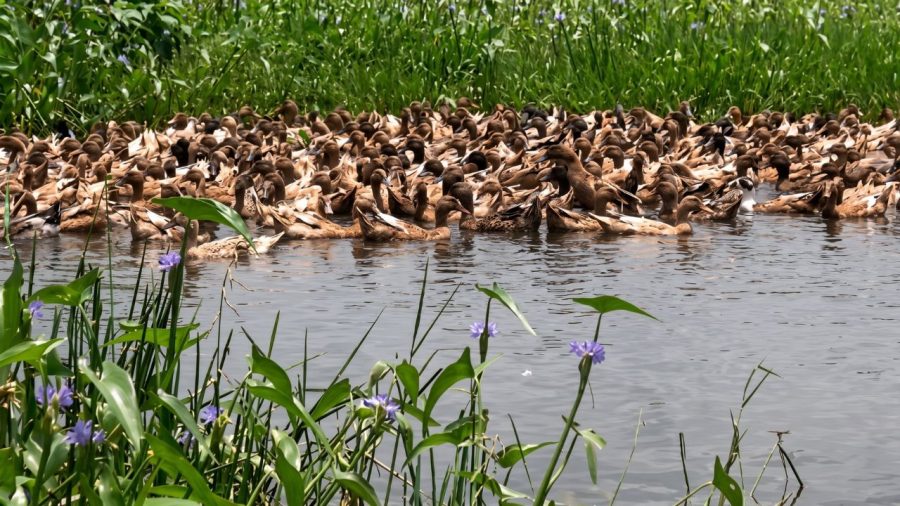
A short walk from the road reveals rows of ducks moving across open fields and waterways, reflecting the importance of the activity to the local economy.

Among the successful farmers is Abuzar Mridha, who started with just 14 ducks.
His farm has since expanded considerably, with sales of eggs and ducklings providing a substantial source of income.
“I started my farm with only 14 ducks, but the number has grown significantly over the years. I sell both eggs and ducklings, earning several lakh taka every month,” he said.
Other villagers, including Zobayer, Shafik and Arif, have also found success in the business, improving their household finances.



Pirojpur’s numerous canals, wetlands and rivers provide favourable conditions for raising ducks.
The birds forage across fields and waterways, obtaining much of their food naturally and reducing farmers’ dependence on purchased feed.
This helps keep operating costs low and improves profitability.
Zobayer, one of the farmers, said the activity had become a major source of income for local households.
“Hundreds of families here depend on duck farming for their livelihoods. There are more than 200 farms of different sizes in our village,” he said.
“Duck farming is particularly profitable here because we do not have to spend much on additional feed.
The ducks roam around fields and wetlands, feeding naturally. This saves us the cost of buying expensive feed and increases our profits,” he added.
The availability of natural food gives Durgapur’s farmers an advantage, allowing them to spend less on feed while generating revenue from eggs and ducklings.
The trade has become a defining feature of the community, earning Durgapur its familiar nickname, the “duck village”.
The district livestock department has also been supporting farmers with advice on rearing practices and disease prevention.
Pirojpur District Livestock Officer Tarun Kumar Sikder said many residents had taken up the occupation, improving their financial circumstances.
“A considerable number of people in this area have chosen duck farming as their occupation. The livestock department is encouraging them and regularly providing advice on disease prevention,” he said.
He added that the business had helped many households achieve financial independence.
According to the district livestock department, Pirojpur has approximately 12 lakh ducks and around 3,000 small and large duck farmers.
For Durgapur, the abundance of fields and wetlands has provided a natural advantage, helping residents turn duck rearing into a source of income and financial security.