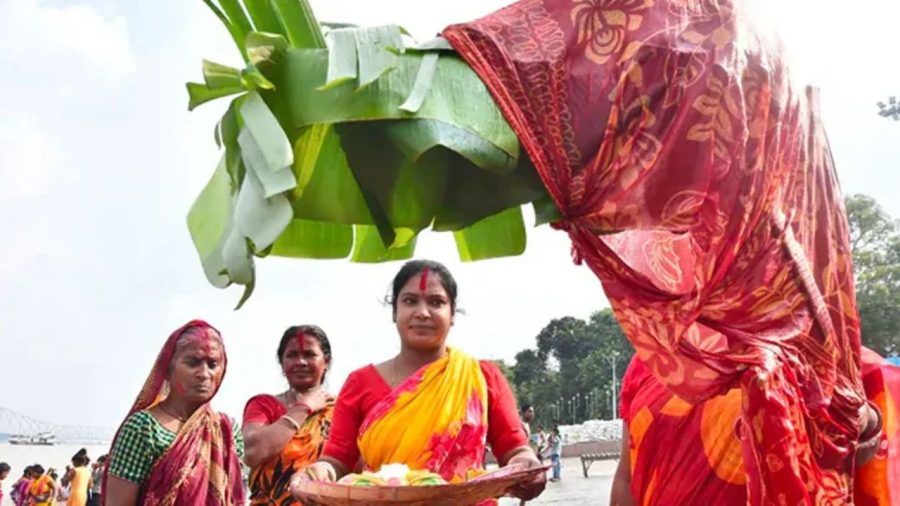



Maha Saptami, the seventh day of Devi Paksha, is being celebrated across Bangladesh and around the world as devotees join the festivities of Durga Puja, the biggest religious festival of Bangalee Hindus.
Nabapatrika Snan, also known as Kalabou Snan, is an important ritual of Durga Puja, celebrated on the morning of Maha Saptami.
In this ceremony, a banana plant along with eight other plants is tied together, dressed in a red-bordered white saree, and bathed in sacred water.

The nine plants, collectively known as Nabapatrika, symbolize different forms of divine energy and the abundance of nature.
After the ritual bath, Nabapatrika is brought to the Durga Puja pandal and worshipped alongside Goddess Durga.




This beautiful tradition reflects the close connection between nature, fertility, prosperity, and spirituality.
Nabapatrika Snan adds a special charm to Durga Puja and reminds devotees of the sacredness of nature and the power of the Divine Mother.
Kala Bou or Nabapatrika is placed beside Lord Ganesha on Maha Saptami during Durga Puja. While popular folklore and her bridal appearance (draped in a red-bordered white sari with vermilion) lead many to believe she is Ganesha’s newly wedded wife whereas she is actually his mother-Goddess Durga herself.
The ritual represents the invocation of Shakti into nature before life is breathed into the main clay idol.