Bangladesh is opening more than 10,000 acres of state-owned industrial assets to private investors in one of its largest efforts to revive underutilised public enterprises, identifying 44 investment opportunities across five state-owned corporations for redevelopment, joint ventures and long-term commercial partnerships.
The initiative, led by the Bangladesh Investment Development Authority (BIDA) and the Ministry of Industries, aims to attract domestic and foreign investment into strategic industrial assets spanning the steel, engineering, chemicals, sugar, food, textiles and jute sectors.
Rather than outright privatisation, the government plans to leverage existing land, factories and infrastructure through brownfield investments, long-term leases, public-private partnerships, joint ventures, strategic partnerships and special purpose vehicles.
The programme marks a significant shift in industrial policy as the government seeks to reduce the fiscal burden of loss-making state-owned enterprises (SOEs), improve productivity, create jobs and accelerate industrialisation by placing commercially viable assets under private-sector management.
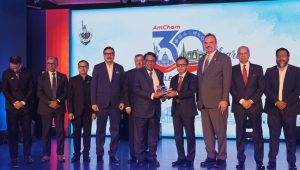
“We firmly believe the private sector is best placed to run commercial enterprises, and government’s role is to enable—not compete with—private capital,” BIDA Executive Chairman Ashik Chowdhury said while announcing the initiative.
“We are calling on investors to join us in revitalising state-owned enterprises through private-sector investment. This win-win formula offers the private sector an opportunity to grow through plug-and-play industrial facilities while the government benefits from job creation and a lighter fiscal burden.”

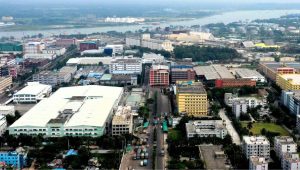
Ashik said the identified opportunities were located across Bangladesh’s principal industrial corridors and were built on strategic land with road connectivity, utility services and, in many cases, established industrial communities already in place.
“These are not random assets,” he said. “They were built on strategic land, with utilities, access and industrial ecosystems already established.”
He said the government was engaging both domestic and foreign investors to bring the assets back into productive use. While some factories could continue operating in their existing industries, others could be redeveloped for new manufacturing activities aimed at reducing imports or expanding exports.
Investors would receive a transparent acquisition pathway supported by faster approvals and coordinated government facilitation, he added.



The investment portfolio covers opportunities under five state-owned corporations, including the Bangladesh Chemical Industries Corporation (BCIC), Bangladesh Sugar and Food Industries Corporation (BSFIC) and Bangladesh Steel and Engineering Corporation (BSEC). It represents one of the country’s largest industrial land banks available for private investment.
Among the biggest opportunities is BCIC’s investment pipeline, comprising projects worth about Tk54,685 crore across 12 industrial segments with projected financial internal rates of return ranging from 12 per cent to 18 per cent.
Flagship proposals include the Tk28,120 crore KPML Integrated Complex in Rangamati, a Tk5,000 crore chlor-alkali and PVC plant in Chattogram capable of producing 100,000 tonnes of caustic soda annually, a $350 million-$550 million lithium-ion battery plant in Khulna and a Tk3,000 crore semiconductor and industrial technology park on a 30-acre site in Mirpur.
The initiative also seeks to transform Bangladesh’s struggling state-owned sugar industry.
BSFIC, which operates 15 sugar mills, produced only 43,326.85 tonnes of sugar in the latest crushing season, meeting around 2.8 per cent of domestic demand. Six mills with a combined processing capacity of 78,020 tonnes remain closed.
Under the investment plan, large sugar estates will be redeveloped into diversified agro-industrial hubs.
The 3,860-acre Setabganj Sugar Mills estate in Dinajpur has been earmarked for grain, maize and fruit processing alongside utility-scale solar power generation. The 2,887-acre Thakurgaon Sugar Mills estate is being promoted for frozen food processing, cold-chain logistics and automated agricultural warehousing.
In the engineering sector, BSEC has identified investment opportunities at Pragoti Industries Ltd, General Electric Manufacturing Company Ltd and Atlas Bangladesh Ltd, alongside a proposed environmentally friendly steel mill in Bogura.
The proposed Tk1,940 crore steel project is designed to produce 300,000 tonnes annually and help reduce Bangladesh’s estimated 3 million-tonne steel supply gap currently met through imports.
Several assets occupy strategically important industrial locations.
General Electric Manufacturing Company’s 122.96-acre site at North Patenga is located about 3.7 kilometres from Chattogram airport and 6.2 kilometres from the country’s principal seaport. Atlas Bangladesh’s 9.62-acre facility in Tongi sits within one of Bangladesh’s largest manufacturing clusters, around 6 kilometres from Hazrat Shahjalal International Airport and 22 kilometres from the Kamalapur Inland Container Depot.
Officials said the existing factories, utility connections and transport infrastructure would substantially reduce project implementation time and investment costs compared with greenfield developments.
To facilitate transactions, BIDA plans to introduce a two-stage bidding process under which shortlisted investors will gain access to digital data rooms containing land records, feasibility studies, utility connectivity information and other technical documents.
The government expects the initiative to unlock idle industrial assets, attract foreign direct investment, promote technology transfer, expand export-oriented and import-substituting industries, generate employment and improve the financial performance of state-owned enterprises by shifting commercial operations to the private sector.
Interested investors have been invited to review the complete investment portfolio through BIDA’s dedicated online platform.