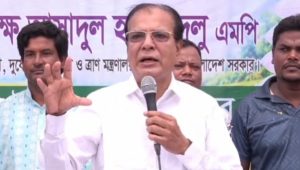
State Minister for Primary and Mass Education Bobby Hajjaj has said that the country’s education system has suffered severe deterioration due to neglect over the past 20 years. He added that Bangladesh’s Higher Secondary Certificate (HSC) level is now considered equivalent to Singapore’s Grade 6.
He made the remarks on Sunday while participating in a general discussion on the supplementary budget for the 2025–26 fiscal year at the second session of the 13th National Parliament. The session was presided over by Deputy Speaker Kayser Kamal.
At the beginning of his speech, the state minister described the new budget as “people-friendly”. He said that, following instructions from Tarique Rahman, the largest allocation for the education sector has been made this year. He added that the government considers education the nation’s biggest investment and plans to gradually increase allocation from the current 2 per cent of GDP to 5 per cent.

Criticising the education system over the past two decades, Bobby Hajjaj said there had been “extreme disorder” in primary and mass education, resulting in students failing university admission tests. He added that the HSC level is even being compared to Singapore’s Grade 6 standard. To address this situation, he said the government has initiated plans to overhaul the curriculum, teacher recruitment and training, and infrastructure.

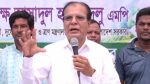
He also announced that sports and cultural activities would be included in the curriculum from Classes 4 and 5 of primary education. Responding to criticism from opposition groups, he expressed anger, saying some political opponents were spreading misinformation that cultural education could mislead students. He also accused them of previously making derogatory remarks about women Members of Parliament, urging them to abandon such “regressive attitudes”.
He further said that students must develop an open and creative mindset to realise Prime Minister Tarique Rahman’s vision of a prosperous Bangladesh, which is why culture and sports are being made an integral part of education.
Explaining the economic aspects of the budget, the state minister described it as an optimistic budget, outlining a framework for increasing national income through a creative economy and the revival of old industries.
He urged the opposition to provide constructive criticism and not obstruct the government’s efforts to build a world-class education system.