Bangladesh is seeking a fresh $4.5 billion loan from the International Monetary Fund (IMF) but faces a familiar hurdle as several reform conditions that led the government to abandon its previous programme remain on the negotiating table.
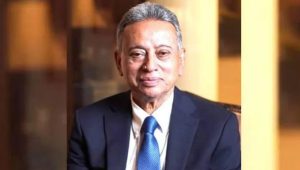
Finance Minister Amir Khosru Mahmud Chowdhury led a delegation in talks with IMF representatives in Bangkok on Monday, on the sidelines of the IMF and World Bank annual meetings, seeking flexibility over the pace and implementation of economic reforms.
Speaking to journalists afterwards, Chowdhury described the discussions as positive, saying the government’s priorities were broadly aligned with the global lender’s recommendations, although implementation would take time.
According to finance ministry officials, negotiations centre on tax administration, revenue collection, banking-sector reforms, a market-driven exchange rate, spending and subsidy reductions, particularly in energy and agriculture, and changes to bankruptcy laws.
The government hopes an agreement will bolster foreign exchange reserves, ease external payment pressures and improve access to financing from other international lenders.

Bangladesh first sought IMF assistance in July 2022 amid mounting economic pressure. The lender approved a $4.7 billion programme on 30 January 2023, disbursing $3.64 billion in five of seven planned instalments.
The interim government continued the arrangement in 2025, when negotiations increased its size to $5.5 billion.
But implementation faltered as Bangladesh struggled to broaden its tax base, withdraw exemptions, liberalise the exchange rate and rationalise subsidies for electricity, fuel, gas and agriculture.
The interim administration issued an ordinance separating tax policymaking from revenue collection, but the subsequent BNP government did not enact it into law.



Banking reforms made some progress, while subsidy spending increased despite commitments to reduce it.
At the IMF’s spring meetings in April, the government announced it would discontinue the programme, arguing that some conditions conflicted with economic realities and policy priorities, particularly subsidy cuts and rapid energy-price increases.
Bangladesh formally requested a replacement programme on 3 June.
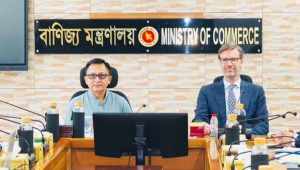
IMF Mission Chief Ivo Krznar welcomed the initiative, saying it offered an opportunity to design reforms reflecting the country’s challenges and the government’s priorities.
Nevertheless, the new proposal retains several contentious requirements, including exchange-rate liberalisation, restructuring revenue administration, rationalising tax exemptions, reforming insolvency laws and reducing subsidies.
Prime Minister’s Economic and Planning Adviser Rashed Al Mahmud Titumir said Bangladesh preferred reforms tailored to domestic circumstances rather than an IMF-prescribed approach.
The government’s priorities include reviving private investment, restoring confidence in banks, reopening closed factories and improving credit flows.
Chowdhury said revenue collection had risen, and efforts were under way to strengthen banking-sector governance.
The delegation, which includes Bangladesh Bank Governor Mostaqur Rahman, is also expected to meet the International Finance Corporation (IFC) to discuss private investment and employment.
A preliminary understanding in Bangkok could pave the way for an IMF mission to visit Dhaka later in October, followed by detailed negotiations in November.
The expected three-year programme could disburse funds in seven instalments, with an agreement and subsequent IMF board approval potentially taking place in January 2027.
Amir Khosru Mahmud Chowdhury also said the government was working with the World Bank on a reform framework aligned with national needs and financing requirements.