
After 14 years of steady progress, Bangladesh’s education system is beginning to backslide, with primary school dropouts surging, higher-secondary seats going vacant and technical institutions struggling to attract students — signs of a deepening crisis across the education sector.
The systemic strain is compounded by acute teacher shortages, professional grievances, widespread student absenteeism, growing concerns over moral values and skills development and repeated shifts in educational philosophy and policy following changes of government.
Against this troubling backdrop, Education Day is being observed across the country today (Thursday). The occasion traces its origins to historic protests during Pakistani rule, which opposed proposals to privatise and commercialise education.
Six decades on, fundamental concerns regarding the state of the nation’s education system persist.
Speaking to TIMES, AN Rasheda, a retired Notre Dame College teacher and co-founder of the Bangladesh College-University Teachers Association, asserted that education has rarely been treated as a national priority.
“Education has never been viewed through a genuine academic lens. Instead, key stakeholders have focused solely on personal financial gain,” Rasheda said. “This decline has compromised the sector and eroded student morality, producing individuals without core values.”
She blamed decades of state mismanagement for rising student intolerance and unprofessional conduct by educators.
“Civil servants have even withheld allocated funds for teachers’ salaries, returning the money unspent,” she noted, adding that perceived budget constraints consistently blocked long-term reform.

“Without fundamental, structural overhaul, we cannot raise principled citizens,” she said.
Primary dropout rises after 14 years
After 14 years of continuous decline, Bangladesh’s primary school dropout rate has reversed course, rising from 13.15 per cent in 2023 to 16.25 per cent in 2024.
According to the Directorate of Primary Education’s Annual Primary School Statistics (APSS) 2024 report, the increase is particularly sharp among boys, surging from 14.12 per cent to 19.02 per cent, whilst the rate for girls rose modestly from 12.32 per cent to 13.36 per cent. Early indicators suggest this upward trajectory continued into 2025.
The APSS attributes this trend partly to high inflation, which has eroded the real purchasing power of student stipends. Strained household budgets are forcing families to withdraw boys for child labour, whilst some girls face premature marriage.
Commenting on the crisis, educationist Rasheda stressed that supplying textbooks alone is insufficient to guarantee quality education. She argued that governments must prioritise competitive salaries, allowances, and rigorous training for teachers, whilst expanding school staffing.

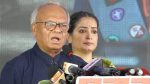


Furthermore, Rasheda advocated for in-house school meal preparation managed directly by institutions, mirroring models in Japan and China, rather than outsourcing to commercial contractors. She warned that granting private businesses and political figures opportunities for financial gain undermines the long-term integrity of the education system.
Higher secondary education faces a squeeze
Higher secondary education faces a severe squeeze, with at least 60 per cent of college seats remaining vacant as classes prepare to begin on 23 September.
Nationwide, around 25 lakh seats are available, yet only 9,95,000 students applied for admission this year. Notably, out of 11.43 lakh SSC and equivalent graduates, approximately 1,50,000 opted not to apply.
Dhaka Education Board Chairman Professor Syed Akhtaruzzaman blamed the deficit on prolonged systemic neglect and chronic classroom absenteeism.
“This year, 37 per cent of candidates failed the SSC examinations – a disaster driven by chronic absenteeism and long-standing neglect,” Akhtaruzzaman told TIMES. “The government has simply failed to give education the priority it demands.”
Regarding successful students who bypassed college admissions, he noted some might be pursuing vocational or diploma courses. “If so, that is a positive trend. Others missed out due to application errors and will be granted a second chance to apply,” he added.
Technical education struggles to attract students
Technical education faces a paradoxical crisis: whilst infrastructure and places expand rapidly, enrolment continues to lag.
According to 2024 Bangladesh Technical Education Board figures, roughly 63 per cent – or 97,000 of nearly 1,56,000 seats – across 149 operational Technical Schools and Colleges remain vacant.
With a further 338 institutions under construction set to push total capacity to 2,85,000, the deficit casts doubt on whether physical expansion alone can boost participation.
Technical Education Board Director (Curriculum) Engineer Animesh Pal noted that whilst state-run diploma programmes remain oversubscribed, drawing 70,000 applicants for 40,000 seats ahead of 26 September admissions, private providers are struggling severely. He attributed this drop to staffing shortages and shifting student mindsets, “The willingness to engage in hands-on learning has declined. Increasingly, candidates seek certificates without acquiring genuine skills.”
Technical training and assessment expert Syed Azharul Haque cited outdated facilities and weak methodology as root causes. “Modern factory machinery is absent from our training centres. We deliver low-standard instruction for high-standard job requirements, naturally eroding student competency,” he remarked.
Policy keeps changing with governments
Beyond enrolment and dropout statistics lies a more fundamental structural failure: the absence of a permanent, broadly accepted national education framework.
In July 1972, then prime minister, Sheikh Mujibur Rahman, formed the National Education Commission headed by renowned scientist Dr Qudrat-e-Khuda. Submitted in May 1974, its landmark report advocated compulsory free education up to Class VIII and prioritised vocational training, science, and women’s education. However, implementation abruptly stalled following the assassination of Sheikh Mujibur Rahman and his family on 15 August 1975.
Subsequent governments established seven additional commissions. Yet, rather than building a stable consensus, these initiatives largely adapted the Qudrat-e-Khuda framework to reflect prevailing partisan agendas, leaving the sector without a coherent long-term strategy.
Professor Mohammad Mojibur Rahman, chairman of the Department of Non-formal and Lifelong Education at Dhaka University, argued that Bangladesh’s education philosophy shifts unnaturally with every political transition.
Contrasting this with India’s consistent national framework, he stressed, “Governments must not alter core educational philosophy whenever power changes hands.”
To ensure policy continuity, Professor Mojibur proposed a permanent, research-driven education reform commission of qualified experts to guide governance.
He also warned against the piecemeal expansion and nationalisation of schools and universities without an underlying national policy.
Finally, he called for civic oversight, noting that the sector lacks an independent watchdog, akin to the Centre for Policy Dialogue (CPD) in economics, to hold the government accountable and shape policy reform.