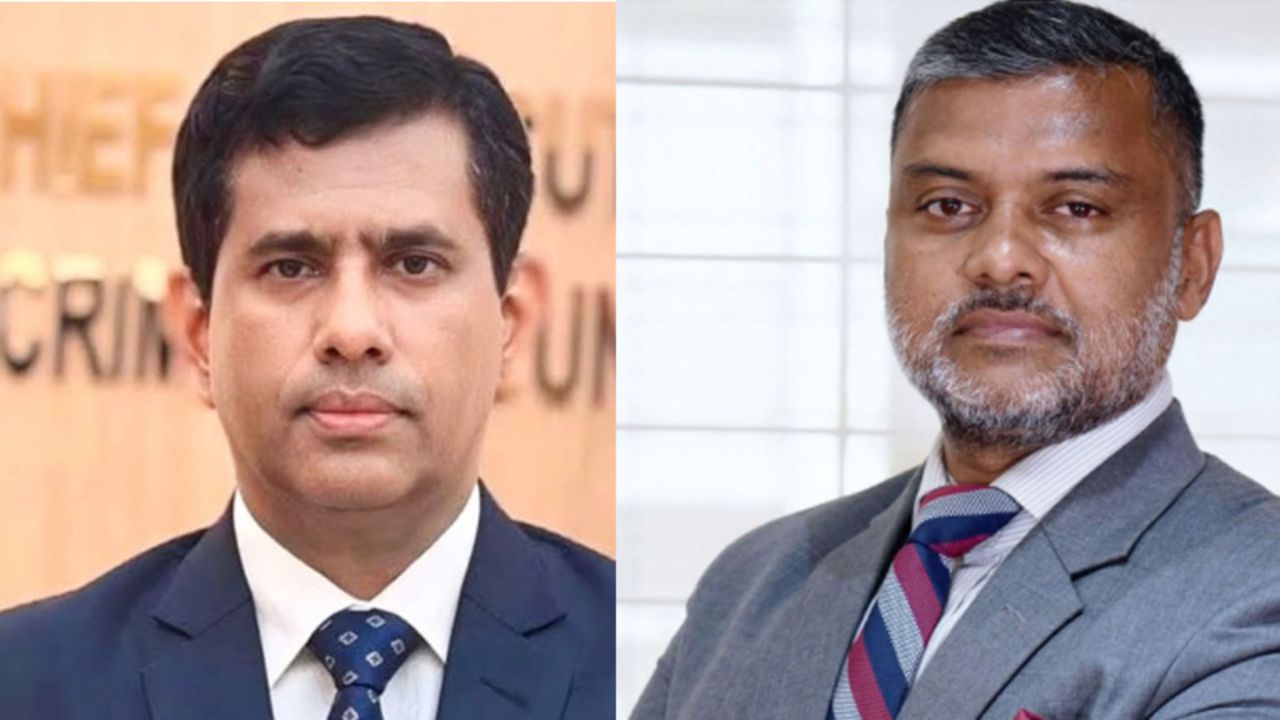

Defence lawyers in the Nusrat Jahan Rafi murder case have raised concerns over the psychological and social pressure faced by lower court judges in highly publicised criminal cases following the High Court’s judgement.
Speaking to journalists on Monday, 24 August, defence counsels Mohammad Tajul Islam and Mohammad Shishir Monir said intense media coverage of a murder case can turn it into a highly sensitive matter, leading to a form of public trial even before formal judicial proceedings begin.
They said such pressure can affect the independence of lower court judges in making impartial decisions and may eventually result in verdicts involving mass death sentences.
In its verdict on the Nusrat murder case, the High Court acquitted 10 of the 16 accused who had been sentenced to death by the lower court. Of the remaining six, the death sentences of two were upheld, while the sentences of four others were commuted to life imprisonment.

Tajul Islam said Bangladesh’s criminal justice system’s heavy reliance on confessional statements recorded under Section 164 of the Code of Criminal Procedure is a major obstacle to ensuring justice.
He said similar concerns have repeatedly been raised in cases of enforced disappearances. According to him, there have been allegations that individuals were held in captivity in cases involving enforced disappearances and extrajudicial killings before being produced in court after being forced to give statements under Section 164.
Tajul Islam said the country’s criminal justice system needs to move away from the practice of awarding convictions primarily based on such confessional statements.




He said the High Court Division’s observations in the Nusrat murder case verdict could help the judiciary reduce its excessive dependence on Section 164 statements.
Highlighting the role of the media, Tajul Islam said extensive media coverage often turns murder cases into sensational issues.
“When a case becomes highly sensitive in this way, it creates enormous psychological and social pressure on judges,” he said, adding that such circumstances can lead to mass death sentences.
He said he had observed a trend of death sentences being awarded extensively in several recent cases. According to him, the High Court, in its Nusrat murder verdict, identified the trend as dangerous and made important observations.
Tajul Islam said the High Court also highlighted limitations in the legal knowledge, understanding of the criminal justice system and sentencing practices of those who award such death sentences.
Shishir Monir also questioned the impact of media trials in high-profile criminal cases.
He said excessive media trials often make it difficult for lower court judges to reach proper decisions.
“That is what is called a media trial,” Monir said, adding that in many cases, a case is effectively tried on television and in the public sphere before formal court proceedings begin.
Such situations, he said, can ultimately prejudice the judicial process and undermine the delivery of true justice.