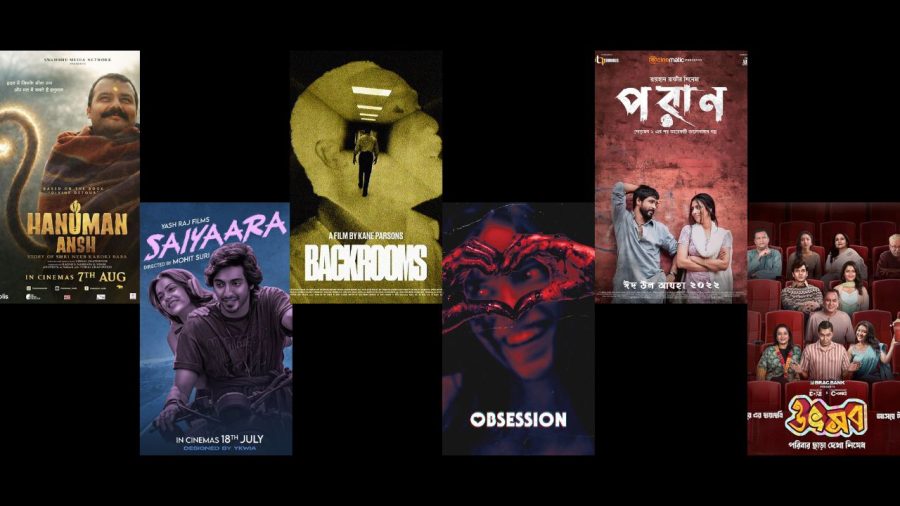



No superstar, lavish set, glossy spectacle, army of visual-effects artists or giant studio campaign — yet audiences keep buying tickets. Then the little film starts climbing while bigger productions lose ground. Across Bollywood, Hollywood and Dhallywood, the message is becoming harder to ignore: money can make a film bigger, but it cannot make audiences care.
The old formula was straightforward: bigger budget, bigger star, bigger opening, bigger returns.
Recently, Hanuman Ansh disrupted it. The Bollywood devotional drama opened at around Rs10 lakh, made about Rs1.08 crore in its first week and only Rs40 lakh in the second. Then came the turnaround. Third-week collections surged, taking it beyond Rs75 crore in India and later past Rs100 crore, according to reports. It faced bigger releases including Mirzapur: The Movie and Yash-starrer Toxic, yet kept growing.

Saaiyaara showed another route to the same result. Led by newcomers Ahaan Panday and Aneet Padda, the reported Rs40–50 crore film crossed Rs200 crore in India within nine days and eventually passed Rs337 crore in domestic net collections. Established star power was not the selling point; audience connection was.
Hollywood has produced even bigger shocks. YouTube filmmaker Curry Barker’s Obsession cost $750,000, opened at around $17.1 million and crossed $400 million worldwide, becoming Focus Features’ highest-grossing film. Kane Parsons’ Backrooms, made for a reported $10 million, opened at $81 million and crossed $100 million in under a week. Within two and a half weeks, it had outgrossed Scream 7’s entire theatrical run. Nearly 90 per cent of recent Backrooms viewers were under 35, while about 75 per cent of Obsession’s early audience were aged 17–34.




Dhallywood has its own surprises. During Eid-ul-Adha 2022, Din: The Day, Poran and Psycho entered the same holiday box-office race with vastly different budgets. Pre-release reports put Din: The Day at Tk100 crore and Poran and Psycho at Tk60 lakh each; later reports put Poran’s cost, including publicity, at about Tk87 lakh. Despite the gap, Poran completed 100 days and generated around Tk12 crore in reported ticket sales, including Tk7.22 crore from Star Cineplex and Tk2 crore from Jamuna Blockbuster. Utshob, made for roughly Tk2 crore, crossed Tk2 crore across three major multiplex chains within 16 days and later reached around Tk13 crore including overseas earnings, running for about 200 days.
But big-budget cinema is hardly finished. Spider-Man: Brand New Day, The Odyssey and Toy Story 5 have shown audiences still turn out in huge numbers for major theatrical events. Hollywood’s summer box office reached $4.6 billion from May through August, up 26 per cent year on year. The shift is not rejection of stars or spectacle; it is rejection of the idea that spectacle alone guarantees a ticket.
Younger viewers can discover films through YouTube, social media, clips and recommendations, allowing good stories to spread without huge campaigns. Word of mouth can turn curiosity into ticket sales. A blockbuster needs massive business to recover its investment; a smaller film needs far less and can deliver a much bigger return.
Bangladesh lacks a comprehensive official box-office system, so distributor, producer and cinema figures remain key references. Even so, audiences are not anti-budget. They are selective. They will pay for stars and spectacle when they deliver, but also for unfamiliar faces and modest productions when a story creates curiosity, emotion or connection.
The box office is no longer simply a race between big and small. It is a battle for attention.
When the lights go down, audiences cannot see the budget, banner or graphics. They see the story.