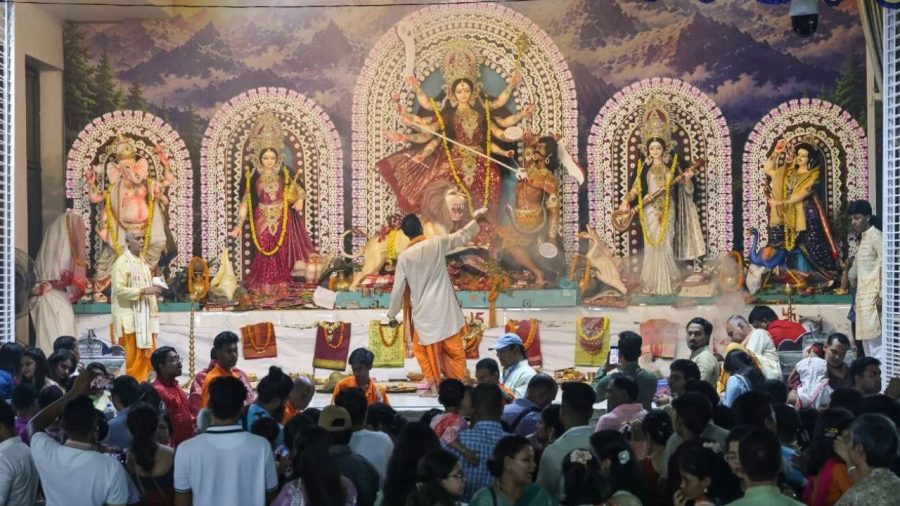



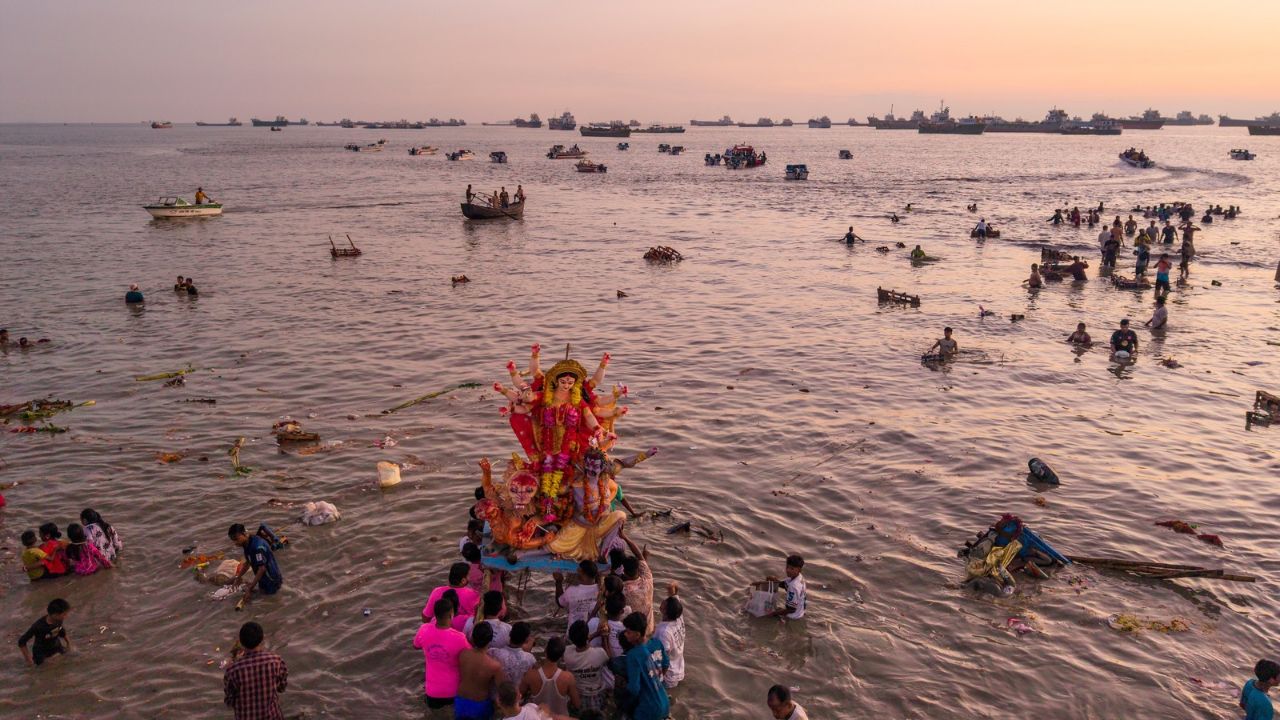
As goddess Durga heads back home to Kailash, marking the end of the grand Sharadiya Durga Puja, Bangladesh celebrates a peaceful, well organised and vibrant festival. Bangladesh has always looked forward to the Durga Puja – the most important part of the entire religious calendar of the Hindu community.
This festival teaches us that truth triumphs over untruth, justice prevails over oppression, and the welfare of the people of the universe.
The values of humanity and solidarity are universal and are not confined within the confines of any religion or faith but rather teach love and solidarity towards all of humanity.
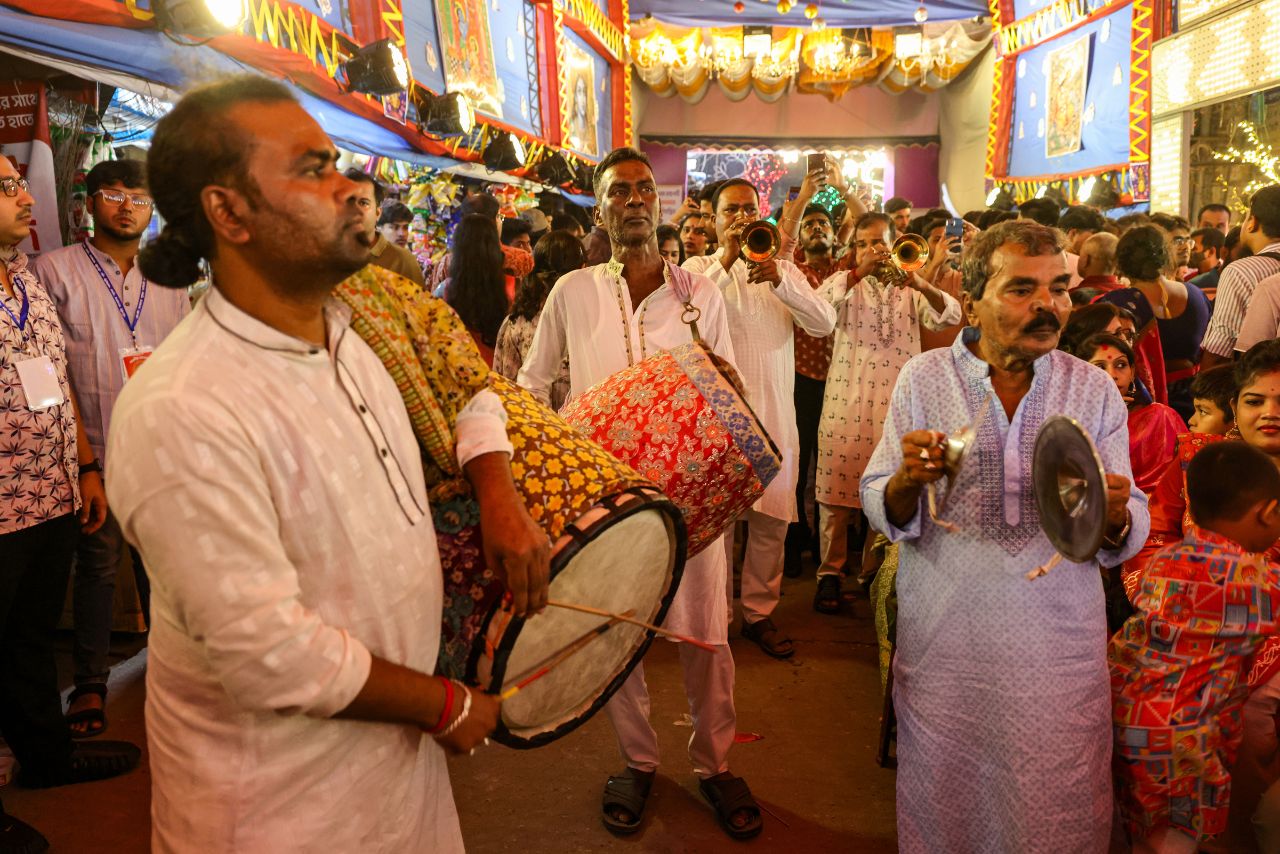
The entire country was in a festive mood during this year’s Durga Puja. With the inclusion of the weekend, the five-day holiday gave Dhaka city a vibe reminiscent of Eid.
According to the Bangladesh Puja Udjapan Parishad, there were a total of 33,851 puja mandaps this year, including 258 in the city of Dhaka alone, compared to almost 1,500 more pavilions than last year.
To maintain law and order, the government has taken extensive security measures – massive security deployments from Ansar and VDP, Bangladesh Police, SRB, APBn, BGB and Coast Guard, drones and special transport, state grants and extra holidays – to ensure a befitting Durga Puja.

Unlike last year, when unrest marred the festival, the general organisation was exemplary with the help of state assistance, and the prime minister visited many of the country’s major pavilions, including the historic Dhakeshwari Temple.
While the Durga Puja was overwhelmingly peaceful, it was the reports that caused alarm. The Bangladesh Puja Udjapan Parishad and the Mahanagar Sarbajanin Puja Committee revealed that just before the start of the festival, about 34 isolated incidents, including vandalism, theft and minor clashes, occurred in various places around the country.
But at the same time, forensic examinations, police investigations and field verification showed an entirely different picture.
The reasons turned out to be mainly internal clashes among the various puja committees – both about the management of shrines and misunderstandings about the allocation of state funds – petty thefts by known criminals and even some incidents committed by mentally ill people. The police have also concluded that none of the reported incidents were related to communal violence, targeted persecution of minorities or any efforts to undermine the right to freedom of religion. The reports accusing the state of a systematic attempt to destroy communal harmony through these incidents were completely baseless.



However, the Bangladesh Hindu Buddhist Christian Unity Council has raised several concerns, stating that the celebration of Durga Puja under the watchful eyes of police, drones, and political figures was shameful.
The Unity Council draws an important distinction between the fact that a festival may be peaceful because of tight security, but people of the minority religions may not feel completely secure. The findings in this regard must be viewed in conjunction with credible evidence rather than speculation and political machinations.
At the same time, isolated incidents may not be signs of systematic communal targeting, but they must receive impartial scrutiny and those responsible must be brought to book regardless of their motives or affiliations.
Following the August 2024 mass uprising, Durga Puja was celebrated amidst a tricky situation where political changes, local instability and diversion of resources to help flood victims led to a reduction in the number of pavilions and tightened security.
Despite this, there were some sporadic disturbances in places like Faridpur, Khulna, Kishoreganj, Rajbari, Chattogram – and the large-scale communal violence of 2021 still casts a long shadow over the festival.
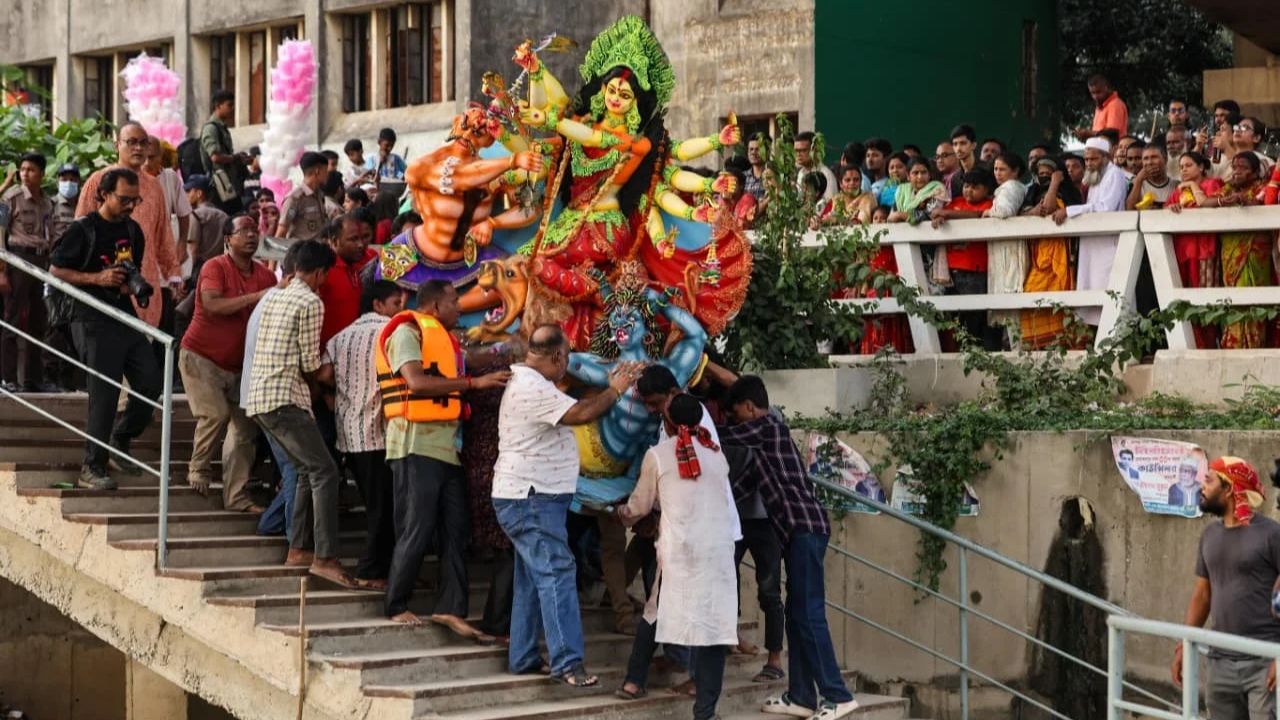
Civic leaders believe the situation is precarious enough that any relaxation of security can lead to renewed communal violence, so administrative and social vigilance must be maintained at all times. Prominent community leaders were satisfied with the security arrangements for this year, while also calling for improvements for future festivals.
Shri Subhashish Kumar Biswas Sadhan, general secretary of the Mahanagar Sarbajanin Puja Committee, said this year’s Puja was far better than previous years – security measures were taken on all fronts, and the prime minister’s presence gave courage.
Mahanagar Sarbajanin Puja Committee President Gopal Chandra Debnath said the main event was conducted in complete peace, despite some disturbances before the event began. Assistant Inspector General of Police Kamarum Munira said the festival ended peacefully, without any major untoward incident.
Authorities must ensure that this year’s improved security becomes the foundation for continued improvements. Security planning must start before major festivals begin, and intelligence gathering, rapid response mechanisms and inter-agency and community coordination must be in place throughout the year.
Investigations into communal violence must be transparent, timely and impartial, and those spreading misinformation to incite hostility must also be brought to book – but without suppressing legitimate grievances or criticism.
Equally important are the responsibilities of political leaders, religious figures, civil society and the media. They must not resort to exploiting religious identity for political gain, stoking hatred or inflaming communal tensions through misleading narratives.
The government must ensure equal protection under the law while citizens must reject divisive rhetoric that pits one religion against another. At heart, Durga Puja teaches us to combat falsehood and oppression and support those who are suffering. While differences in ideology and religion are inevitable, humanity and solidarity must remain at the core of our values.
Bangladesh was born in 1971 through the joint sacrifice of Muslims, Hindus, Buddhists and Christians – based on the principle that religion is a personal matter while the state belongs to everyone. The preservation of this pluralistic legacy requires the dedication of the government, law enforcement and civil society at all times.
Md Emdadul Hoque Howlader is the Deputy Editor at Daily TIMES of Bangladesh