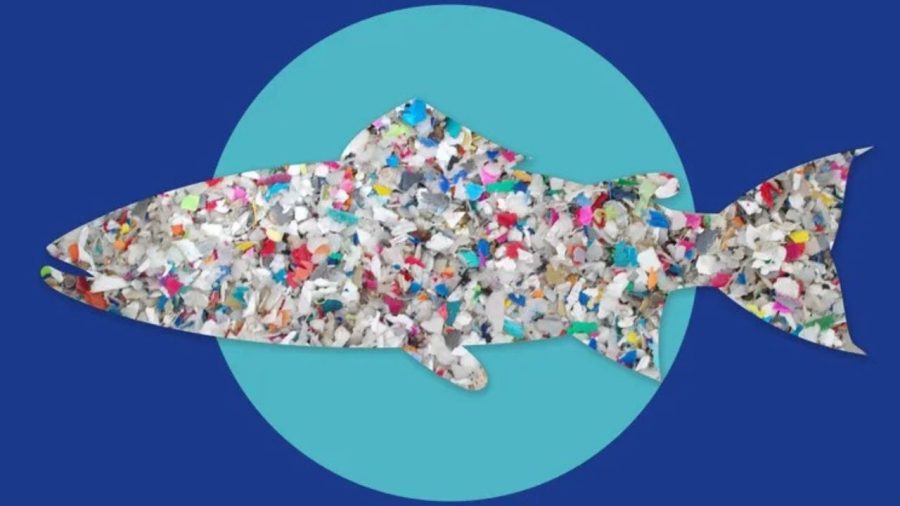



Harmful microplastic particles have been detected in fish raised in commercial freshwater aquaculture ponds, a major source of dietary protein and economic commodity in Bangladesh, raising fresh concerns over aquatic environment quality and food security.
Researchers discovered these microscopic plastic contaminants after analysing bottom sediment from 25 commercial fish ponds and 150 fish across six species in Trishal upazila, Mymensingh.
The findings emerged from an international joint study led by Md Bodiuzzaman Khan, professor at the Institute of Environmental Science and Disaster Management at Bangladesh Agricultural University (BAU).
The study, titled “Microplastics in Freshwater Aquaculture: Evidence of Sediment-Fish Transfer and Associated Ecological Risks in Bangladesh,” was published in the international scientific journal Environmental Pollution.
It evaluated the presence, characteristics, and potential ecological risks of microplastics in pond sediment and fish samples.
Ingestion rates across species
As part of the research, samples of pond sediment and six fish species – rui, katla, pangas, mrigal, common carp, and sorpunti – were collected from 25 commercial farms in Trishal. Chemical and microscopic analyses were conducted on 25 fish from each species.

A total of 90 microplastic particles were identified in the digestive tracts of the 150 fish, representing an average of 0.60 particles per digestive tract.
Microplastic ingestion rates varied significantly across species. Sorpunti recorded the highest average intake at 1.20 particles per fish, while rui and kalibaus showed an average rate of 0.68 particles per fish.
In terms of overall presence, pangas recorded the highest detection rate, with microplastics present in 40 per cent of tested fish, followed by rui at 36 per cent. Katla and mrigal both recorded detection rates of 20 per cent, while common carp and sorpunti recorded 16 per cent each.
The study highlighted a direct link between microplastic intake, fish habitat layer, and feeding habits. Bottom-dwelling fish, living at sediment level, showed the highest microplastic ingestion rate at 52 per cent.




Mid-water species recorded an ingestion rate of 35 per cent, whereas surface-dwelling fish recorded 13 per cent. On the basis of feeding habits, omnivorous fish exhibited a 58 per cent ingestion rate, compared to 42 per cent among herbivorous fish.
Pond sediment as plastic reservoir
Researchers also assessed the physical condition index of the fish using Fulton’s condition factor (K-value). Sorpunti, which ingested relatively fewer microplastics overall, recorded the highest K-value of 2.27.
In contrast, katla and pangas recorded significantly lower K-values of 0.35 and 0.37, respectively.
Microplastics were detected in the bottom sediment of all 25 tested ponds, averaging 11.04 particles per kilogramme of sediment.
Evaluating plastic pollution in pond sediment using the Pollution Load Index (PLI), researchers found index values ranging from 1 to 4.5, indicating extremely high pollution levels in several samples.
The researchers noted that pond bottom sediment acts as a long-term reservoir for microplastics, which enter fish digestive tracts during feeding, making habitat and feeding mechanisms key factors in exposure.
Chemical analysis of the identified plastics revealed multiple polymer types.
Among particles found in fish digestive tracts, polypropylene accounted for 24 per cent, polystyrene 21 per cent, polycarbonate 19 per cent, cellulose acetate 15 per cent, polyethylene terephthalate 13 per cent, and polyethylene 8 per cent.
In contrast, polyethylene was the most dominant polymer in pond sediment at 39 per cent, followed by polypropylene at 27 per cent.
The study identified several primary sources of plastic contamination, including plastic feed bags and packaging, nylon and polyester fishing nets, plastic tarpaulins used along pond banks, and the weathering of plastic pipes used in irrigation.
Most particles found in fish digestive tracts measured between 1 millimetre and 5 millimetres. Microplastics are defined as plastic particles smaller than 5 millimetres formed by the breakdown of plastic waste. The particles were predominantly fragmented, irregular shapes, and fibres, with black particles being the most common colour at 33 per cent.
Human health implications
Addressing potential health implications, lead researcher and BAU professor Bodiuzzaman said that while the study examined the digestive tracts of fish, microplastic accumulation in human-edible fish muscle was not directly measured.
As a result, the research cannot definitively confirm how much microplastic enters the human body through fish consumption or what the exact health impacts might be.
He added that future studies must focus on testing microplastic presence in fish muscle and evaluating its combined effects with heavy metals and other toxic chemicals.
He also emphasised the need for proper collection and recycling of plastic bags, nets, and equipment used in aquaculture, ending plastic waste disposal in ponds, adopting eco-friendly materials, and regularly monitoring pond water and sediment quality.