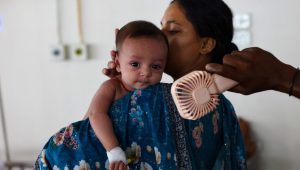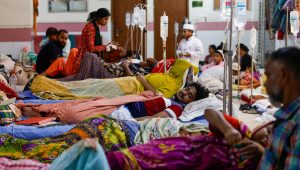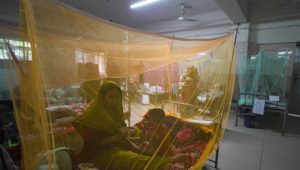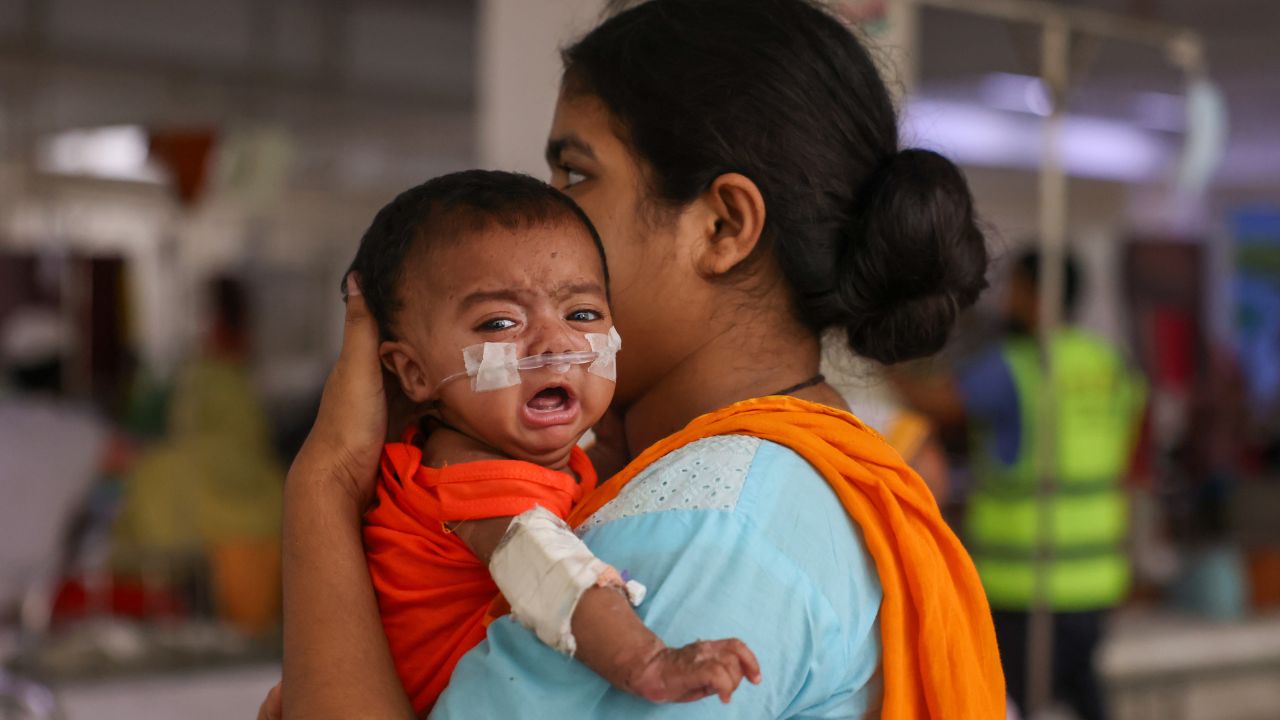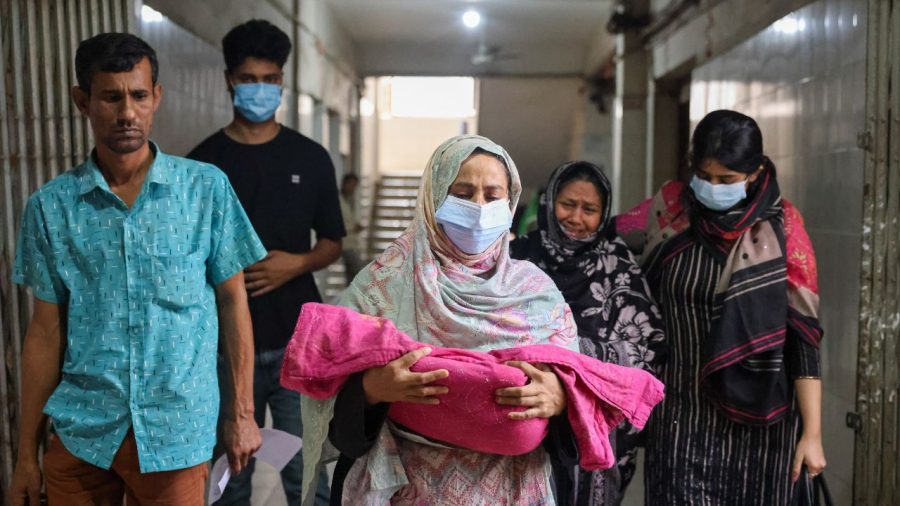



Azad, a Class IX student from Munshiganj, has been receiving treatment at Dhaka’s Mugda Medical College Hospital for eight days after contracting dengue for the second time in two months.
He was treated at the same hospital a month and a half ago when the infection affected his liver. Before fully recovering, he developed a fever again, and this time the infection spread to his lungs.
Azad lives in a municipal area.
His mother, Mohona Begum, said, “The municipality does fogging twice a day. We also keep our yard clean and do not let water collect anywhere, yet my son has contracted dengue twice. His father is in Saudi Arabia, so I have to do everything alone. I have been at the hospital for these eight days, eating or not eating.”
Azad’s suffering reflects a wider public health crisis. Despite government prevention programmes, cleanliness drives and vaccination campaigns, hospitals remain under pressure as dengue and measles infections and deaths continue.
Deaths from the two diseases have become a recurring feature of public health reports, raising questions about whether they are inevitable or reflect weaknesses in prevention and treatment.
The Directorate General of Health Services reported 119,801 dengue hospitalisations and 371 deaths so far this year, nearly double the 60,791 cases and 249 deaths recorded last year.

Measles has also taken a toll. Since 15 March, 218,870 people have been identified with measles-like symptoms. Laboratory tests have confirmed measles in 23,273 people. During the same period, 1,110 people have died with symptoms, while 104 deaths have been confirmed as measles-related.
Combined deaths from dengue and measles this year stand at 1,585, according to the DGHS.

Prime Minister Tarique Rahman inaugurated a nationwide cleanliness and mosquito-control campaign on 12 September. An emergency measles vaccination programme began on 5 April in 30 upazilas across 18 districts, followed by a nationwide catch-up campaign on 26 September, scheduled to continue until 31 October.
Government figures show vaccination coverage at 117.2 per cent of the target.
Public health expert Mohammad Mushtuq Husain, however, questioned whether exceeding the target reflected success.
“If there are 100 children and the target is set at 50, then vaccinating 60 or 70 will certainly exceed the target,” he said.

DGHS Disease Control Division Director Md Halimur Rashid maintained that the dengue situation was better than last year because the death rate had fallen despite rising infections.
“The cleanliness drive began from the Prime Minister’s Office itself. He does not know what other steps can be taken beyond this,” he said.


On measles, Halimur said, “Infection has fallen since June-July and the vaccination programme is continuing. And there have been no deaths from confirmed measles this month. If a child dies with a rash after a cold and fever, in many cases it is being assumed to be a measles death.”
Mushtaq Husain, however, said measles had reached epidemic proportions and dengue was approaching that stage. He called for both to be declared public health emergencies.
He attributed weaknesses in disease control to gaps in primary healthcare, early detection, treatment capacity and the implementation of prevention plans, rather than mosquito eradication or vaccination alone.
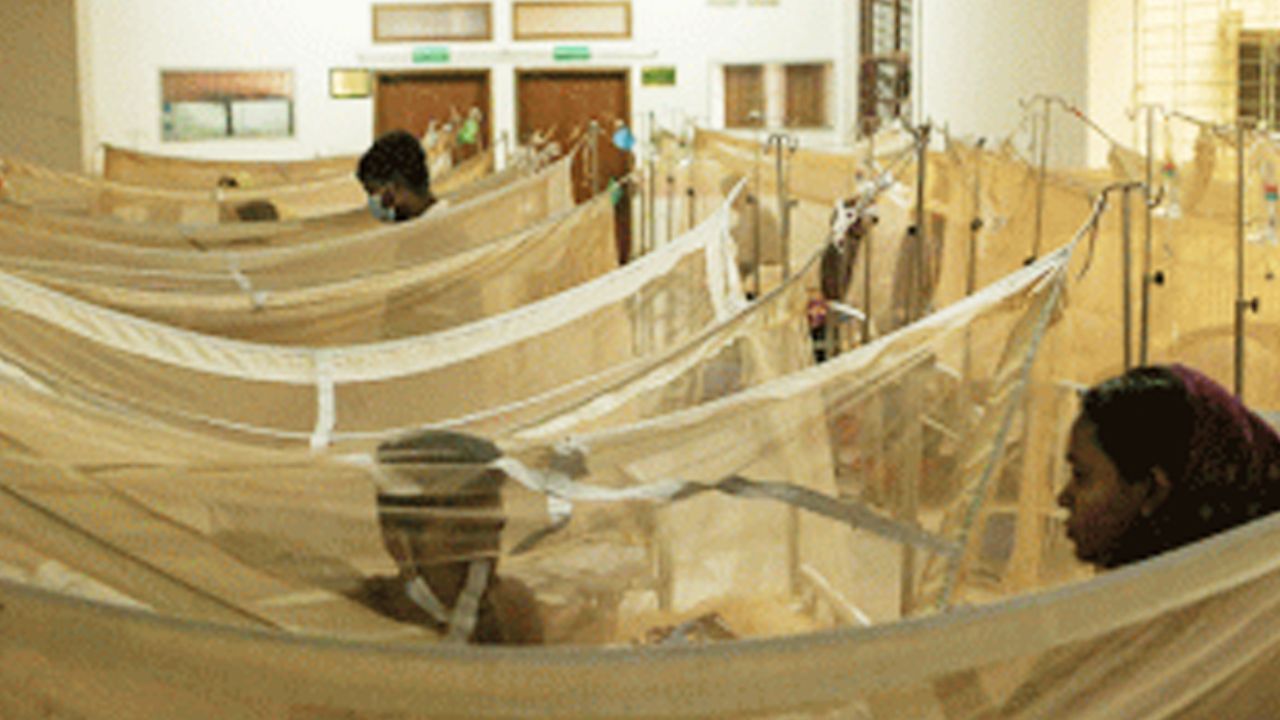
Major hospitals in Dhaka face acute shortages of intensive care unit (ICU) beds and limited access to high-flow oxygen, with some patients receiving treatment on makeshift beds on the floor.

“The lack of skilled manpower is also a barrier to treating critically ill patients. It will not be enough just to increase ICUs; trained manpower to run them must also be ensured,” Mushtuq Husain said.
He advocated a pyramid-shaped healthcare system, with stronger community-level diagnosis and primary treatment, improved access to healthcare in slum areas, better-trained nurses and medical technologists, and trained young volunteers.
Mushtuq criticised delays in mosquito-control operations. He said calls for a comprehensive mosquito-elimination drive in Dhaka before the dengue season had been ignored, allowing infections to spread nationwide.
The BNP’s election manifesto promised year-round, science-based mosquito eradication and integrated prevention programmes against dengue, chikungunya and malaria, rather than seasonal campaigns alone.
However, the 20 proposed measures for the overall development of the health sector, as outlined in the BNP’s election manifesto, are yet to produce any visible results.
The DGHS plans to introduce new technologies alongside conventional mosquito-control methods.

Halimur Rashid said preparations were under way to introduce the Wolbachia method.
Wolbachia is a naturally occurring bacterium introduced into Aedes mosquitoes in laboratories to reduce their ability to transmit dengue, Zika and chikungunya viruses. Once released, the bacteria can spread to subsequent mosquito generations through breeding with wild populations.
Studies from Australia, Brazil, Indonesia and Vietnam indicate reductions in dengue infections ranging from 69 to 96 per cent using this method.
The Bangladesh government and the international organisation World Mosquito Program plan to introduce the technique experimentally.
The icddr,b and entomologists have developed the wAlbB2-Dhaka strain, adapted to Dhaka’s environment. Halimur expects it to reduce dengue transmission capacity by about 92.7 per cent.
An initial pilot project is planned for the Dhaka North City Corporation area, although its implementation remains uncertain.
Halimur and Mushtuq, both experts said dengue vaccines offer no immediate solution, cautioning against using experimental vaccines without WHO approval.

Eminent physician Mobin Khan said there was no specific antiviral treatment for dengue, with care mainly focused on supportive measures. However, timely and appropriate treatment could keep the death rate below one per cent.
He said dengue serotypes 1 and 2 had predominated until last year, while serotype 3 had spread extensively this year.
Infection with one serotype generally produces lasting immunity against that type, but not against others, leaving previously infected patients vulnerable to reinfection.
Bangladesh has previously demonstrated its ability to control infectious diseases.
Following widespread deaths from kala-azar (black fever) between 1993 and 2013, the government, supported by WHO, introduced free liposomal amphotericin B injections and indoor insecticide spraying to eliminate sandflies.
In 2023, Bangladesh became the world’s first country to be recognised as free of kala-azar.
Malaria-control efforts launched in 2008 included free insecticide-treated mosquito nets in 13 high-risk districts, rapid diagnostic kits in remote areas and modern treatment. DGHS figures show that malaria deaths subsequently fell by 96 per cent.
According to Mushtuq Husain, those successes resulted from sustained efforts, continuous surveillance and house-to-house campaigns.