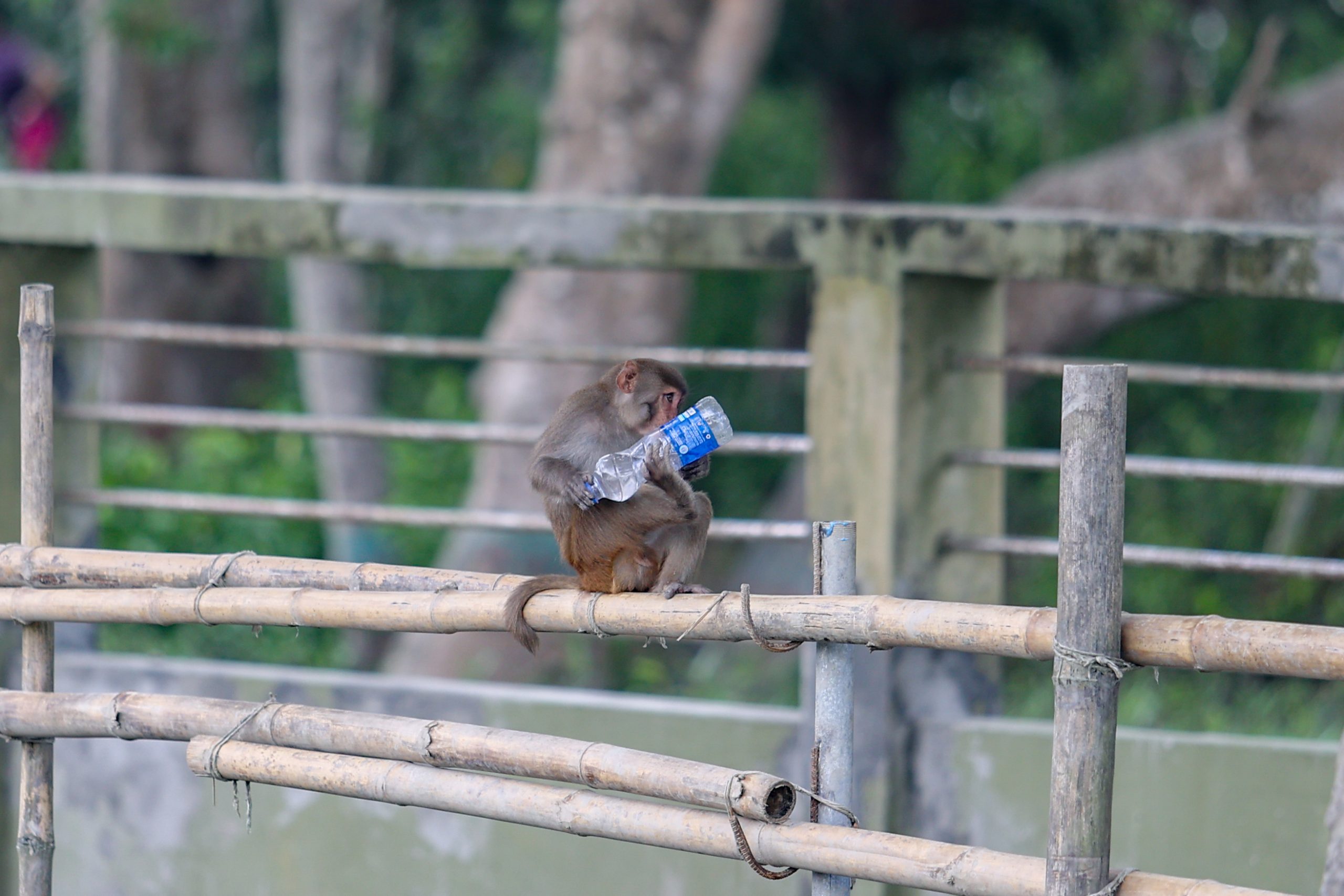
On Friday morning, the wide brown rivers that snake through the Sundarbans swelled with cruise vessels carrying hundreds of tourists. Some lounged on rooftop decks under neon lights; others swam in on-board pools. A few casually tossed empty bottles into the tide.
These ships — the MV Bono Shampan, the MV Alaska and a growing fleet of luxury liners — are promoted as “eco-friendly gateways” to the world’s largest mangrove forest. Operators promise safe, comfortable escapes deep into tiger country, complete with buffets and air-conditioned cabins.
But conservationists warn that these floating hotels are quietly accelerating an ecological crisis.
Plastic wrappers snarl the roots of mangroves. Styrofoam boxes bob in estuaries. Abandoned fishing gear drifts into dolphin habitat. A 2022 study published in the ‘Journal of Hazardous Materials Advances’ documented microplastics lodged in the bodies of crabs, shrimp and fish in Sundarbans rivers, with concentrations climbing higher up the food chain. Even plankton, the foundation of the aquatic ecosystem, is contaminated.
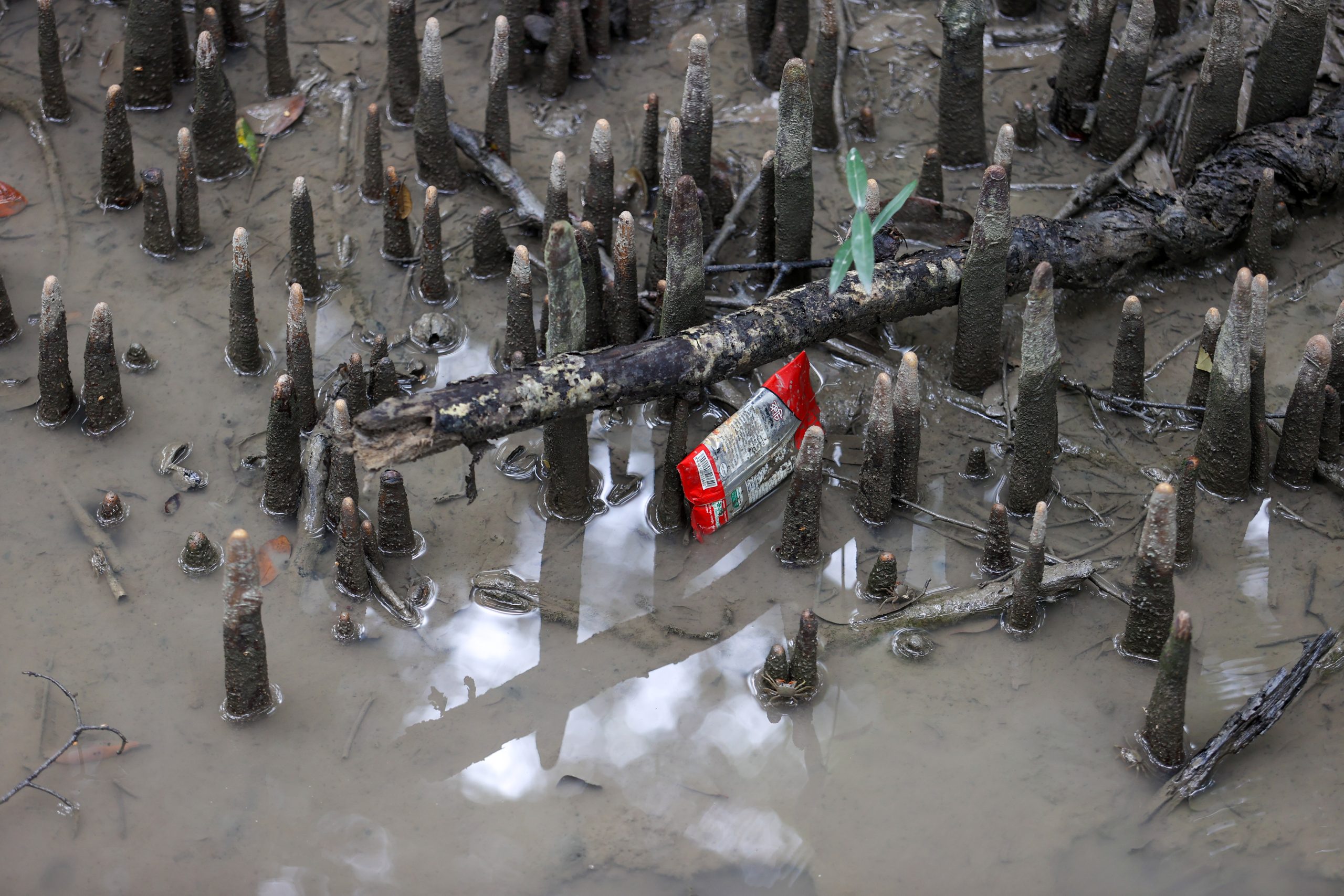
Bangladesh extended its annual tourism ban in 2022, closing the forest for three months — from June through August — to allow wildlife to breed. In 2023, authorities outlawed single-use plastics in the Sundarbans. But rules on paper have done little to stem the tide of waste choking the forest.

Conservation biologist Shahriar Caesar Rahman says the crisis mirrors urban behaviour creeping into the wild. “In Dhaka, people drive through the city and toss soda bottles onto the street,” he said.
“Now the same behaviour is appearing in the Sundarbans. The difference is that Dhaka has millions of people, while here, only a few hundred gather at a time. That makes it far easier to control. If tour companies simply restricted plastics and enforced proper waste management, the problem could be solved immediately.”




Ironically, disaster relief has added to the disaster. After Cyclone Amphan in 2020, more than 56 tons of plastic packaging from emergency aid materials ended up in the mangroves.
“Every boat carries bottled water, plastic plates, disposable cups,” said a forest officer, speaking anonymously because he was not authorised to discuss the issue.
“Now in the jungle, we only hear the hum of engines,” said local fisherman Abu Majid. “Even the birds don’t come near.”
The damage threatens the very purpose the forest serves. The Sundarbans is more than a tourist draw. It is a living shield protecting 4.5 million people along Bangladesh’s coast. Its roots blunt storm surges, its rivers feed fisheries, and its biodiversity is globally unique.
Yet scientists say its resilience is being eroded. Researchers at Jadavpur University estimate that the Ganges, Brahmaputra and Meghna rivers flush as many as 3 billion pieces of microplastic into the Bay of Bengal every day, much of it settling in the Sundarbans waters. Over time, the mangroves themselves become plastic sinks, trapping pollutants until they suffocate.
Another study by the ‘Canadian Wildlife Health Cooperative’ found microplastics inside the gastrointestinal tracts of more than a dozen species, from fish and molluscs to zooplankton.
Tour operators defend their business, saying cruises create jobs and generate revenue. But critics accuse them of profiting at the forest’s expense.
“The idea of eco-tourism here is a sham,” said Rubel Ahmed, a college student in the port town of Mongla. “These operators are making millions by selling an illusion of wilderness while quietly poisoning it.”
Without urgent regulation, scientists warn, the Sundarbans faces a slow ecological collapse. Plastic already strangles mangrove roots and poisons estuaries, weakening the forest’s natural defences against rising seas and cyclones.
“Tourism and exploration matter, but only strong laws, enforced without compromise, can ensure that both the Sundarbans and tourism endure together,” said the biologist. For wildlife, aquatic life, and millions who depend on this living shield, the threat is not distant. It is here.