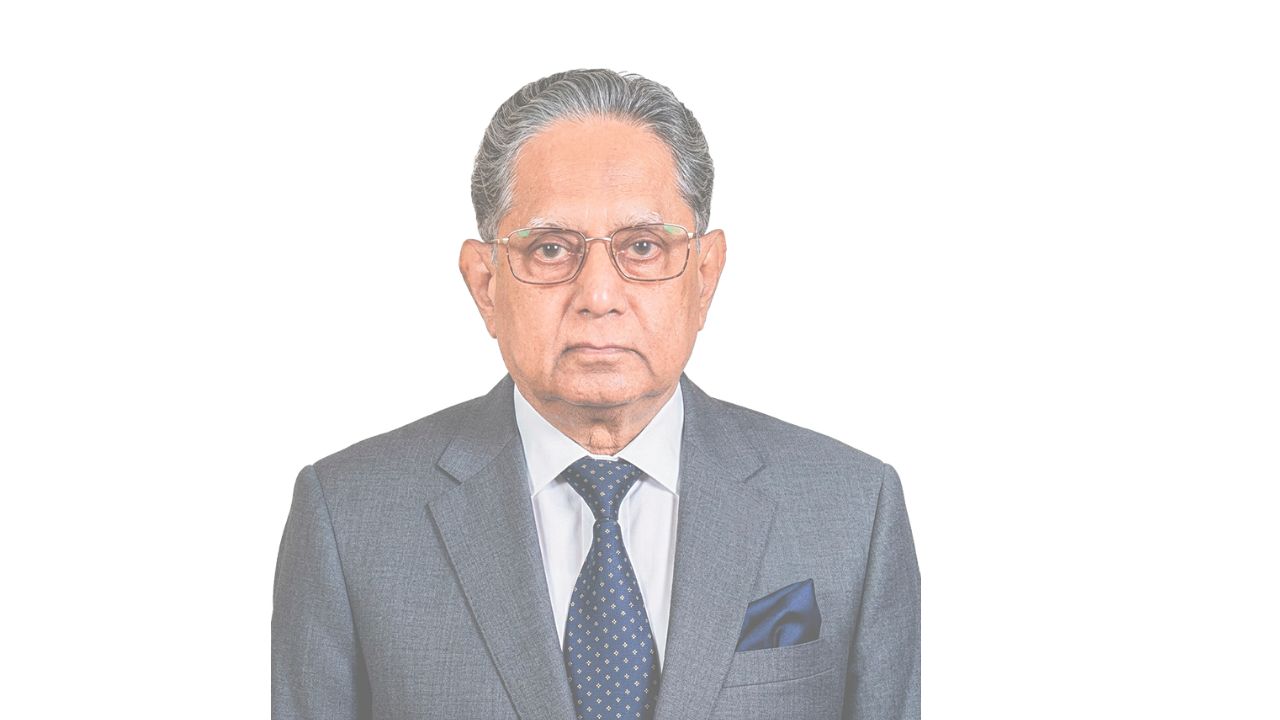



Bangladesh’s most experienced bank director Monzurur Rahman, chairman of Pubali Bank PLC, has framed Bangladesh’s banking sector as undergoing a structural reordering driven by governance discipline, depositor confidence and accelerating technology adoption.
The institutions with strong compliance frameworks are now outperforming those that once operated under what he described as political insulation, and the political regime change in August 2024 sharpened the distinction between strong and weak banks.
In an interview with TIMES of Bangladesh, he said, “Those who follow good practices, who are banking with the right strategy and professionalism are significantly growing now.”
Deposits, lending activity and export-linked flows are concentrating in better-governed institutions, while their capital adequacy is also improving in parallel.
“Deposits have moved, lending has moved, exports have moved,” he said. “All sides, good banks have performed well on all sides.”
He linked earlier stress in parts of the banking system to liquidity pressures that were partly obscured under previous macro and policy conditions, arguing that post-change visibility had exposed underlying imbalances more clearly.
At the centre of his argument is governance architecture. As board chairman of Pubali Bank PLC, he said his role is confined to structured oversight rather than executive decision-making.
“I preside over board meetings,” he said. “But decisions are made by the board. I do not take unilateral decisions. I believe in consensus.”

He said Pubali Bank’s model is built on a clear separation between governance and management execution, where the board appoints competent leadership and sets policy direction while day-to-day operations are left to executives without interference.
He contrasted this framework with episodes in the wider sector where politically connected influence had, in his view, weakened institutional discipline and compromised depositor interests.
Pubali, he said, had instead expanded through what he described as “grassroots deposits”, built over decades of trust and consistent service delivery.
“Banks stand on public money and protecting it, growing it should be the principle of each banker,” he said.
“When many banks have been failing to repay depositors, we kept the door open always,” he said, adding that Pubali never faced a situation where customers were unable to withdraw their deposits.




That governance discipline, he said, has translated into measurable balance sheet strength. Non-performing loans have halved to 2.2 per cent in a year, compared with the industry NPL exceeding 30 per cent due to the collapse in segments of the banking system.
Capital adequacy has also strengthened, rising to 15.36 per cent from 13.77 per cent within a year. Liquidity, he said, has remained stable through cycles of sector stress.
“As we remained compliant, disciplined, we never faced liquidity shortfalls,” he said. Beyond governance, he positioned technology as a central pillar of Pubali Bank’s next phase.
The institution, he said, has accelerated investment in digital banking systems, moving faster than many peers in adoption and using technology to improve efficiency, service delivery and financial inclusion.
“We have moved faster than most banks in digital banking,” he said, framing the push as strategic rather than incremental, with long-term competitiveness dependent on technological capacity alongside governance strength and depositor trust.
He also highlighted customer-centric pricing decisions, including the introduction of free internet-based electronic fund transfers up to Tk1 lakh.
The customers loved it and preferred to park their money in Pubali, he said, linking the policy to stronger customer loyalty and more stable low-cost deposits.
That trust, he said, has supported sustained expansion.
Pubali Bank ranked fourth among listed banks in deposit growth over six years to March, posting a compound annual growth rate of 20.7 per cent. Deposits stood at over Tk92,71,000 crore at end-March, reflecting strong mobilisation across retail and institutional segments.
Monzurur Rahman said his wider professional background, citing international exposure and early entrepreneurial experience, helped enrich his professionalism.
In the early years, he absorbed structured business practices and governance discipline that later shaped his approach to banking and insurance business in Bangladesh.
He founded the country’s first private sector life insurers, Delta Life Insurance Company, describing it as part of efforts to deepen formal savings channels and strengthen the long-term financial system.
Experience reinforced his emphasis on institutional integrity. “I learned good business practices,” he said, linking it directly to his focus on compliance, risk management and governance standards at Pubali Bank.”
He first became a director in 1967 at Eastern Mercantile Bank, which was later nationalised in 1972 before returning to private ownership as Pubali Bank.
He rejoined the board in 1985 after privatisation, marking what he described as a multi-decade institutional association.
He warned that governance failure represents the most irreversible form of institutional damage.
“Organic business losses can be recovered, but governance failure cannot be,” he said, arguing that discipline, once weakened across generations, is difficult to restore.
Pubali Bank’s strategic direction rests on three pillars—strict governance, non-intervention in day-to-day operations and accelerated digital banking adoption.
The structure preserves managerial autonomy while maintaining board-level oversight. On leadership, he referred to the appointment of Mohammad Ali as managing director and CEO, citing his academic background across computer science, development economics, finance and marketing alongside long banking experience.
“He has four master’s degrees, all with first-class results and top academic standing,” he said. “With that background, he should be reliable in making the right business decisions, not the directors.”
Monzurur Rahman said he never met borrowers to discuss loan applications. Pubali Bank’s long-term trajectory is anchored in governance credibility, depositor confidence and technology-driven transformation, he said, arguing that the forces together will define its next growth phase in a banking sector undergoing rapid rebalancing.