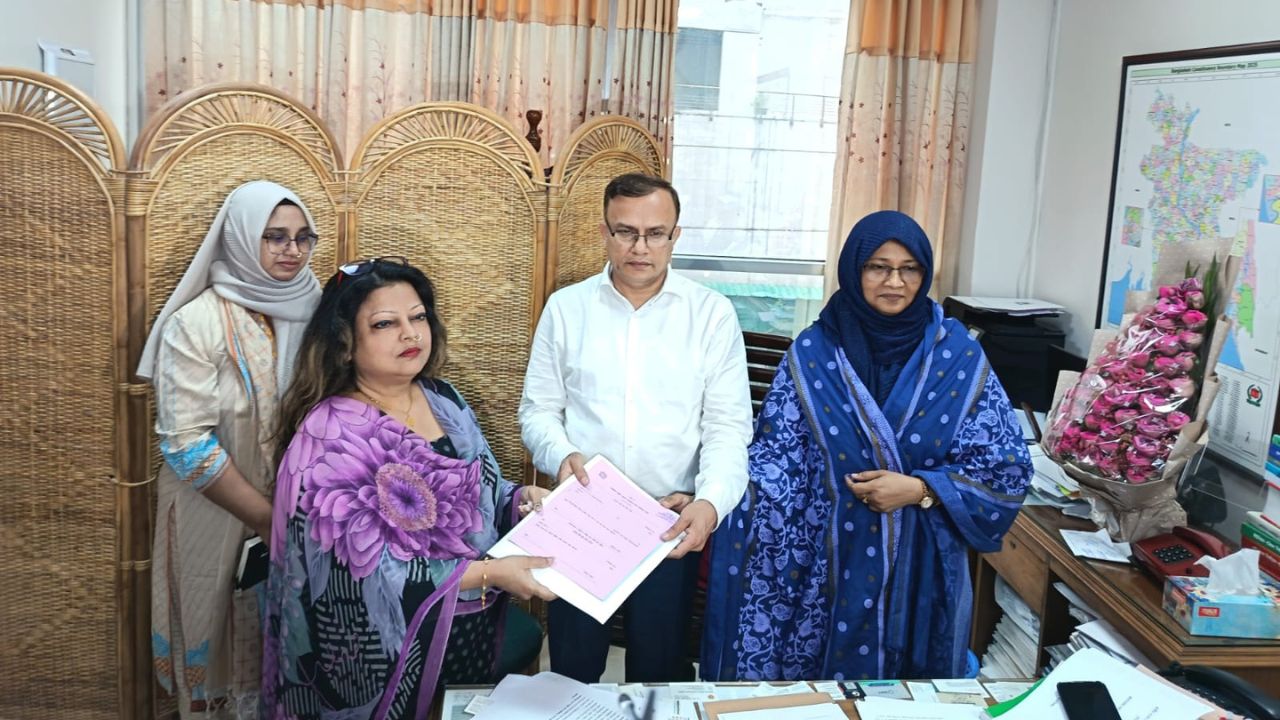



The Alliance for Fair Election and Democracy (AFED) has expressed deep concern over the low number of women nominated by political parties for the 13th national election, while also highlighting multiple violations of the electoral code of conduct during ongoing campaigns.
Presenting its preliminary pre-election observation data at a press conference held at the National Press Club on Monday, the organisation unveiled a set of urgent recommendations aimed at ensuring a credible electoral process.
Supported by the European Union and the European Partnership for Democracy, AFED has deployed 175 long-term observers across the country since 28 December 2025.
On election day, the alliance plans to further strengthen its monitoring by deploying 1,800 sample-based observers and 400 short-term observers to oversee the voting and counting processes.

While 59,558 polling centres have been prepared nationwide, AFED noted that gender balance and minority inclusion were considered in the recruitment of polling staff in only 39 per cent of cases, even though 82 per cent of staff have already completed their training.
Vote buying and material violations
A total of 2,034 candidates are contesting the upcoming election, including 80 women and one transgender candidate, a participation rate that AFED finds deeply concerning.
Although the alliance described the campaigning period as largely peaceful, it documented significant breaches of electoral rules, including 27 incidents of vote buying involving cash, essential goods, transport tokens, and mobile recharge credits.


Observers also directly witnessed 56 instances of food distribution and two cases of cash distribution during campaign events. Additionally, regulations regarding campaign materials have been frequently ignored, with reports of unauthorised colours, oversized banners, and the use of prohibited images.
Intimidation and election violence
The safety and voting rights of minority communities have also come under scrutiny, with AFED documenting nine incidents of harassment and intimidation targeting these groups in Jashore, Patuakhali, Dinajpur, and Khulna.
While the overall level of election-related violence has remained low, the organisation expressed alarm over recent reports of killings and violent clashes in Bhola, Bagerhat, Patuakhali, Chattogram, Sirajganj, and Mymensingh.
AFED received 25 reports of riots and physical attacks against campaign workers and volunteers, yet political stakeholders filed formal complaints in only half of these cases. Furthermore, 75 incidents of general intimidation and harassment were documented by the observers.
Election Commission and transparency
AFED welcomed the Election Commission’s efforts to enhance transparency, including the decision to lower the minimum age for observers from 25 to 21.
However, the alliance pointed out that many of the 81 newly accredited national observer organisations lack experience and have undisclosed funding sources.
Calling for a smooth and credible polling day, AFED urged the commission to immediately address operational challenges and ensure that women and minority communities can exercise their right to vote freely and in secrecy.
The alliance, a non-partisan platform of 30 civil society organisations established in July 2025, also called on security forces and political parties to maintain law and order during and after the election.