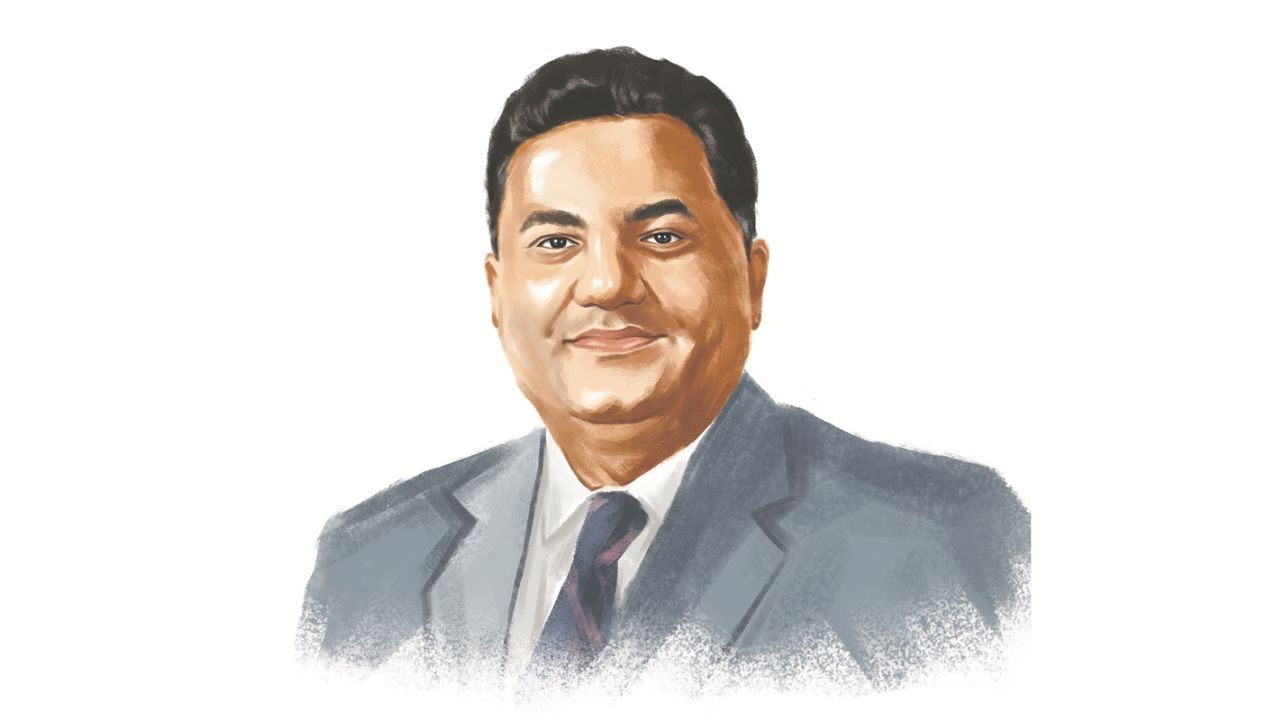

The economic outlook for 2026 is cautiously optimistic, with expectations of gradual recovery and improving business confidence, said IPDC Finance PLC Managing Director Rizwan Dawood Shams.
“While global and domestic risks remain, 2026 is widely viewed as a transition year from stabilisation toward selective and carefully managed growth,” he told TIMES of Bangladesh in an interview, while sharing his new year business plans.
With inflationary pressures expected to ease and policy conditions becoming more stable, he said the operating environment is likely to become more predictable.
Reflecting on the immediate past, Rizwan Dawood Shams described 2025 as a year of consolidation and strengthening for Bangladesh’s non-bank financial institution (NBFI) sector, “underpinned by resilience and discipline.”
Throughout the year, he said, the sector operated in a cautious macroeconomic environment where political conditions, elevated inflation and high interest rates weighed on business sentiment, leaving trade activity and private-sector credit growth subdued.
At the same time, strong remittance inflows and improvements in external balances helped support overall macroeconomic stability, he said, while regulatory reforms strengthened governance, transparency and supervisory discipline in the financial sector.
Despite industry-wide credit growth remaining modest, those reforms, he said, helped build a stronger foundation for sustainable growth in the coming years.

2025: a confidence-building year
Turning to IPDC Finance PLC, Rizwan Dawood Shams said the company, a growth champion for a decade, deliberately followed a quality-led strategy last year.
“For IPDC, 2025 was a constructive and confidence-building year marked by quality-led progress,” he said.
Across SME, consumer and corporate finance, he said IPDC prioritised prudent credit selection and disciplined execution rather than volume-driven expansion.
Instead of chasing scale, the institution focused on portfolio quality, funding stability and operational discipline, while placing strong emphasis on strengthening human capital through enhanced training and capability-building initiatives.
Alongside these efforts, digitisation and process automation continued to advance, and the ongoing integration of sustainability further strengthened IPDC’s long-term strategic positioning and institutional credibility, he said.




On the reform front, Rizwan Dawood Shams said measures taken in 2025 improved macroeconomic stability and predictability.
Stronger external balances, supported by remittance inflows, combined with improved regulatory oversight helped reduce systemic vulnerabilities, he said.
However, private investment activity remained cautious amid high financing costs and uncertainty, while slower trade flows and capital machinery imports reflected restrained business expansion.
Within the NBFI sector, he said 2025 also brought notable structural progress, particularly in governance, asset quality management and liquidity practices.


At the same time, “some longstanding challenges continue to require attention,” Rizwan Dawood Shams said.
“Limited access to stable, long-term funding can create maturity mismatches and constrain the financing of longer-term productive investments,” he said.
Further strengthening of legal and judicial processes, he added, would support more timely and effective loan recovery.
Even under sector-wide pressure on asset quality, well-managed institutions have shown resilience through strong regulatory compliance, disciplined growth and prudent risk management, he said.
What shapes IPDC’s business planning
Looking ahead to 2026, Rizwan Dawood Shams said the transition from stabilisation to selective growth is shaping IPDC’s business planning.
For the year ahead, IPDC is aligning its strategy toward quality-led growth while maintaining strong asset quality, liquidity discipline and risk management standards.
Particular emphasis will remain on sectors with resilient demand and sound fundamentals, especially cottage, micro, small and medium enterprises, consumer finance and well-structured corporate opportunities that support productive economic activity.
Environmental, social and governance considerations, he said, continue to remain central to IPDC’s planning approach.
“We continue to embed responsible and sustainable finance principles into our decision-making processes, supporting inclusive growth and climate-conscious financing,” Rizwan Dawood Shams said.
At an institutional level, he said IPDC is strengthening its foundations through investments in governance, technology, data-driven credit assessment and process efficiency to enhance customer experience and operational readiness.
Careful management of funding strategies, he added, is also aimed at ensuring stability and better alignment between the maturities of assets and liabilities.
Summing up the year ahead, Rizwan Dawood Shams said IPDC’s approach to 2026 reflects a prudent and forward-looking mindset.
“By combining disciplined growth, sustainability-aligned opportunities and strong governance, IPDC aims to navigate the improving economic environment responsibly while remaining resilient to external uncertainties,” he said.