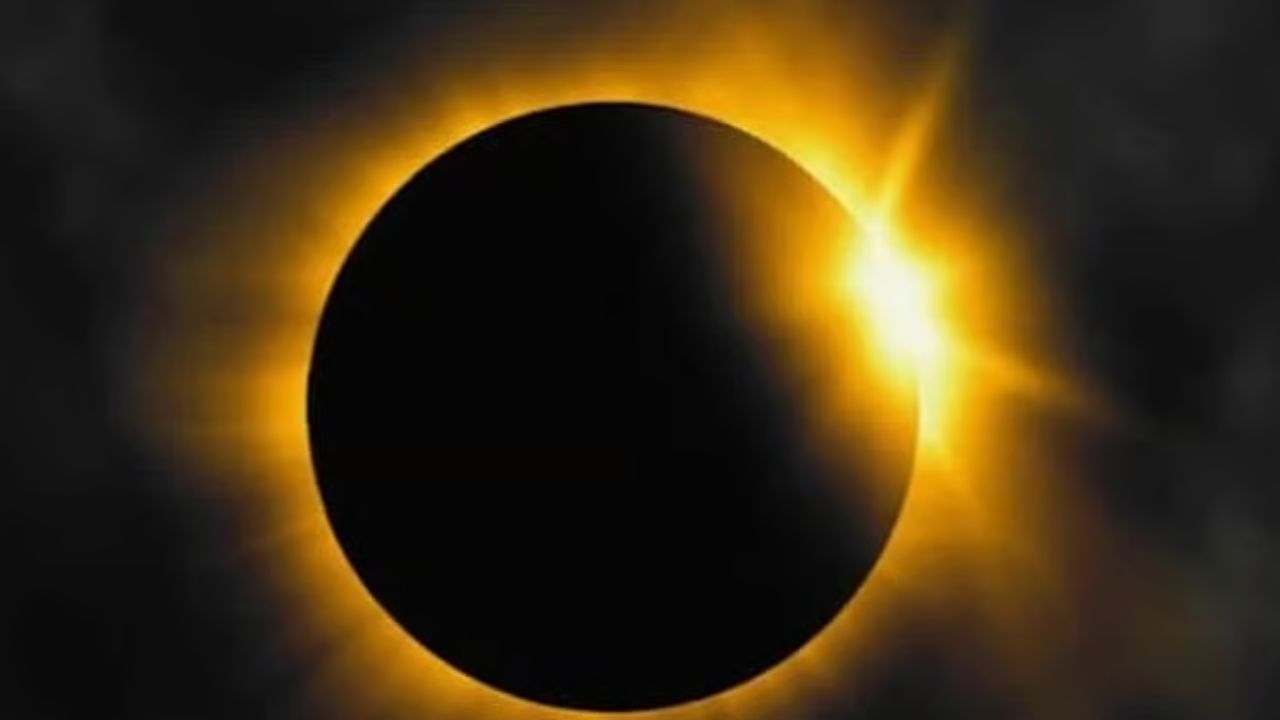



Earth is poised for a rare celestial spectacle on Wednesday (12 August), as a total solar eclipse sweeps across the skies. For the first time in nearly two years, the Sun, Moon, and Earth will align in perfect symmetry, allowing the Moon’s shadow to swallow the Sun’s disk and briefly turn day into night.
Certain regions will experience a brief transformation of daylight into deep darkness. The eclipse process will begin at 3:34pm GMT, NASA said.
The Moon’s shadow will then swiftly move across the Earth. During this time, the Moon will position itself between the Earth and the Sun, making the Sun fully invisible from specific regions. With sunlight completely blocked, those areas will see night‑like darkness in the middle of the day.
The path of totality for this eclipse will stretch about 8,300 kilometres. Starting from the Arctic coast, it will pass near the North Pole and move across Greenland, Iceland, northern Portugal, and northern Spain. The Sun will remain fully obscured for anywhere between 20 seconds and more than two minutes.
Beyond the path of totality, large parts of Europe, Africa, and North America will witness a partial eclipse, where the Moon will cover only a part of the Sun. Experts say that clear skies will provide the best viewing experience of this rare event.
Bangladesh, however, is not included in the path of totality. Since the eclipse is centered over the North Atlantic and Europe in the Northern Hemisphere, it will not be visible from South Asia.
Although the eclipse is scheduled to begin at 9:34pm Bangladesh time on Wednesday, it will not be observable from the country’s skies.
What is a solar eclipse?
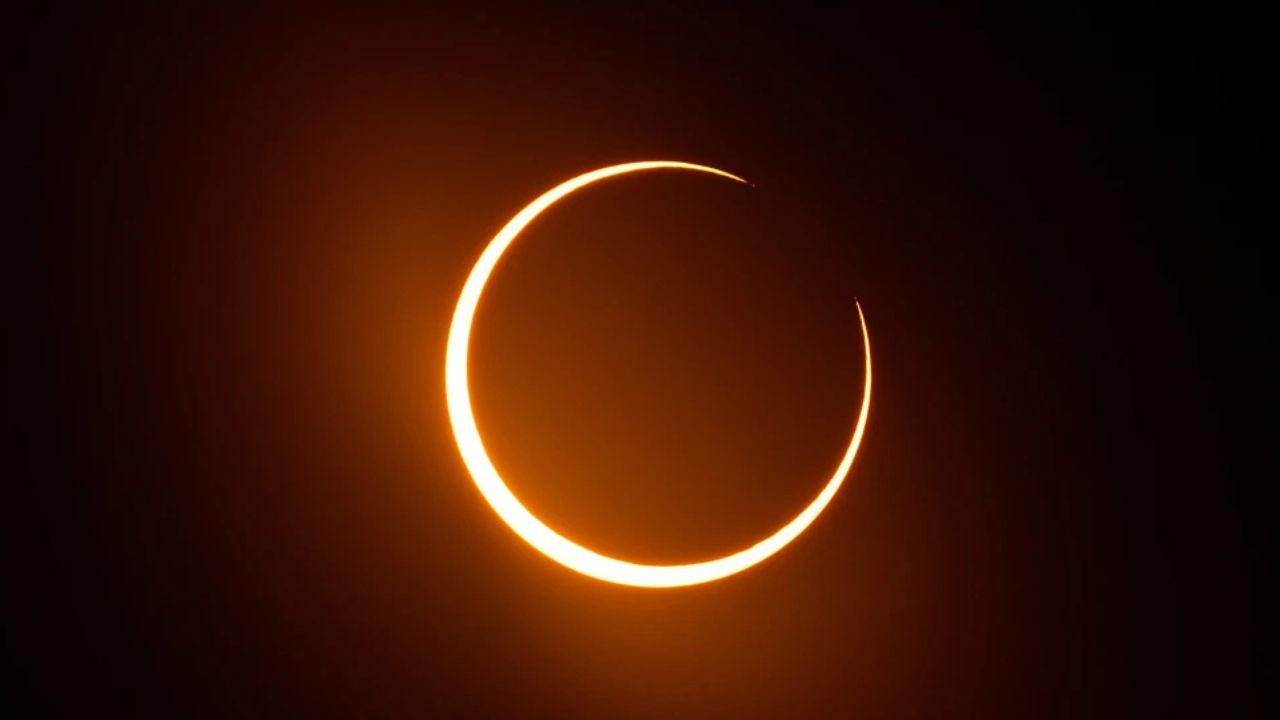
A solar eclipse takes place when the Moon moves directly between the Earth and the Sun, casting its shadow across the Earth’s surface.

Observers experience a total eclipse when the Sun’s light is completely blocked by the Moon, placing them in the umbra, the darkest part of the Moon’s shadow.
In contrast, a partial eclipse occurs when only part of the Sun’s light is obscured, meaning viewers are located in the penumbra, the lighter outer shadow.
“The Moon and Sun have to line up precisely for the Moon to fully cover the Sun and for you to see a total eclipse,” Megan Argo, a reader in astrophysics at the University of Lancashire and vice‑president of the Society for Popular Astronomy, told The Guardian.
“Because the orbit of the Moon is slightly tilted, it doesn’t appear to cross the disc of the Sun from our perspective each time it orbits the Earth,” Argo said.
How rare is 12 August solar eclipse?
This total eclipse marks the first to be visible from mainland Europe in two decades. The UK last experienced such an event in 1999, when parts of Devon and Cornwall lay within the path of totality. The next total eclipse visible from the UK is not expected until 2090.




On Wednesday, the country will see only a partial eclipse, yet astronomers remain enthusiastic. Experts note that the next comparable event visible in the UK will not occur until 2081, underscoring the rarity of this week’s spectacle.
Where to watch?
The eclipse will be most prominently visible from Greenland, Iceland, northern Russia, and parts of Spain and Portugal. In northern Spain and northwestern Portugal, observers may even witness the rare spectacle of a total eclipse coinciding with sunset.
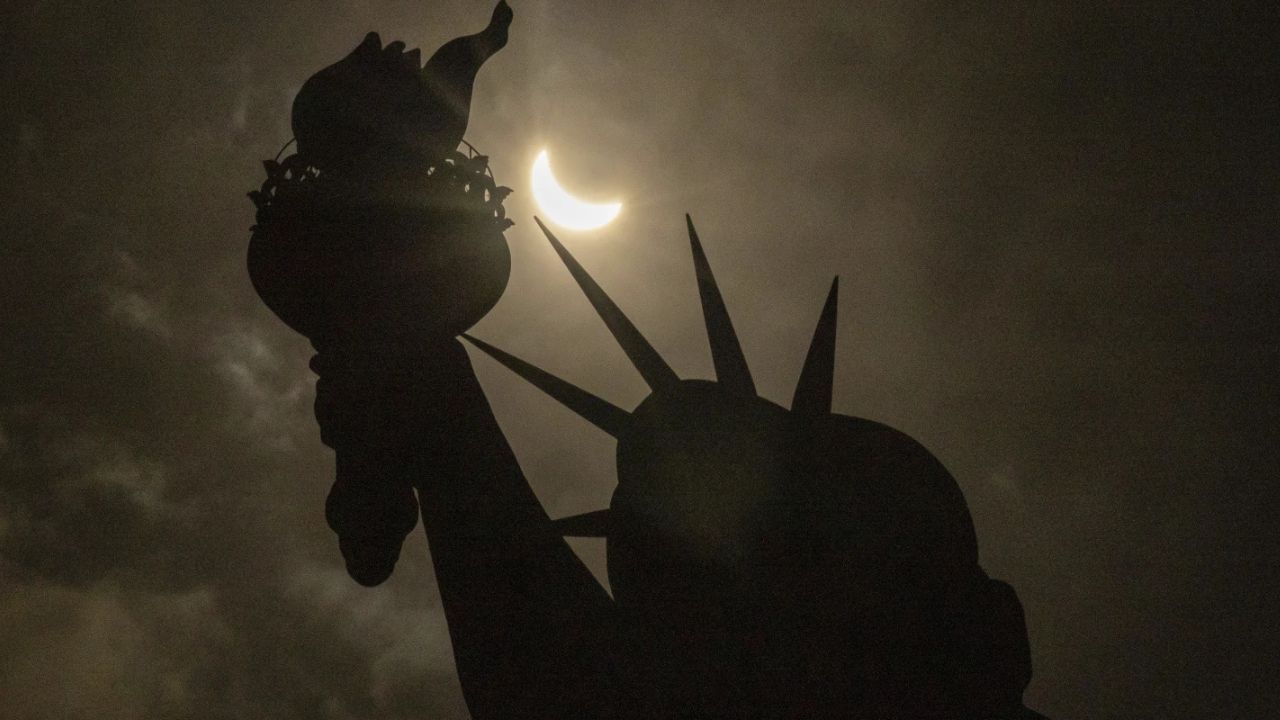
This has given the event special significance for mainland Europe, where people have long awaited the return of a total solar eclipse.
Many enthusiasts from around the world have already gathered near the path of totality, though their experience will ultimately depend on weather conditions. Cloudy skies or rain could obscure the crucial moments despite long preparations.
When will the rare eclipse take place?
According to NASA, the duration of totality will vary depending on location. In areas close to the central path of the eclipse, totality may last slightly more than two minutes.
Even the longest duration will remain under two and a half minutes, while in some places the total eclipse may be as brief as 20 seconds.
The regions where the Moon’s shadow fully covers the Sun’s disk are the only places where a total solar eclipse can be observed. Outside the central path, larger portions of the Moon’s shadow cover only part of the Sun, producing a partial eclipse.
Why should you take safety measures?
The last total eclipse was seen on 8 April 2024, across wide areas of the United States, Canada, and Mexico. Nearly two years later, people in certain regions of the world are again getting the chance to witness totality.
For mainland Europe, however, the wait has been much longer. The last total eclipse visible from Europe’s mainland occurred in 2006, while Spain’s mainland last saw such an event in 1905.

This year’s eclipse therefore offers residents of Spain a historic opportunity to witness totality again after more than 120 years.
Safety remains a critical concern during eclipses since looking directly at the Sun without protection can cause severe eye damage.
During partial phases, observers must use certified solar viewing glasses or safe solar filters. Only during the very brief moments of totality is it safe to look at the Sun without protection.
It is never safe to look directly at the Sun without proper eye protection. Specialized solar filters are essential for safe viewing.
Looking at any part of the Sun through a camera lens, binoculars, or a telescope without a certified solar filter fixed securely to the front of the optics can cause instant and severe eye damage.
During a partial or annular eclipse, observers must use safe solar viewing glasses (often called “eclipse glasses”) or handheld solar viewers at all times. These are not ordinary sunglasses; no matter how dark, regular sunglasses cannot protect your eyes.
Approved solar viewers are thousands of times darker and should meet the ISO 12312‑2 international safety standard. NASA does not endorse specific brands, but stresses compliance with this standard.
Before use, eclipse glasses or handheld viewers should always be inspected. If they are scratched, torn, or damaged, they must be discarded. Children should be supervised carefully when using solar viewers.
Importantly, eclipse glasses or handheld viewers must never be used in combination with cameras, telescopes, binoculars, or other optical devices. Concentrated solar rays can burn through the filters and cause serious injury.
For those without eclipse glasses or viewers, indirect methods provide a safe alternative. A simple pinhole projector — such as a small hole punched in an index card — can project an image of the Sun onto a nearby surface. With the Sun behind you, the projected image can be observed safely. However, you must never look directly at the Sun through the pinhole itself.