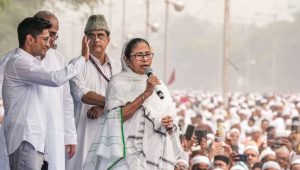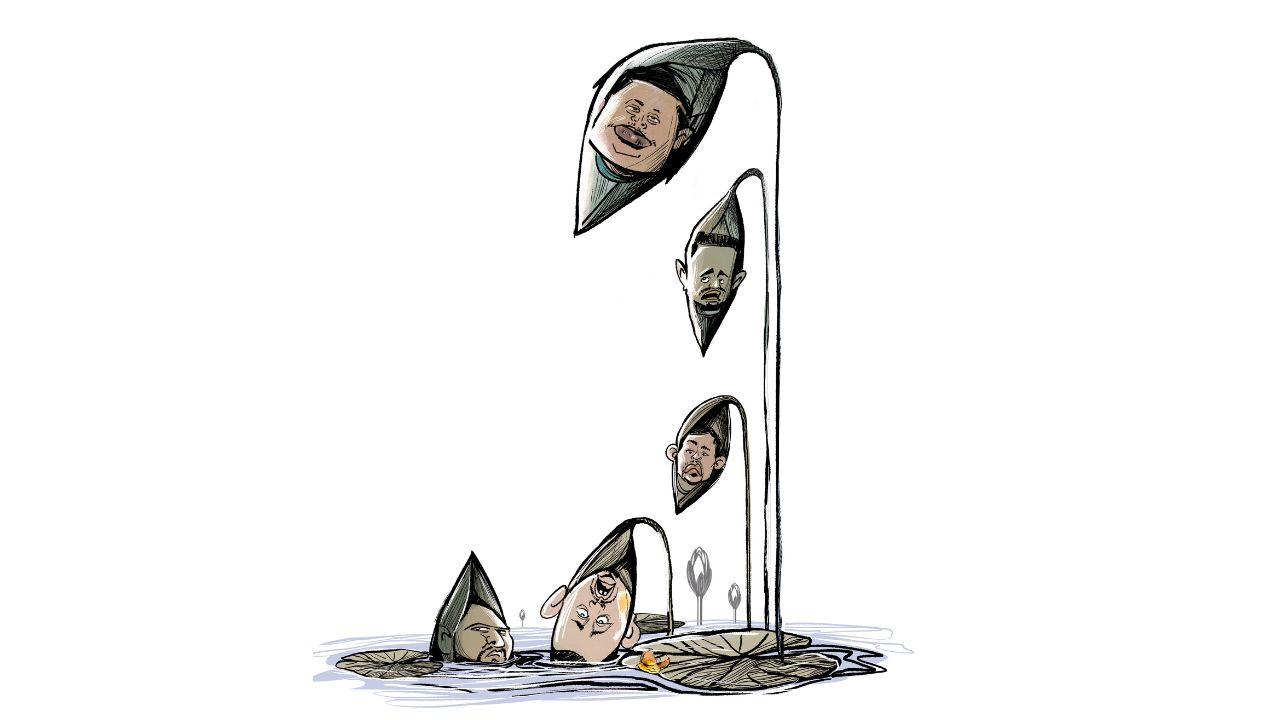



Recent attacks on leaders of National Citizen Party (NCP) have reignited debate over political violence.
While these incidents have largely been blamed on activists from BNP student and youth wings, analysts say they also risk overshadowing a broader political reality: NCP’s own organisational weaknesses and the performance of the Yunus-lead interim administration have both contributed to the party’s declining public standing.
The discussion intensified following a series of attacks targeting NCP leaders. In one incident, party’s chief coordinator Nasiruddin Patwari was attacked while returning from a march in the Sylhet region after tensions linked to a political programme in Habiganj.
Local media reports suggested that the attack followed controversial remarks Patwari had made about Prime Minister Tarique Rahman, prompting a strong backlash from local BNP supporters.
Regardless of the immediate trigger, analysts say such episodes reflect a deeper and persistent problem in politics: the inability of rival political actors to tolerate dissent without resorting to violence.
NCP emerged from the momentum of the July uprising, which brought a new generation of activists to national prominence and generated significant public goodwill.
At its height, the movement was widely regarded as a break from the country’s entrenched political culture, with supporters associating it with demands for accountability, institutional reform and anti-corruption measures.
Its rise also coincided with an unusual political moment. With Awami League largely absent from mainstream electoral politics and BNP remaining the dominant political force, NCP was viewed by some as a potential third political alternative.
However, analysts say its early popularity was driven as much by the emotional legacy of the protests and public frustration with traditional politics as by its organisational strength.

NCP won six parliamentary seats in the February 2026 election and emerged as a relatively small partner within the opposition alliance.
As the movement transitioned into a political party, expectations rose sharply. Several prominent figures associated with the uprising took up positions in the interim administration and later became involved in forming NCP, further blurring the distinction between the movement and the government in the public mind.
However, many of the reforms associated with the movement’s original demands—including improvements to governance, the justice system, public administration, law enforcement and anti-corruption efforts—have progressed more slowly than many supporters had anticipated.
Although NCP and the interim government remain institutionally separate, analysts say the public has often viewed them as politically linked.
As a result, dissatisfaction with the pace of reform has also affected perceptions of the party.
Some observers argue that the interim administration therefore cannot be fully separated from NCP’s declining popularity, given how closely the expectations generated by the movement became tied to the government’s performance.




Questions over transparency have further complicated the party’s image.
The interim government pledged greater openness, including commitments to disclose advisers’ asset declarations publicly. Critics say these expectations have not been fully met.
At the same time, allegations involving several advisers and former student leaders—including claims of irregularities or undue influence—have periodically surfaced in the local media.
While none of these allegations have been substantiated through publicly available investigations, analysts warn that delays in conducting independent scrutiny can erode public confidence, regardless of the eventual outcome.
Debates have also emerged over appointments within the public administration, although many of these issues remain unresolved and politically contested.
NCP announced a financial policy and crowdfunding initiative in 2025, making this an especially relevant test of whether its practices matched its promises. But, in reality, the party’s finances remained largely uncleared.
Leaders of Anti-Discrimination Student Movement, who later formed NCP, raised over Tk11 crore for flood relief.
Although nearly Tk2 crore was spent and the remainder deposited in bank accounts, they have yet to publish a financial statement detailing the collection, expenditure and their current status.
Beyond formal questions of governance, analysts say public perceptions have also been shaped by appearances.
Social media discussions have highlighted what critics describe as apparent changes in the lifestyles of some former student leaders following the movement, including images of expensive vehicles and associations with influential political figures.
There is no publicly available evidence that such lifestyle changes, in themselves, indicate wrongdoing, and analysts caution against drawing conclusions without verified facts.
However, they argue that the contrast between the movement’s original message of ethical renewal and subsequent public perceptions has weakened the moral authority that initially distinguished it from established political actors.
Alongside issues of governance and public perception, NCP has faced a structural challenge: transforming a protest movement into a functioning political organisation.
The large, spontaneous crowds that defined the July movement have not been consistently replicated since the party’s formation.
Analysts say this reflects a common difficulty faced by protest-based movements, which often struggle to convert short-term mobilisation into long-term organisational capacity based on local structures, policy development and sustained grassroots engagement.
Critics also argue that the party has often appeared reactive rather than policy-driven, relying heavily on confrontational rhetoric and social media campaigns instead of presenting detailed policy positions on issues such as inflation, employment, education, healthcare and administrative reform.
Transparency in candidate selection and women’s representation remained broader concerns across Bangladesh’s political parties before the election. NCP should be judged against the reform standards it claims to represent, not merely against the weaker practices of traditional parties.
Analysts emphasise that none of these criticisms justify attacks on political activists.
They argue that democratic competition requires peaceful political engagement and that disagreements over political speech cannot legitimise violence.
However, they also note that the public sympathy generated by such attacks has not necessarily translated into broader political support for NCP, partly because unresolved concerns over transparency, accountability and organisational maturity continue to shape public opinion.
Despite its recent setbacks, analysts say NCP has not entirely lost its political relevance.
They argue that rebuilding trust will require greater financial and organisational transparency, stronger internal democratic practices, more coherent policy positions and cooperation with independent investigations into any allegations involving party figures.
More broadly, they suggest that the party’s long-term prospects will depend less on its identity as a product of the July movement and more on its ability to demonstrate credible leadership on the everyday issues affecting voters.
The expectations generated by the uprising remain among the most significant political developments in recent history.
Whether those expectations can still be translated into a sustainable political alternative is likely to shape the country’s evolving political landscape in the years ahead.