
If weapons are essential for sustaining a conflict then there is something else which is just as, if not more important: military bravado!
Actually, bravado, bluster or “Dhapki” in colloquial Bangla is an essential element for all of life’s critical moments.
Keep the brave face up, show no fear and although the soul may be rattled, never take the linguistic back-foot.
That means, whatever the odds, the language should never show a feeling of hopelessness or despair.
And that’s what we are currently seeing being delivered on the middle-eastern conflict.
The war, which many thought would be over within weeks, has actually become a long drawn out affair – no winner in sight, no major breakthrough, only what looks like a re-enactment of the trench warfare of WW1.
Settle in, take a few shots every day, enjoy the military ration, play cards, browse the net and forget about the end.
Both sides solidly placed in their respective dug outs with any concrete advance almost impossible.

Meanwhile, the belligerent language never stops.
On the ground though, reality speaks of a stalemate, with a total capitulation of Iran appearing more like a fallacy.
The middle east conflict has taught us one thing: in modern day warfare, when an opponent has tech based weapons, an outright victory is impossible.
The concept of sending in soldiers or boots on the ground was sidelined long ago because Vietnam memories are vivid enough to remind what happens when alien boots are on the grounds of a hostile nation.
So, how exactly will this conflict bring a victory?




Actually, victory in the conventional sense in which a liberating army moves into a conquered country, flags waving is a thing of the past.
At least in the case of the ongoing middle-east conflict, that sort of victory may not happen.
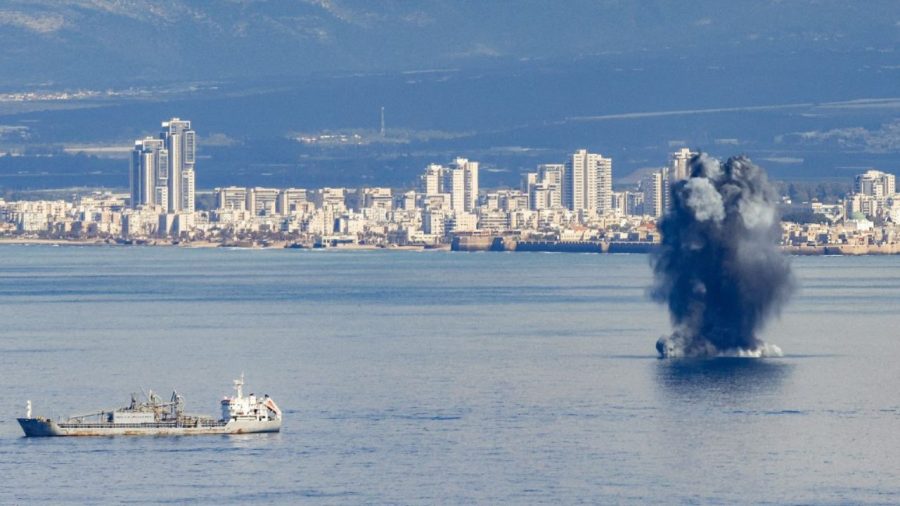
The rockets will be fired and in retaliation, the Hormuz will be under surveillance and respective allies will be wreaking havoc.
Stars and stripes flying in the end?
I leave that for you to decide.
The war has already disrupted global supply chains, triggered economic unrest across continents and the fact that all shops are closed in Bangladesh after 8pm is but a fall out of the USA-Iran joust.
With global economy on a volatile platform and public resentment growing, it’s only a matter of time before millions are on streets to force their governments to take a stand to end the war.
Oh, lest we forget, it’s also becoming expensive!
But one cannot just take a back step now because that would be tantamount to a loss of face with the rest of the world taking it as a defeat.
So what’s the alternative?
How about carrying on with the fight and while the missile strikes and retaliations are shown on television, make efforts to establish a direct link for talks?
As all this goes on, the rodomontade will escalate.
If we try to understand it through the common lines used in urban and rural clashes in Bangladesh: Tui amare chinos! (Do you know I am?), Ekkere Khaiya Halamu (I will devour you alive!), Aijka tui shesh (today, you are finished!).
Of course, the line of all lines is from our beloved villain Dipjol: Aijka tor Sunday Monday close koira dimu!
When we were at school, an idiom became a favourite of sorts: empty vessel sounds much!
Be that as it may, the fact remains war rages, economies flounder or try to adapt to desperate measures and the arms manufacturers are having a field day.
Six months later, Iran is still free, her allies, the Houthis, have the Red Sea chokepoint in control, the USA is carrying on the strikes using ultra-modern weapons and the military rhetoric remains bombastic as ever.
The US President Donald Trump celebrated his 80th birthday in June but will he be enjoying Christmas with the grin of the victor?
Honestly speaking, one feels this war will only prolong bother and irritation for others and, in the end, stop abruptly.
However, for the time being, the tit for tat action will go on!
Oh well, Oscar Wilde did say: as long was war is regarded as wicked it will have its fascination, when it’s deemed vulgar, it will cease to be popular!