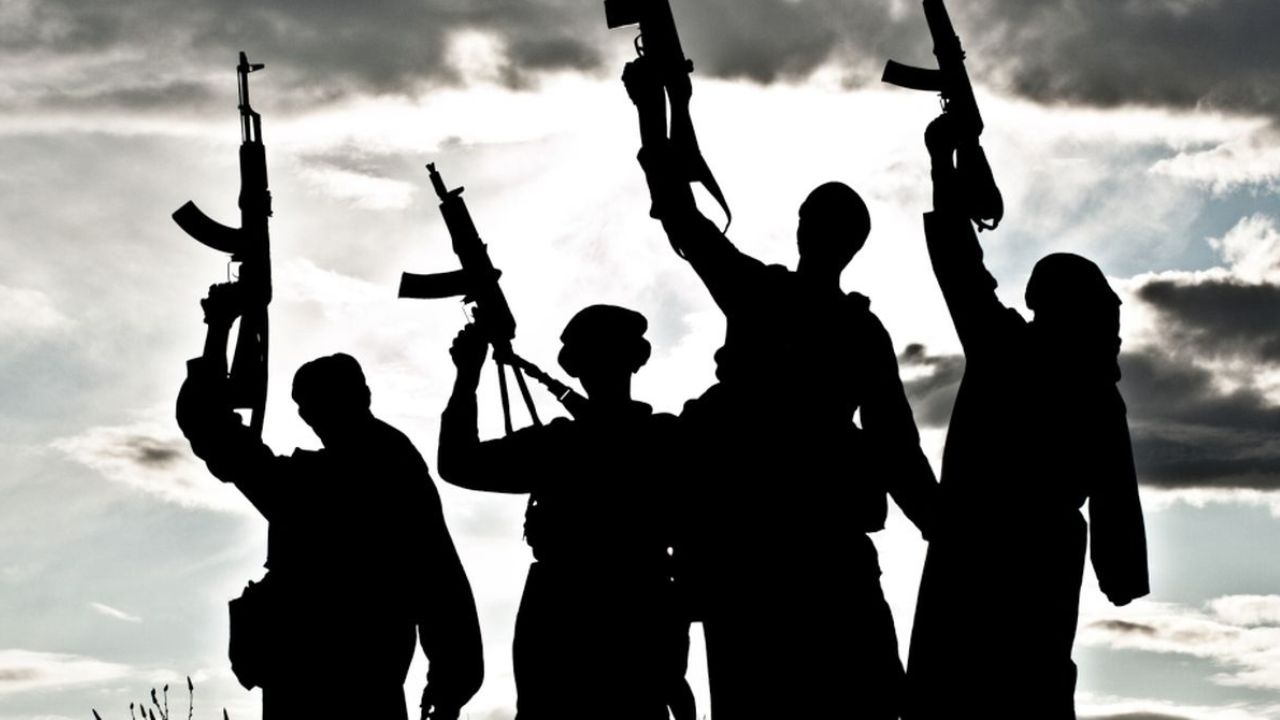



The fall of Sheikh Hasina in August 2024 brought political change to Bangladesh, but it also created new space for old extremist forces and emboldened new actors seeking to establish a caliphate or Islamic rule.
For these individuals and groups, the post-Hasina environment appeared favourable. Banned outfits began holding rallies, processions and meetings without obstruction. Hizb ut-Tahrir, despite its ban, staged processions in Dhaka and openly called for a caliphate.
Old and new radical forces also became increasingly visible at seminars, waz mahfils, religious gatherings, educational institutions and madrasas.
Online campaigns expanded alongside efforts to bring different groups under a common platform capable of pursuing a broader political project: establishing Islamic rule in Bangladesh along the lines of the Taliban’s model in Afghanistan.
Then came a series of disturbing incidents.
In December 2025, a powerful explosion at a madrasa in Keraniganj severely damaged the building and injured four people. Investigators linked the blast to extremists and identified two people who had previously been arrested for militant activities. A woman arrested from the madrasa had also been jailed over her alleged militant connections.
Investigators said a mobile phone recovered after the Keraniganj blast led a joint forces team to the residence of the personal driver of banned Neo-JMB leader Hafiz Khalid Ibrahim in Jashore on 1 February this year. Ten powerful grenades, three foreign-made pistols, 19 rounds of ammunition and other weapons were recovered.
These developments demanded an immediate and comprehensive security response. Instead, the Muhammad Yunus-led interim government appeared reluctant to confront the growing extremist threat, seemingly wary of alienating Islamist groups that had long claimed to have been persecuted under the Awami League regime.

That approach was dangerous.
Extremism cannot be treated as a political force to be selectively tolerated. Groups seeking to transform Bangladesh into an Afghanistan-style Islamist state cannot simply be allowed to operate freely.
In April, 20 people, including Bangladesh Air Force personnel, were detained for their alleged links to Tehrik-e-Taliban Pakistan (TTP). It came as a major surprise, but the fact remained.
Other suspected militant incidents followed, including bomb explosions and the recovery of pipe and pressure-cooker bombs in Dhaka, Cumilla, Ashulia and Savar in recent months. Investigators now say several extremist networks are linked to these incidents.
A dangerous bid to revise history
A parallel effort to reshape the public narrative around militancy has also emerged since the July 2024 uprising.



Following Hasina’s ouster, some senior police officers began claiming that there was no militancy in Bangladesh and that the Awami League government’s counterterrorism operations had largely been a “drama”. People accused of militancy made similar claims.
The narrative was subsequently reinforced by sections of the media, with some reports portraying accused militants as innocent victims of the previous regime.
There is no question that many people were falsely accused or became victims of politically motivated counterterrorism operations. Some raids were staged to create the appearance of counterterrorism successes.
But concluding that everything was fake is equally dangerous.
Real militants were arrested and genuine militant hideouts were raided. Bangladesh also suffered a series of deadly terrorist attacks.
The emergence of ISIS in 2014 and the spread of its ideology inspired a new generation of extremists. During the height of the Shahbagh movement, Mufti Jasimuddin Rahmani openly called for the killing of bloggers and atheists in sermons delivered at his madrasa in Basila.
A new phase of terrorism followed. Bloggers, teachers, LGBT activists and foreigners were murdered by groups inspired by ISIS and al-Qaeda in the Indian Subcontinent (AQIS). The Holey Artisan Bakery attack in Dhaka’s diplomatic zone in July 2016 left 21 people dead, including 17 foreigners. Five ISIS followers were killed during the subsequent operation.
These events were real. They cannot be erased from history simply because the Hasina government later exploited counterterrorism operations for political purposes.
Rahmani was arrested in 2014 for inciting murder and was later convicted and served his sentence. The Awami League government, however, continued to keep him in prison by bringing additional cases against him, which was unlawful.
The fact that the government unlawfully prolonged his imprisonment does not make his earlier extremist activities fictitious. He was among those who secured bail and were released after Hasina’s fall. There are now many like him operating openly.
I have covered terrorism and counterterrorism since 2002 and independently researched the subject from 2021 to 2023 for a book co-authored with Dr Jasmin Lorch, Women and Terrorism in Bangladesh: Women’s Involvement and Roles in Jihadist Networks and the Problem of Human Rights Violations in Counterterrorism, published in Germany in 2024.
After examining hundreds of pages of case documents and media reports, and interviewing investigators, lawyers, experts and people involved in both genuine and fabricated cases, one conclusion became clear: the Awami League used counterterrorism for political gain.
Hasina sought to establish that only her government could defeat militancy, while political opponents either tolerated or supported extremists. Law enforcement and intelligence agencies were drawn into that political campaign. Competition among agencies to “capture” militants sometimes created incentives for staged operations and manipulated cases.
I found numerous instances in which innocent people were arrested and raids were fabricated. But I also found genuine cases involving men and women who had become deeply radicalised.
What the Tarique government must do
The UN Security Council’s warning about al-Qaeda’s efforts to establish a cell in Bangladesh is the latest wake-up call for the government.
Extremist forces have survived and periodically flourished in Bangladesh for more than three decades because successive governments failed to confront them by being politically motivated. The current resurgence was allowed to gather momentum during the Yunus administration.
In this situation, Prime Minister Tarique Rahman’s government must adopt a policy of zero tolerance towards violent extremism while avoiding the political abuses of the past. Counterterrorism must be intelligence-led, evidence-based and subject to judicial and human rights safeguards.
Legitimate religious and political expression must not be criminalised merely because it is conservative or Islamist. But violent extremism, militant recruitment and terrorism cannot be excused in the name of political freedom or as a reaction to previous repression.
The state must protect freedom of belief and expression while also showing no tolerance for terrorism, militant recruitment, violent extremism or attempts to impose a violent theocratic order.
In the past, Bangladesh has seen where denial, political manipulation and complacency can lead. It cannot afford to watch the deadliest face of extremism emerge again.