
Diplomacy rarely comes with a Bollywood soundtrack, but Malaysian Prime Minister Anwar Ibrahim has given his India visit a distinctly cinematic touch.
Instead of relying solely on conventional footage from his official engagements, Ibrahim has been sharing highlights from the trip on social media with some of Bollywood’s most recognisable songs playing in the background.
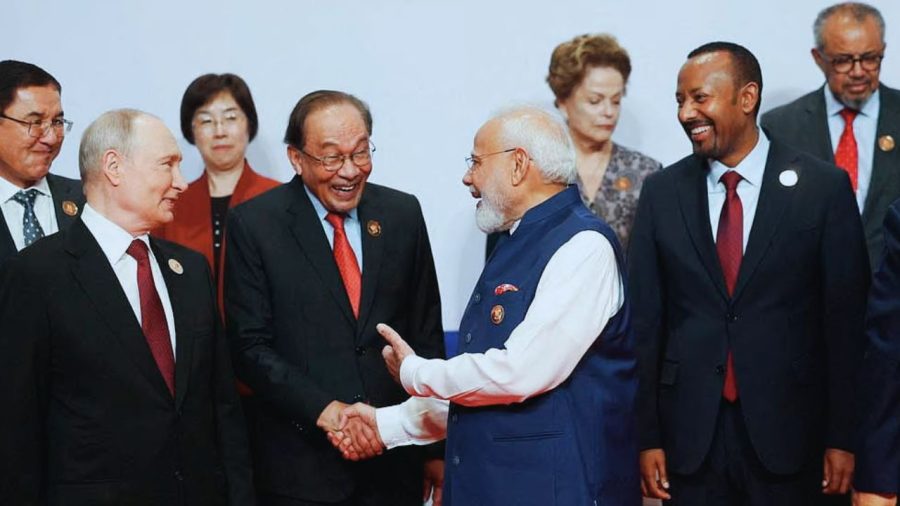
One of the clips shows Indian Prime Minister Narendra Modi welcoming Ibrahim at Bharat Mandapam in New Delhi, accompanied by the classic romantic song “Tujhe Dekha To Yeh Jana Sanam” from the 1995 Shah Rukh Khan and Kajol starrer “Dilwale Dulhania Le Jayenge”. The unusual pairing quickly drew attention online.

Ibrahim continued the musical theme across other moments from his India visit. A post featuring his interaction with Modi used the title track of “Dil To Pagal Hai”, while another BRICS-related post featured the title song from “Har Dil Jo Pyar Karega”.
His meeting with Congress leaders Rahul Gandhi and Priyanka Gandhi was paired with “Aisa Des Hai Mera” from “Veer-Zaara”. For his departure from India, Ibrahim chose the patriotic song “Kandhon Se Milte Hain Kandhe” from “Lakshya”.




The Malaysian prime minister’s affinity for Bollywood also surfaced during the BRICS visit when he sang Kishore Kumar’s “Khwab Ho Tum Ya Koi Haqeeqat” from the 1965 film “Teen Deviyan” at a gathering in Delhi. The performance was widely shared on social media.
The musical posts have added an unexpected pop-culture dimension to Ibrahim’s diplomatic engagements, with Bollywood songs providing the backdrop to photographs and videos involving Indian political leaders and other BRICS participants.
This is not Ibrahim’s first use of popular music in diplomatic social media posts. During Bangladeshi Prime Minister Tarique Rahman’s official visit to Malaysia in June, Ibrahim’s verified social media page featured Habib Wahid and Mehrnigori Rustam’s “Moha Jadu” in a video highlighting the visit. The clip featured bilateral meetings, official engagements, a luncheon and cultural programmes.
The unusual use of familiar songs has given Ibrahim’s diplomatic updates a more personal and cultural tone, showing how music can become an unexpected part of the way leaders present international engagements online.