
Saudi Arabia launched fresh air strikes against Houthi fighters in Yemen on Wednesday, the Iran-backed group reported, as the militia consolidated gains from a rapid offensive that has widened the Middle East conflict and tightened pressure on global oil markets.
The escalation prompted Washington to toughen its travel guidance for Saudi Arabia, barring government staff from approaching within 20 miles of the Yemeni border, reflecting growing international concern over the deteriorating security situation in this new front of the wider regional war, reports Al Jazeera.
Houthi forces have spent the past week sweeping through towns along Yemen’s Red Sea coast and taking control of islands in the Bab el-Mandeb strait.
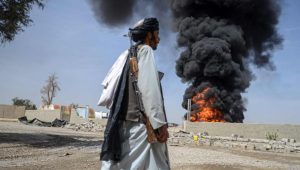
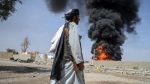
Footage released overnight showed fighters capturing armoured vehicles from Saudi-backed troops while explosions erupted across desert terrain beneath low-flying warplanes.
A Houthi military spokesman said the group had downed a Saudi F-15 jet, though no supporting evidence was offered and Saudi authorities did not respond to requests for comment.

The spokesman also claimed Saudi forces had conducted roughly 450 air strikes on Yemen over the course of the week.
Officials from the Saudi-backed administration governing southern Yemen confirmed that strikes against Houthi positions were under way, although Riyadh itself has not formally acknowledged the campaign.
The Houthis have meanwhile launched repeated attacks into Saudi territory, triggering air-raid alerts across cities in the kingdom’s south and west.



Separately, an assault attributed to Iran-aligned militants operating in Iraq disabled Saudi Arabia’s East-West Pipeline last week, cutting off a critical route used to bypass the blockaded Strait of Hormuz.
Saudi officials said their air defences intercepted a Houthi drone south of Mecca on Tuesday before it could breach restricted airspace above the city, describing the incident as crossing a red line given the site’s religious significance.
The Houthi spokesman rejected claims that Mecca had been targeted, characterising the Saudi account as a fabricated propaganda narrative.
According to sources familiar with the matter, American officials met Houthi representatives in Oman over the weekend, where the group indicated it had no plans to strike US vessels and remained bound by a ceasefire agreed with Washington last year.
The widening conflict threatens to deepen an existing global energy shortage caused by six months of US-Israeli military action against Iran, which has already disrupted shipping through Hormuz.
Brent crude traded near $108 a barrel on Wednesday, close to its highest point since May, while average US diesel prices climbed past $6.30 a gallon, a record high with significant political implications.
Analysts warned that an extended shutdown of the East-West Pipeline could remove up to four percent of global oil supply from the market, though US Energy Secretary Chris Wright told CNBC on Tuesday that flows should resume within days.
Saudi Arabia has led a military coalition against the Houthis since 2015, a conflict that had largely calmed under a ceasefire in recent years before reigniting in July, when the Houthis declared a naval blockade and began striking southern Saudi areas.
Fighting has escalated sharply this month as Houthi forces pushed back troops loyal to Yemen’s internationally recognised, Saudi-backed government.
Saudi Crown Prince Mohammed bin Salman contacted President Donald Trump last week to request military assistance, receiving only intelligence support so far.
Washington previously conducted a two-month bombing campaign against the Houthis in 2025 before halting operations under a ceasefire Trump described as ending attacks on shipping.
He now faces a choice between allowing the Houthi advance to worsen the energy crisis or deepening US involvement in a costly new theatre of conflict.