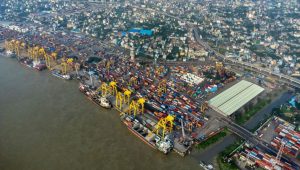
Although BNP previously declared it would avoid mega-projects, arguing that such initiatives serve primarily as conduits for mega-corruption, the government led by the party itself is now pursuing large-scale projects with mega spending.
Within just seven months of assuming office, the government has approved two major infrastructure schemes with a combined expenditure approaching Tk80,000 crore, with several others awaiting approval.
At the same time, the total cost for two metro rail routes initiated by the previous administration has escalated by over Tk1 lakh crore.
Consequently, the government faces dual financial pressures – servicing the debt and operational costs of inherited infrastructure alongside the fresh liabilities of newly commissioned developments.
Mustafa K Mujeri, former director-general of the Bangladesh Institute of Development Studies (BIDS) and former chief economist at Bangladesh Bank, maintains that given prevailing economic conditions, the necessity, financial capacity, potential returns, and debt overheads of new major projects require rigorous reassessment.
Speaking to TIMES, he noted, “Even regarding general state procurement, expenditures are emerging that seem redundant at present. Alongside curtailing superfluous spending, public funds ought to be directed towards employment-generating sectors or initiatives that bolster existing private investment.”
He added that simply disbursing funds is insufficient; the actual economic yield must be safeguarded through prudent project selection.
Khondaker Golam Moazzem, research director at the Centre for Policy Dialogue (CPD), contends that political considerations drive these decisions. “Through these schemes, the government aims to showcase tangible achievements ahead of the next election,” he explained.

“As a result, populism-driven projects that could comfortably be deferred are instead being prioritised.”
Prior to the parliamentary election, BNP Chairman and current Prime Minister Tarique Rahman insisted, “A core objective of the BNP is to eschew mega-projects, which are synonymous with mega-corruption. State resources will instead focus on enhancing education, healthcare, and human rights.” Finance and Planning Minister Amir Khosru Mahmud Chowdhury echoed these sentiments repeatedly.
Yet, government actions diverge sharply from these pledges.
Approved post-election projects include the Padma Barrage Project, its first phase alone costing Tk34,497.25 crore, fully state-funded, approved by Ecnec in May 2026, and the MRT Line-5 Southern Project, valued at Tk45,504 crore and co-financed by the ADB and South Korea.
Further plans highlighted in the budget speech encompass the Teesta Mega Plan, a second Jamuna bridge, a third Meghna bridge, and the Dhaka-Chattogram Elevated Expressway. Meanwhile, cost overruns for the inherited MRT Line-1 and MRT Line-5 Northern routes have surged by Tk1.10 lakh crore.


Mega-projects line up to become financial liabilities
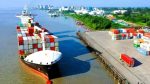
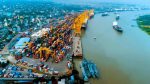
Several mega-projects undertaken during the Awami League administration have devolved into severe financial liabilities for the state, with Payra Port, the Karnaphuli Tunnel, and the Dhaka-Gazipur Bus Rapid Transit (BRT) scheme standing out as prime examples.
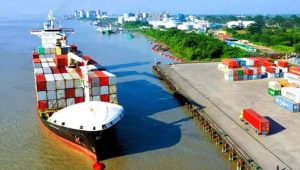
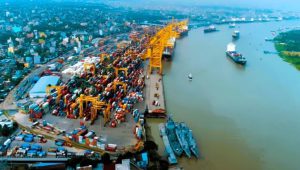
Built at a cost of roughly Tk15,691 crore, Payra Port has failed to emerge as an international trade hub. Maintaining navigability along the Rabnabad Channel alone has already absorbed Tk6,500 crore, a major portion drawn directly from foreign currency reserves.
Similarly, the Karnaphuli Tunnel, constructed for Tk10,689 crore, suffers from severely depressed traffic volumes and fails to generate sufficient toll revenue to cover basic operational expenses. Consequently, running the facility drains over Tk3.5 crore from state coffers every month.
The Dhaka-Gazipur BRT project, launched in 2012, saw its budget more than double from an initial Tk2,040 crore. Despite this expenditure, urban commuters have seen little benefit, even as loan repayments have now commenced.
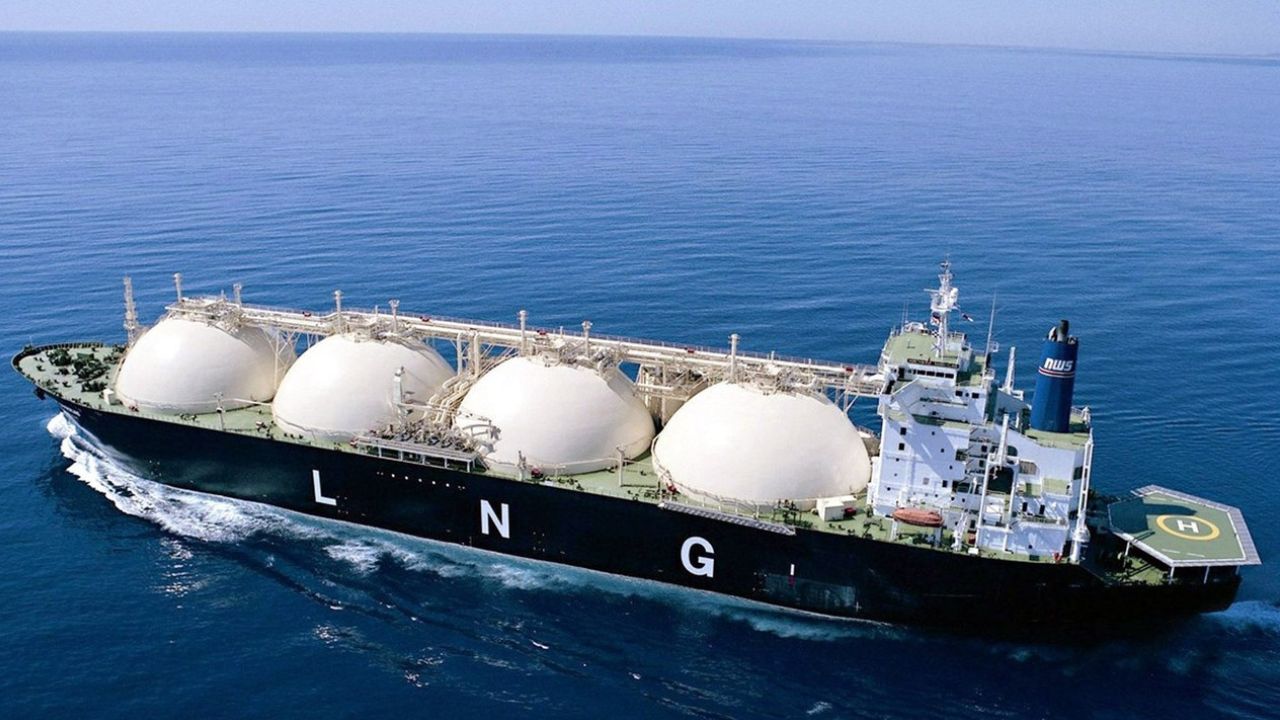
Down on the coast, the Single Point Mooring (SPM) facility in Maheshkhali, completed in mid-2024 at a cost of Tk8,500 crore, remained largely idle due to contractual delays in appointing an operator. Its floating mooring systems, pipelines, and 2,00,000-tonne storage capacity sit unused. The government faces mounting debt service without offsetting revenue, alongside heightened risks of equipment degradation through prolonged inactivity.
The operator appointment proposal was approved by the cabinet committee on purchases on Wednesday.
Rail infrastructure reflects similar shortfalls. The Padma Bridge Rail Link, completed at nearly Tk39,000 crore, services only three intercity and two mail trains, with freight movement virtually non-existent. Over six months, it generated just Tk37 crore in revenue against an annual projection of Tk1,339 crore.
Meanwhile, the Dhaka-Mawa Expressway, constructed at Tk200 crore per kilometre, was highlighted by the interim government’s Economic Reform Task Force in February 2025 as one of four key projects failing to deliver expected returns. Persistent bottlenecks at entry points, the lack of an effective Dhaka ring road, and absent industrial planning in the south-west mean traffic simply compresses back into the capital.
Finally, the Tk11,000 crore Dohazari-Cox’s Bazar rail line, opened in November 2023, remains hobbled by antiquated tracks and dilapidated bridges. Despite these shortcomings, two follow-up initiatives totalling Tk21,000 crore, upgrading the Pahartali–Dohazari line to dual-gauge and constructing a new Kalurghat rail-cum-road bridge, have nevertheless been advanced.
Calls to avoid mega-projects
Economists have repeatedly warned that for projects dependent on foreign borrowing, future debt-servicing liabilities must be rigorously evaluated.
Mustafa K Mujeri told TIMES, “Had foreign loans been accessible at lower interest rates, overall project costs could have been contained. However, Bangladesh’s weakened credit rating has pushed borrowing costs higher and increased the burden of securing external financing. Given these realities, eschewing such projects would have been the logical course of action.”
He argued that public investment ought to be channelled into employment-generating sectors and measures that foster a supportive environment for private enterprise. Simultaneously, curbing redundant expenditure and guaranteeing the efficient deployment of state funds remain paramount.
Echoing these concerns, CPD’s Golam Moazzem urged the government to prioritise human capital development, healthcare, and education over grand infrastructure.
“While completing existing, unfinished mega-projects may be justified, the administration must exercise far greater caution and sensitivity before committing to entirely new ventures,” he observed.
He added that reining in state spending and eliminating fiscal extravagance are essential prerequisites for restoring social stability and rebuilding economic resilience.
Economists worry about the beginning of a worse fiscal cycle of borrowing to meet operating expenses and debt repayment amid weaker revenue mobilisation.
Institutional capacity remained weak, as the implementation of the annual development program fell to a multi-year low of 1.85 per cent of the yearly total target in the first two months of the fiscal year.
Asked about the government’s position on approving new major infrastructure projects amid concerns over rising costs, debt obligations and the financial viability of several existing infrastructure schemes, Land Minister Md Mizanur Rahman Minu told TIMES, “The projects the government is undertaking are being taken in the interest of the country.”
He declined to make any further comments.
TIMES also sought comments from the state minister for planning and several other ministers involved with the projects. However, despite repeated attempts to contact them by phone, they could not be reached.