
Bangladesh Petroleum Corporation (BPC) expects Single Point Mooring (SPM) project to save Tk500 to 600 crore annually in fuel oil unloading and transportation once it becomes fully operational.
The expectation comes as fuel oil unloading through Bangladesh’s SPM system is set to resume after more than two years of delay, following government approval to appoint an Indonesian state-owned company to operate and maintain the facility.
The Cabinet Committee on Government Purchase on Wednesday approved the appointment of PT Pertamina Trans Kontinental, an Indonesian state-owned company, as the operator of the country’s first SPM with Double Pipeline system at Moheshkhali in Cox’s Bazar.
The five-year operation and maintenance contract is valued at Tk 1,946 crore.
The approval came at the 46th meeting of the Cabinet Committee on Government Purchase in 2026, held at the Secretariat with Finance Minister Amir Khosru Mahmud Chowdhury in the chair.

BPC will implement the initiative under a proposal from the Energy and Mineral Resources Division.
Officials said the appointment of the operator clears a major hurdle that had kept the SPM project from entering full-scale operation despite completion of its main infrastructure.
Zaman Naheed Raihan, Deputy General Manager (Planning & Operations) Petroleum Transmission Company PLC, told TIMES that the contractor selection process was completed in accordance with the Public Procurement Regulations (PPR).



Under the contract, the operator will have up to four months to procure the necessary machinery, spare parts and other equipment and commence technical operations.
“If all preparations are completed as scheduled, the SPM system is expected to become operational by December or January 2027,” Naheed said.
The SPM project, costing around Tk 8,300 crore, was conceived to significantly reduce the time and cost involved in unloading imported crude oil and diesel.
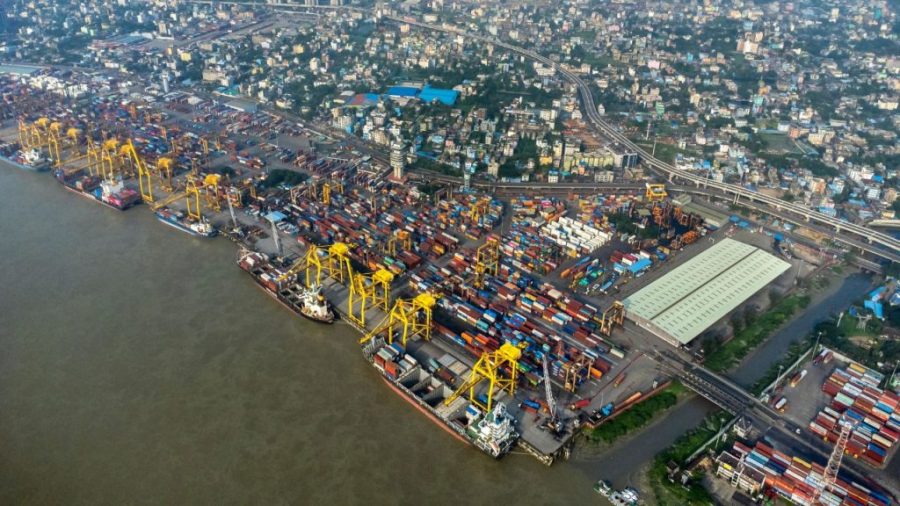
At present, large oil tankers carrying imported fuel cannot directly unload their cargo at the Chattogram port facilities. Oil is generally transferred to smaller lighter vessels at designated lighterage points before being transported to shore.
According to BPC, unloading 100,000 tonnes of oil through the conventional lighterage system can take 10 to 12 days.
Once the SPM system becomes fully operational, however, 100,000 tonnes of crude oil can be transferred to Eastern Refinery in Patenga within about 48 hours, while 70,000 tonnes of diesel can be delivered in around 28 hours.
The system is therefore expected to reduce unloading time, lighterage costs, system losses and international demurrage payments.
The project infrastructure was constructed on about 100 acres of land at Sonarpara village in Kalarmarchhara Union of Moheshkhali Upazila. The project was implemented under a government-to-government (G2G) arrangement between Bangladesh and China.
Six storage tanks have been installed at the terminal. Three tanks have a combined storage capacity of around 126,000 tonnes of crude oil, while the other three can store approximately 75,000 tonnes of diesel.
Through the SPM system, large mother vessels anchored in deep water will be able to unload crude oil or diesel directly through pipelines to the Moheshkhali terminal.
From there, the fuel will be transported to Eastern Refinery in Chattogram through a 220-kilometre pipeline, comprising both offshore and onshore sections. Around 146 kilometres of the pipeline runs along the seabed.
The project includes a range of supporting infrastructure, including an HDD crossing, pumping station, main and booster pumps, generators, SCADA systems, custody metering stations, pigging stations, security and firefighting facilities, three block valve stations, a microwave relay station and pipeline terminal facilities.