






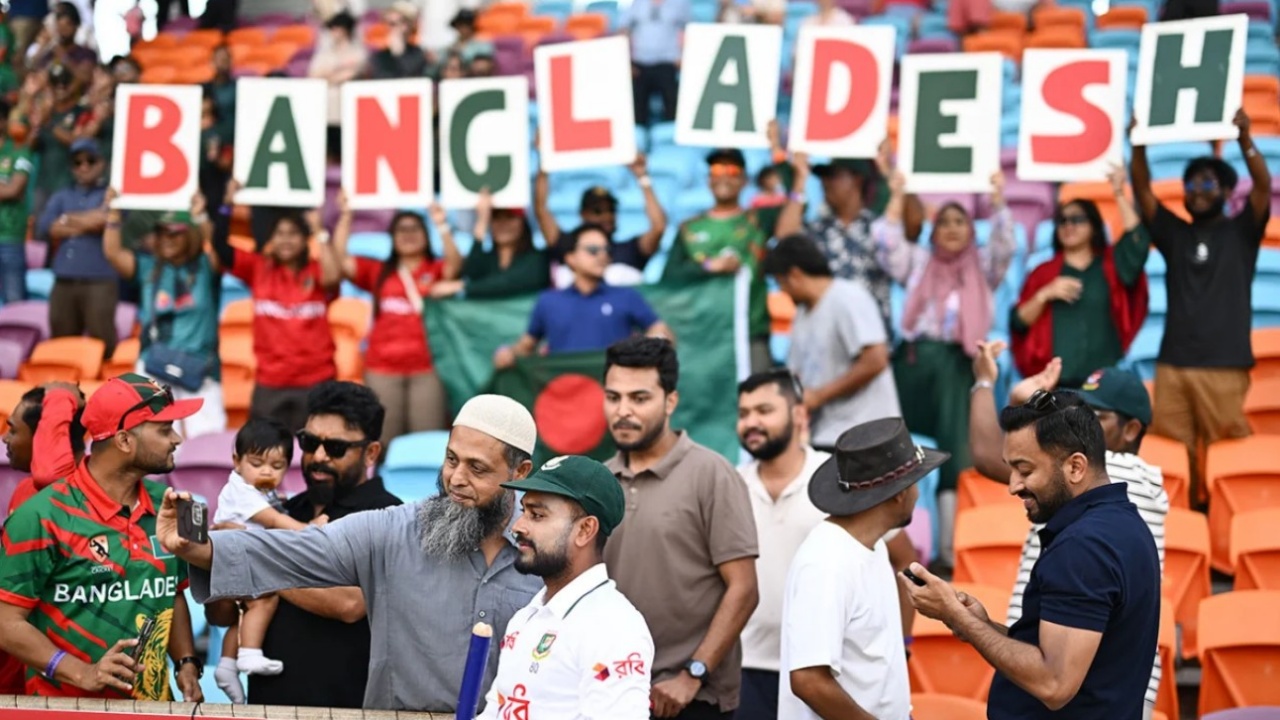
Before this tour began, I said it: this series mattered enormously for Bangladesh. We were returning to Australia after 23 years, and if we could compete well, it would mean something big for our cricket. Now that we have won, I can say it means even more than I had hoped.
We have never been a consistent Test side. We have won in Pakistan before, but beating Australia — in Australia — carries a different weight altogether. It does something to you mentally. It gives the whole team a genuine lift, the kind that doesn’t fade the next morning.
The real value of this win lies in whether we can carry it forward — into the next Test, or across the next year of cricket. That is what will decide whether this becomes a turning point or just a happy memory.
We do not get many Test matches to begin with, and that makes every one of them count.
Whether we are playing India in India, Australia in Australia, or England anywhere at all, no amount of talk about board budgets or facilities changes one basic truth: performance on the field is what earns you more cricket. Play well, and the opportunities follow. The improvement takes care of itself after that.
For years now, we have had bowlers capable of taking 20 wickets in a Test — our pace attack has developed into a genuine strength. That mattered enormously here, because taking 20 wickets is the only way to win a Test match, and we did that.
But I would be doing Bangladesh cricket a disservice if I did not point to where we are still struggling. Our opening partnerships remain a concern.
We need one of our openers to consistently post big scores, not just useful ones. Shadman has shown he has the game, but not the consistency. When an opener converts a start into something substantial, everything downstream becomes easier. Tanzid Tamim showed exactly that in this Test.
The second issue is our batting once we get into the lower order. Too often, after the fifth or sixth wicket falls, our batters fail to extend the innings the way a side chasing a lead needs them to.
That is precisely what changed this time — Mehidy, alongside Hasan and Taskin, batted with the resolve that has so often been missing. Between a century at the top and a knock of 84 further up, we had the platform; it was the runs from the lower order that turned a good position into a winning one.
If we can make that a habit rather than an exception, we might not win every match but will be able to draw more Test matches.
Back in 2003, Australia were the number one side in the world, and the name alone was enough to unsettle you. You would walk through the team hotel and see Glenn McGrath, Brett Lee, Jason Gillespie, Stuart MacGill, Shane Warne and their presence alone got inside your head before a ball was bowled.
It wasn’t only about reputation, either. Our first-class structure back then bore little resemblance to what it is today. We were genuinely far behind, in every sense. We were beaten mentally before we had a chance to be beaten on the field.
Compare that to now. Today’s players have grown up competing against Australians from age-group level upward. Mentally, this Bangladesh team operates on a completely different level.
We have now played more than 100 Test matches — that first tour of Australia was only our eighth Test as a nation, which is a large part of why they were able to beat us inside three days back then.
This time, we dominated roughly eleven sessions of play. Test cricket can turn quickly, but here, we controlled three and a half days virtually uninterrupted and closed it out. That tells you everything about how far we’ve come.
That self-belief, built over these days in Australia, is what will matter most the next time we find ourselves under pressure in a Test match. It’s easy to play with confidence when things are going your way — the real test is whether that belief holds when they aren’t.
We will enjoy this win, as we should. But Bangladesh cricket cannot afford to treat it as a peak to be admired rather than a base to build on. We are no longer the team that wins once and loses the next ten — the team that used to trigger processions over a single upset win.
Those days have to stay behind us. The next Test will bring more pressure, not less, and we have to welcome that pressure rather than shrink from it. Win, lose or draw, we cannot afford to lose badly again.
There are bigger challenges still ahead of us, in both Test and one-day cricket. If we genuinely want to be a top-ranked side — whether that’s number one, two or four in the world — we have to keep improving, one step at a time. This win doesn’t finish that job. It only proves the job is possible.
The writer is a former opener of the Bangladesh National Cricket Team.

