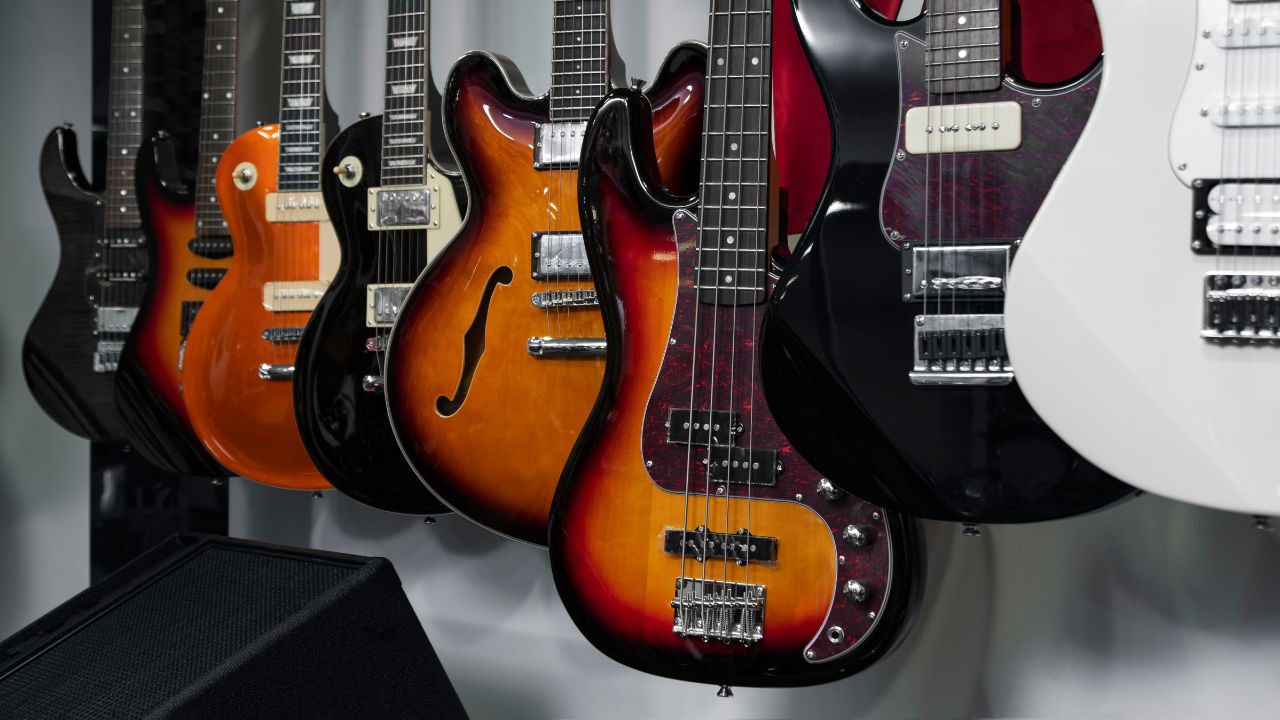



The hushed silence inside Acoustica, a prominent musical instrument shop in Dhaka’s Science Laboratory area, deeply pains its proprietor, Saikat Biswas Tutul. His shop remains beautifully decorated with guitars, keyboards, and drum sets, but customers are virtually non-existent.
“Previously, the shop was bustling with buyers all day long,” Tutul recalls. “Those who came to purchase would test the instruments, raising melodies that brought a sense of spiritual peace. But now, people hardly visit. There are no sales and, more importantly, no music is being played.”
A slump born of political turmoil
This quietude is a symptom of a systemic crisis crippling the nation’s music industry. Tutul told TIMES of Bangladesh that a severe business slump began immediately after the political transition on 5 August 2024, and has progressively worsened.
His sales have plummeted by over 60 per cent, making it exceptionally difficult to meet basic operational expenses, including staff salaries and shop rent.
When asked about the root cause, Tutul points to a climate of fear. “Due to attacks, the cancellation of cultural events, and mob violence, a young person is now afraid to even walk down the street with a guitar in hand,” he says.
Vandalism and growing obstacles
These apprehensions are fuelled by a series of disruptions over the last two years. Recently, madrasa students vandalised a cultural programme at the Brahmanbaria District Police Lines.

The protesters then blocked roads and demonstrated until 2:30am, demanding a total ban on all future concerts. On the same day, in Kishoreganj Old Stadium, the Imam-Ulama Parishad obstructed a scheduled afternoon band show.
This rising hostility has directly hit major musical instrument hubs across the capital, including Elephant Road, Science Lab, Bashundhara City, and Shankharibazar. Where sellers once struggled to manage crowds, they now spend days sitting idle.
Traders explain that the decline in cultural events, concerts, and stage shows has caused a direct stagnation in the instrument market.
A stagnant value chain
At Bashundhara City’s “Guitar Center,” Manager Proloy Ghosh echoes these concerns, highlighting the direct link between open-air concerts and retail sales.


“The reduction in concerts has broken this economic cycle,” Ghosh notes, adding that his average monthly guitar sales have dropped from ten to just three or four. He points out that instrument buyers are primarily hobbyists and niche customers, many of whom are no longer active.
Shanker Sarkar, the proprietor of Melody & Co., explains the psychological impact of live music on the youth.
“Open concerts are where young people see guitars, keyboards, and drums being played live and get inspired to learn. Without these concerts, their interest is fading, which directly impacts our sales,” he says.
To survive, several establishments – including Jatin & Co. and Music Point—have downsized their shops or transitioned into partnership-based operations to manage rising costs.
The scale of the music market
While official government statistics on the size of Bangladesh’s musical instrument market are unavailable, industry insiders estimate it to be worth around 4,000 to 5,000 crore BDT, comprising both local production and imports.
Bangladesh imports at least 12 types of instruments, including guitars, pianos, harmoniums, and drum sets, while traditional instruments like the dhol and tabla are brought in informally from India. Statista, a German-based market research platform, estimated the market’s size to be nearly Tk 8,000 crore in 2025.
Artists facing a precarious future
The economic squeeze extends far beyond retail, heavily impacting the livelihoods of performing artists. Singer Shimla Akhter told TIMES that opportunities in various cultural fields are drying up step-by-step, hitting artists’ livelihoods directly.
She urged the government and relevant authorities to ensure a safe and free environment for artists to pursue their professions.
Sharif, a music studio producer, describes the state of the local music industry as miserable, noting that artists are now facing obstacles not only at physical concerts but also when sharing their work on social media.
“Stopping musical programmes means destroying employment opportunities for others, which is never a good sign,” Sharif warns.
Azizur Rahman Tinku, a member of the popular rock band Ark, points to a lack of support from law enforcement during outdoor concerts.
“We are not getting the expected cooperation from the police regarding security. This silence from law enforcement increases uncertainty among organisers and artists, making bands fearful of signing up for new shows,” Tinku says.
Tinku stresses that a single concert drives a massive micro-economy involving stages, lighting, sound, transport, security, venue management, and the instrument trade. Consequently, the lack of shows drags down the entire music-centric economy.
Amidst this uncertainty, prominent singer Asif Akbar has called on the government to quickly clarify its stance on cultural events, asking point-blank, “Will music be played in Bangladesh or not?”
In response, Culture Minister Nitai Roy Chowdhury told TIMES that “the government is aware of the situation and will take the necessary steps.”