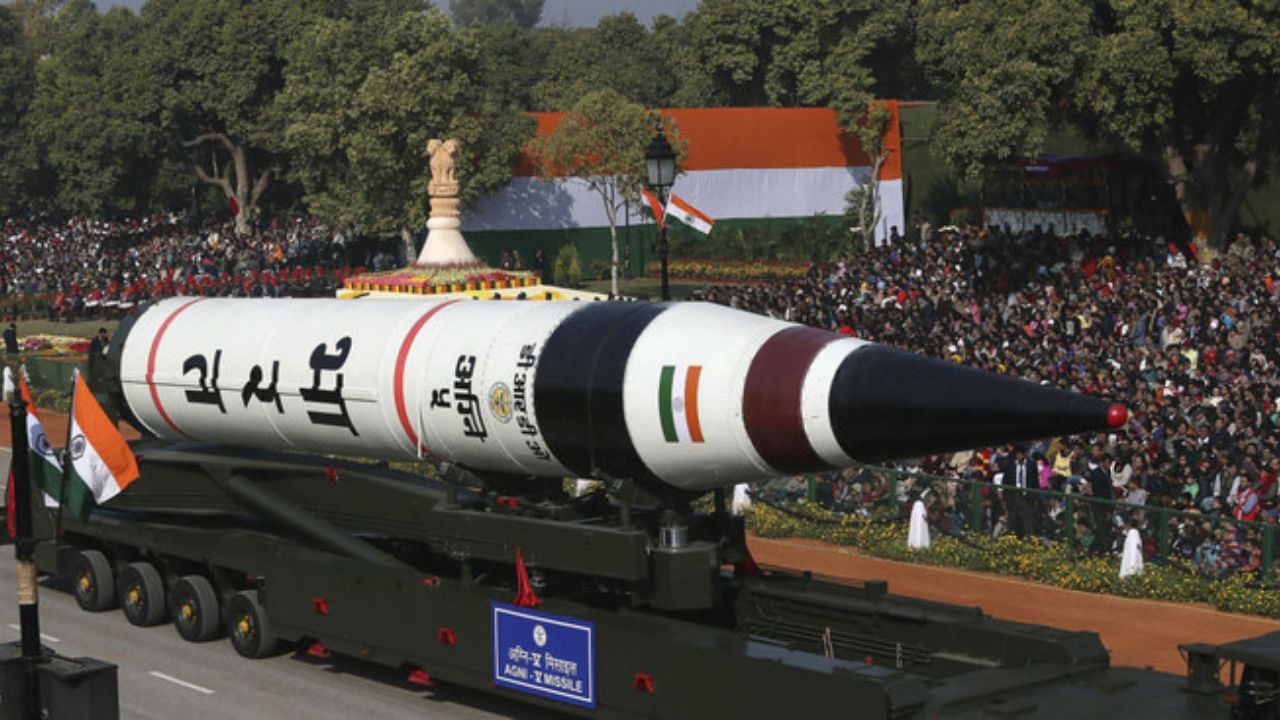



In a major policy shift for its state-dominated defence sector, India has approved a framework allowing private domestic enterprises to manufacture advanced conventional missile systems.
Indian Defence Minister Rajnath Singh cleared the transfer of technologies developed by the state-run Defence Research and Development Organisation (DRDO) to the private sector for domestic manufacturing, the country’s Ministry of Defence announced last Tuesday.
The landmark move ends the long-standing production monopoly held by government-run firms in this sensitive military sphere, reports Al Jazeera.
The Indian Ministry of Defence stated that the primary objective of the policy is to accelerate the transition of missile systems from development to mass production, enhance local manufacturing capabilities, and reduce India’s reliance on foreign imports.
It also aims to integrate micro, small and medium-sized enterprises (MSMEs) into the defence supply chain.
Ending state monopoly amid border concerns
Historically, India has relied heavily on public sector firms, such as Bharat Dynamics, to manufacture missiles developed by the DRDO.
Under the newly approved policy, private defence companies can compete for technology and production rights, provided they meet strict technical qualifications, certifications, and other regulatory requirements.

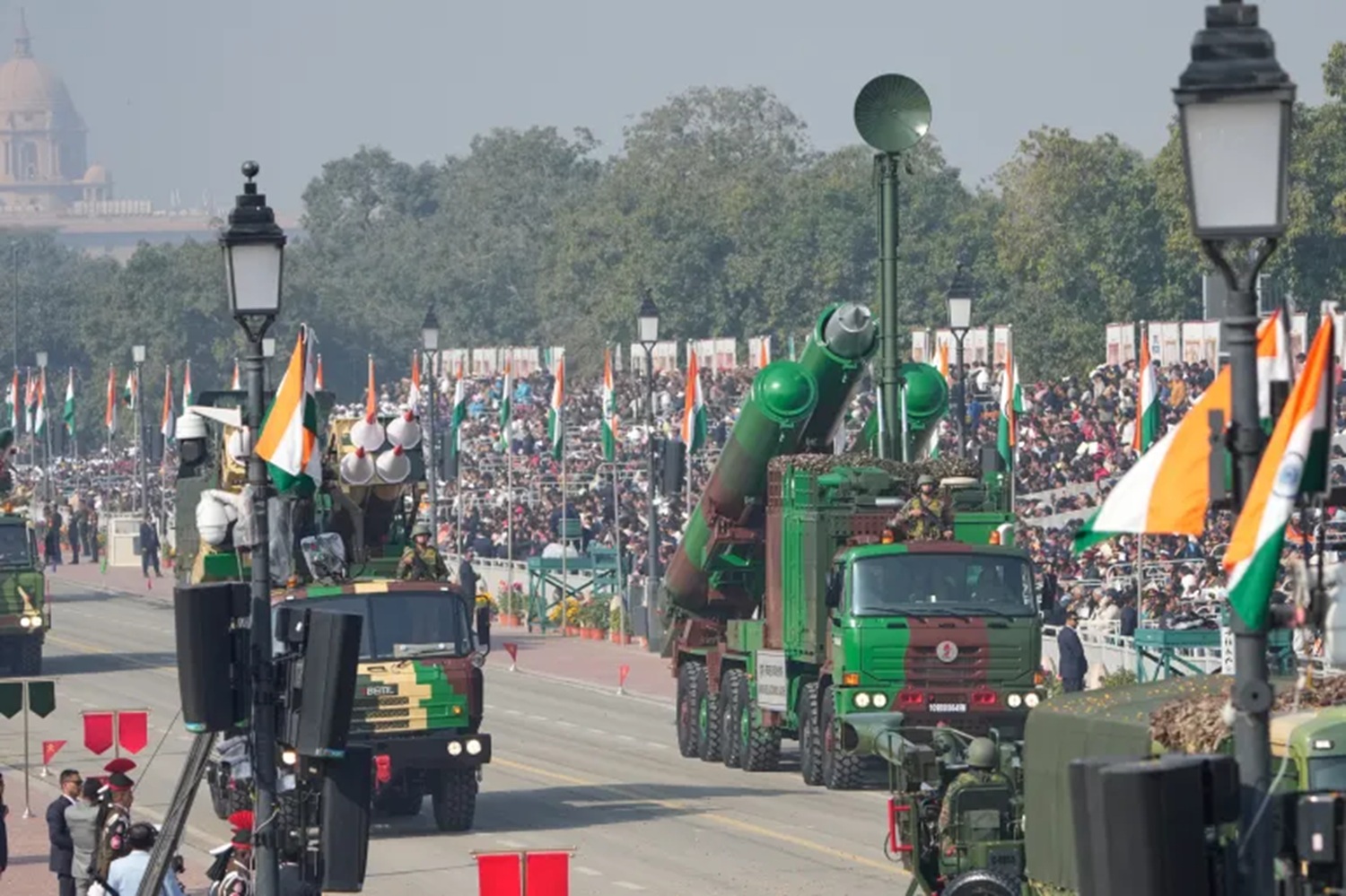
Aditya Ramanathan, a research fellow with the Bengaluru-based Takshashila Institution, said while private firms have supplied missile components for years, this decision marks a big change because it permits them to become prime integrators of complete systems.
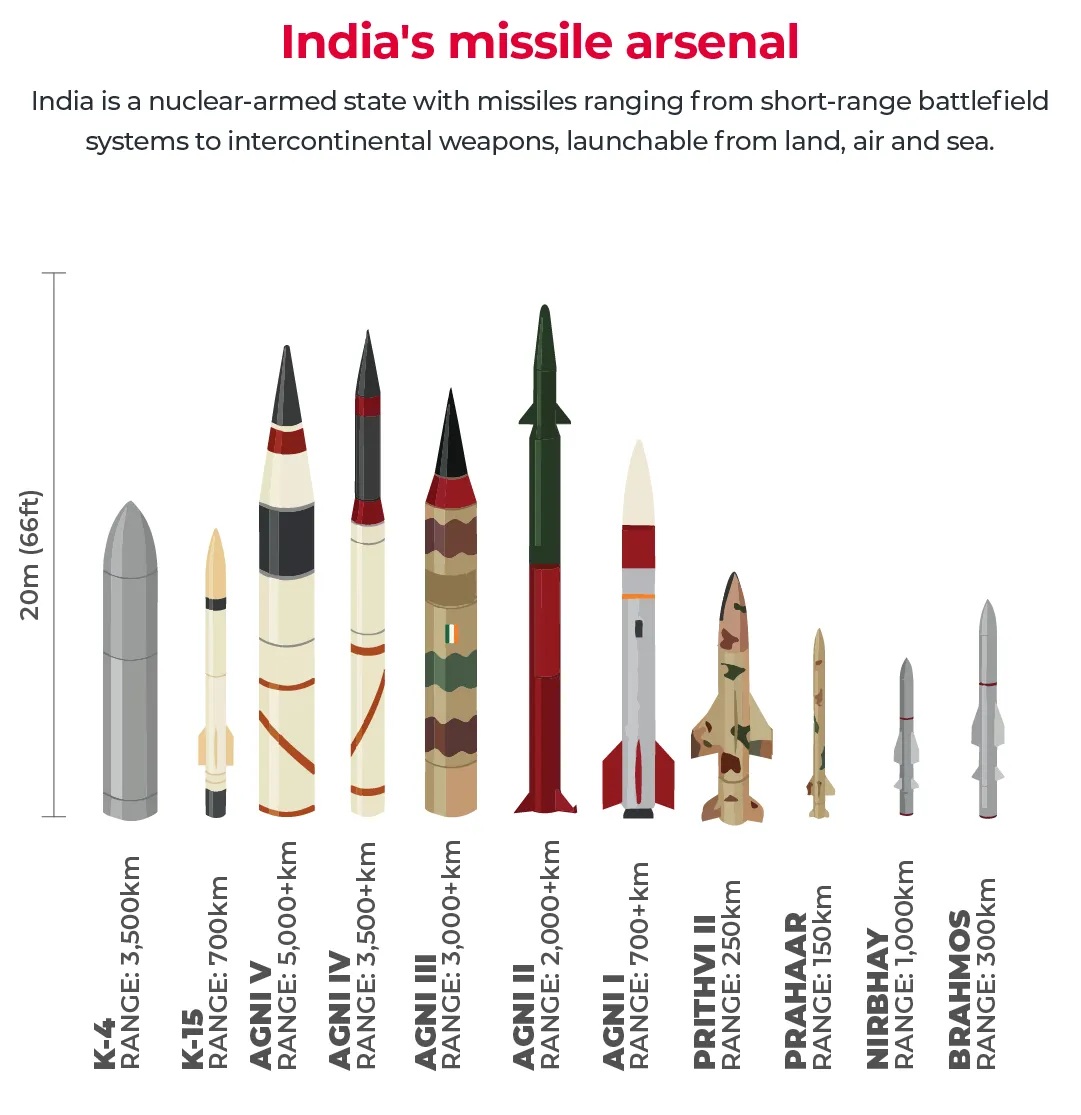
According to Ramanathan, the technology transfer will cover a comprehensive range of hardware, including surface-to-air, air-to-air, and anti-radiation missiles, anti-tank systems, and heavier equipment such as land-attack cruise missiles.
This policy shift comes at a time when India faces uncertainties on its borders with rivals Pakistan and China.
Under Indian Prime Minister Narendra Modi, India has more than doubled its defence budget from $38 billion in 2014 to $86 billion in the current financial year.
This year’s defence budget is 16 per cent higher than the previous year, influenced in part by a brief four-day conflict last year with nuclear-armed Pakistan.




Military planning has also been shaped by lessons from other recent global conflicts. Decision-makers have observed how rapidly modern warfare exhausts ammunition stockpiles, and how precision-strike systems can degrade inventories.
Additionally, India is establishing a tri-services conventional missile force, which requires a substantial “magazine depth” that necessitates active private-sector involvement.
Private capacity and controversial exports
India’s private sector has rapidly expanded its footprint in defence.
In June, New Delhi announced plans to spend over $2 billion on military drones from domestic manufacturers, an industry featuring startups alongside major conglomerates such as Tata Advanced Systems, Larsen & Toubro, and Adani Defence & Aerospace.
In July, the government approved $5.46 billion in military hardware purchases, including electronic warfare systems and kamikaze drones. The navy is also modernising, with plans to build most of its 75 planned ships and submarines domestically.
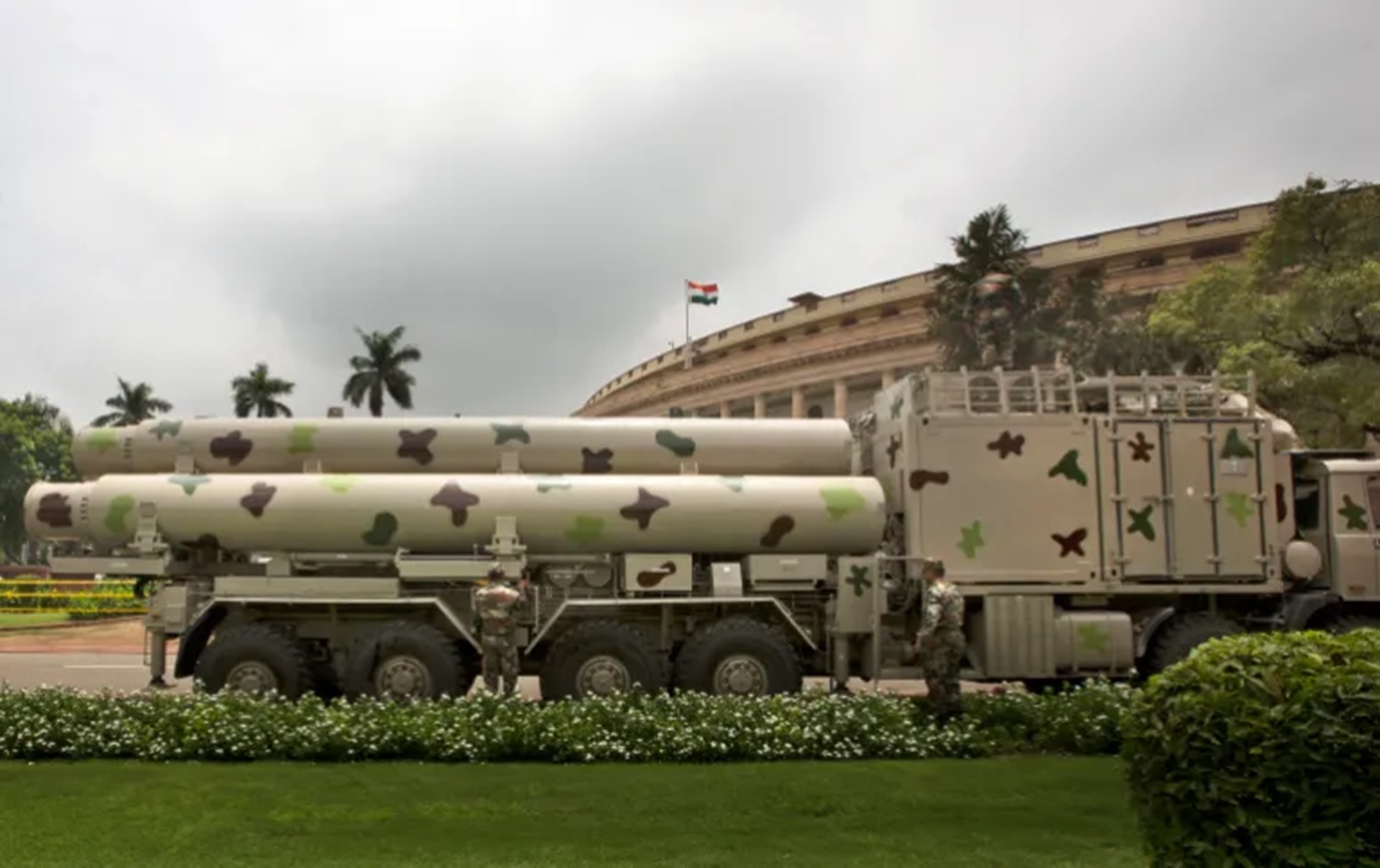
Major conglomerates are already preparing for missile manufacturing. In 2024, Adani Defence & Aerospace announced a plan to invest over 30 billion rupees ($315 million) in ammunition and missile production facilities in Uttar Pradesh.
However, Ramanathan warned that missile manufacturing is highly complex and expensive. He stressed that the policy’s success depends on the scale of government orders, which must be large enough to justify private investment and generate profits that can be reinvested into research and development.
Meanwhile, Indian arms exports have risen from $72 million in 2014-15 to $4 billion in 2025-2026.
The supersonic BrahMos cruise missile, co-developed with Russia, has been sold to the Philippines, Vietnam, and Indonesia, with a sales proposal also sent to the United Arab Emirates.
Fast-growing domestic firms like Paras Defence expect their exports to more than double to $14 million in the 2026-27 financial year, driven by demand linked to conflicts in the Middle East.
These exports have drawn scrutiny. Adani Defence produces Hermes 900 armed drones in partnership with Israel’s Elbit Systems.
A 2024 investigation by Al Jazeera revealed that India exported rocket components and ammunition to Israel during the Gaza conflict, and in June 2026, Amnesty International warned that these sales risk making India complicit in genocide.
Evaluating security risks and industrial limits
The transfer of sensitive defence technology to private players has raised cyber-security concerns.
These risks were highlighted in March when Iranian hackers claimed to have breached the servers of US defence contractor Lockheed Martin, stealing blueprints for F-35 fighter jet components.
Private firms can sometimes have lower security standards and oversight than top-secret government laboratories.
However, Ramanathan pointed out that India’s major defence candidates are “old hands” with decades of confidentiality experience.
Moreover, the Indian government has strong incentives to protect its technology to safeguard its national security and maintain its standing under the Missile Technology Control Regime.
Despite the focus on domestic production, India remains the world’s second-largest weapons importer, with Russia supplying 40 per cent of its imports between 2021 and 2025, according to the Stockholm International Peace Research Institute (SIPRI).
Though firms like Tata Advanced Systems and Bharat Forge have been shortlisted to manufacture next-generation fighter jets, Ramanathan concluded that India remains far from establishing a US-style military-industrial complex, as administrative and political power remains overwhelmingly with the government.