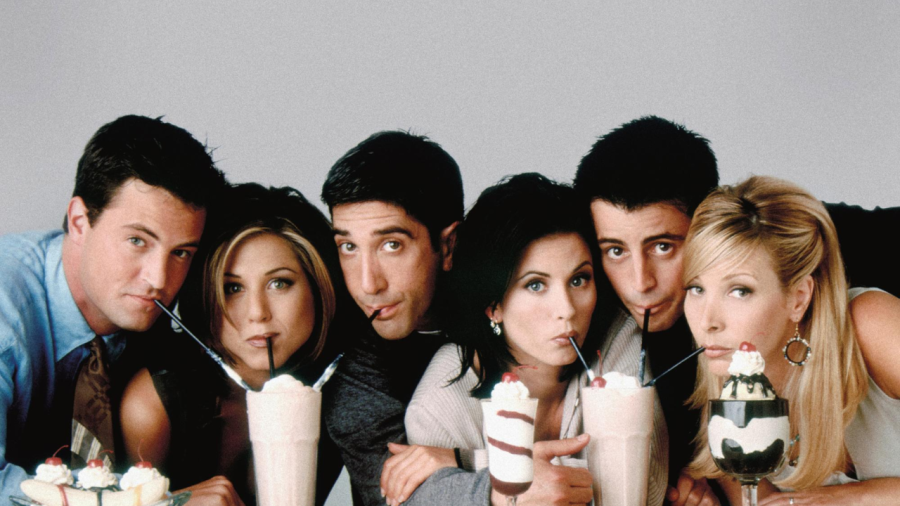

Once upon a time, six young people could sit on a sofa in a Manhattan coffee shop and make the whole world stop.
Rachel, Monica, Phoebe, Joey, Chandler and Ross became more than sitcom characters. For 10 seasons, millions watched them fall in love, lose jobs, break up, make up and grow up together. Friends did not just capture a generation. It became part of everyday life.
Now television keeps searching for that magic. A new wave of US sitcoms is following twenty-somethings through friendship, romance, work and the awkward business of becoming adults. But the harder these shows try to recreate Friends, the clearer one truth becomes: Gen Z may never get its own Friends because the world that created the original has disappeared.
Mindy Kaling’s Not Suitable for Work follows five recent graduates in Manhattan. FX’s Adults puts five friends under one roof in Queens. Kaling’s The Sex Lives of College Girls centred on four college friends, while HBO’s I Love LA follows young people chasing online fame.
None has come close. Not Suitable for Work was cancelled after one season, while The Sex Lives of College Girls ended after three. Adults and I Love LA earned second seasons, but neither became a defining cultural phenomenon.

The problem starts with television itself.
When Friends premiered in 1994, the screen was far less crowded. Its 10 seasons produced 236 episodes, giving audiences years to know its six leads. The sitcom averaged around 25 million viewers a week, while its 2004 finale drew 52.5 million Americans.
That shared viewing culture has almost vanished. Activate’s 2026 Media Outlook says 43% of Gen Z prefer YouTube or social video platforms, compared with 37% for paid streaming and 12% for traditional television.




Sitcoms have also shrunk. Traditional network comedies often ran for more than 20 episodes a season. Today’s friendship shows usually get only eight to 10. There is less time to turn fictional friends into family.
Authenticity is another hurdle. Many Gen Z shows come from millennial or older writers. Entertainment journalist Max Gao says more Gen Z writers need platforms to tell their own stories. Attempts at slang such as “facts” and “unhinged” can sound forced.
Gen Z also has a harder reality to laugh through. The generation came of age amid a pandemic, economic scarcity and combative politics. Dr Yalda Uhls, founder and CEO of UCLA’s Center for Scholars & Storytellers, says those pressures have shaped the generation and its distrust.
Friends offered young adults dreams of careers, romance and better homes. Today’s twenty-somethings face shrinking entry-level opportunities, AI-driven job fears and housing pressures.
Not Suitable for Work touched on this through Kel’s AI motion-capture audition, but its polished Manhattan apartments could feel detached from reality. Adults offers a more grounded picture, putting five friends in Samir’s childhood home and making Billie’s struggle for full-time work central to season two.
Diversity makes the formula harder still. Gen Z is America’s most racially and ethnically diverse generation. Friends came from a far more homogeneous world of whiteness and heterosexuality. Modern sitcoms must represent wider experiences without losing focus.
Then there is the internet. Gen Z lives partly online. Adults largely avoids phones, while Not Suitable for Work barely addresses dating apps. I Love LA comes closest, exploring influencers and the pressure to remain visible, but mostly mocks online performance rather than examining the double life between digital and physical worlds.
Perhaps Friends’ closest successor is its own memory.
It gave audiences time: 236 episodes to watch six strangers become friends, friends become family and fictional lives become familiar. Around 25 million watched each week, and 52.5 million Americans tuned in for the finale.
They were not simply saying goodbye to a sitcom. They were saying goodbye to people who had occupied their lives for a decade.
Today’s viewers will find new favourites. But they may never experience Friends quite the same way.
Because its greatest magic was not just six unforgettable characters. It was a world where millions could still watch them together.