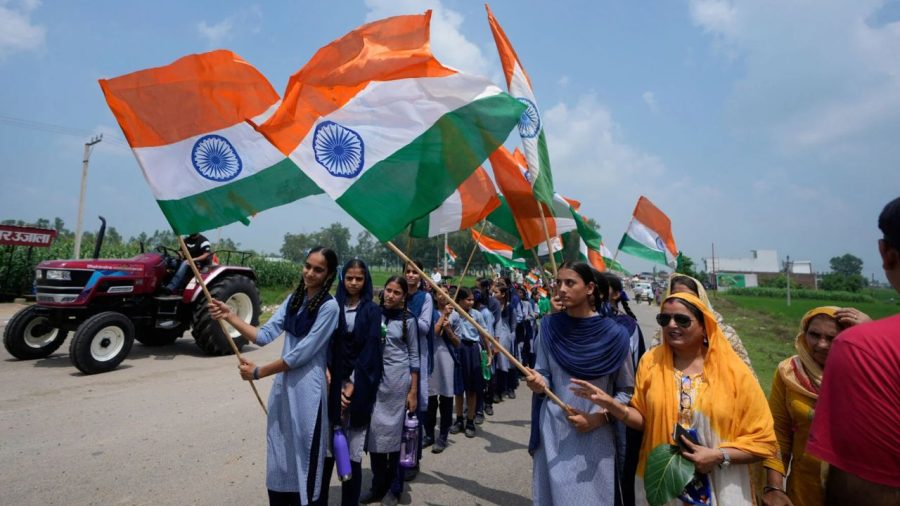

A new wave of student protests is sweeping across India, with children from government schools demanding safer buildings, better facilities and improved education standards.
At a primary school in Samuhi Bhatpurwa village in Uttar Pradesh, 122 students refused to enter their classrooms until authorities promised to build a new school building.
The protest, led by children as young as six, came after years of neglect and safety concerns, reports Al Jazeera.
The school’s current structure is in poor condition, with part of the building lying in rubble after a wall collapse severely injured a girl in 2023.
“I am happy. We will get a new building. We (the children) dread the school building would one day fall. Its condition is poor,” Priya told Al Jazeera. “The fear does not let us concentrate on our studies. That is why we all protested.”

Similar protests have emerged in at least 10 Indian states, including Maharashtra, Bihar, Rajasthan, Jharkhand and Madhya Pradesh, as students challenge poor infrastructure in government-run schools.
The protests follow earlier demonstrations by Gen Z youths over examination paper leaks, unemployment and flaws in the education system. The latest movement is being described as a Gen Alpha uprising, with younger students increasingly questioning authorities.




India has one of the world’s largest education systems, with 247 million students across 1.5 million schools. However, many government schools continue to struggle with inadequate buildings, shortages of teachers, electricity, drinking water and basic facilities.
“The children are demanding their rights. They want teachers, benches, school buildings, drinking water, electricity and toilets,” Bengaluru-based education rights activist Nagasimha Rao told Al Jazeera.
“Unfortunately, for a long time, the basic infrastructure and manpower to run schools have been missing. It is the story of most government-run schools across the country.”
Students at Sarvodaya Inter College in Uttar Pradesh protested over a lack of drinking water, electricity and benches. “No one can imagine how difficult it is for us to study in the school. There is no electricity, so no fans during the hot and humid summers.
We don’t have a drinking water facility. Many students sit on the floor because we don’t have enough benches. So we decided to protest,” class 12 student Manoj said.
The Right to Education Act, introduced in 2009, guarantees children aged six to 14 the right to education with standards for infrastructure, safety and teacher-student ratios.
Yet government data shows more than 100,000 schools still have only one teacher for all grades.
Education activists say urgent reforms are needed, including better infrastructure, more teachers and stronger accountability.
“The children are our future. If they don’t get proper education in a conducive atmosphere, it would derail India’s growth. These children are tomorrow’s voters too,” said Akash Sarkar, an education activist from West Bengal.
With more than 30 per cent of India’s population under 18, the growing student movement could become a significant political challenge ahead of the 2029 national elections.