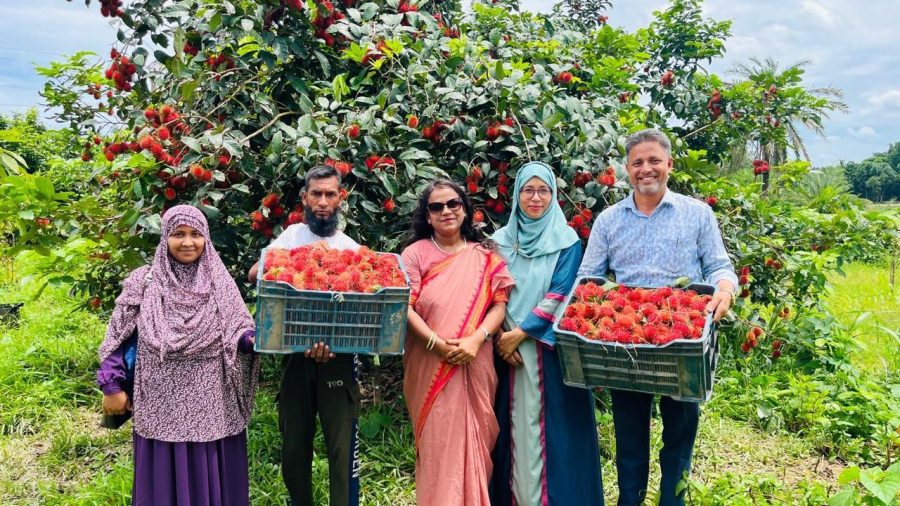

It looks like a litchi but is slightly larger, with long hair-like spines covering its skin. In Dhaka, rambutan sells for Tk1,500 to Tk2,000 per kilogram. Many buyers show interest when they see the fruit but lose enthusiasm after hearing the price.
Native to Southeast Asia, particularly Malaysia and Indonesia, rambutan is now widely cultivated in countries such as Thailand, Cambodia and the Philippines.
The fruit has also made its way to Bangladesh. However, its high price means it is currently consumed mainly by affluent people. Farmers and entrepreneurs hope that, like dragon fruit, rambutan will eventually become more affordable and accessible to a wider section of people.
When dragon fruit was first introduced in Bangladesh, many consumers were also discouraged by its price. Today, the nutritious fruit is sold for as low as Tk100 by mobile vendors.
Whether rambutan will follow the same path remains uncertain. But Taif Agro in Nandipara village of Bhaluka upazila in Mymensingh has already demonstrated its commercial potential.
Established by uncle-nephew duo Sheikh Ashraful Islam and Sheikh Mamun, the orchard sold rambutan worth around Tk7 lakh this year. Their success has attracted visitors from different parts of the country, many of whom come to learn about rambutan cultivation.

Spread across around 20 bighas, the orchard contains various local and foreign fruit varieties. Of the 400 rambutan saplings planted there, 212 trees are now producing fruit.
The orchard is managed by Sohel Rana, who returned from Malaysia. He told TIMES of Bangladesh that many saplings died after the initial planting, leaving the entrepreneurs disappointed.
However, their confidence returned when some trees started bearing fruit the following year.
“After the trees started producing fruit, the situation changed. We recovered our initial investment from fruit sales in the first year itself. Since then, we have focused more on orchard care and expansion,” he said.



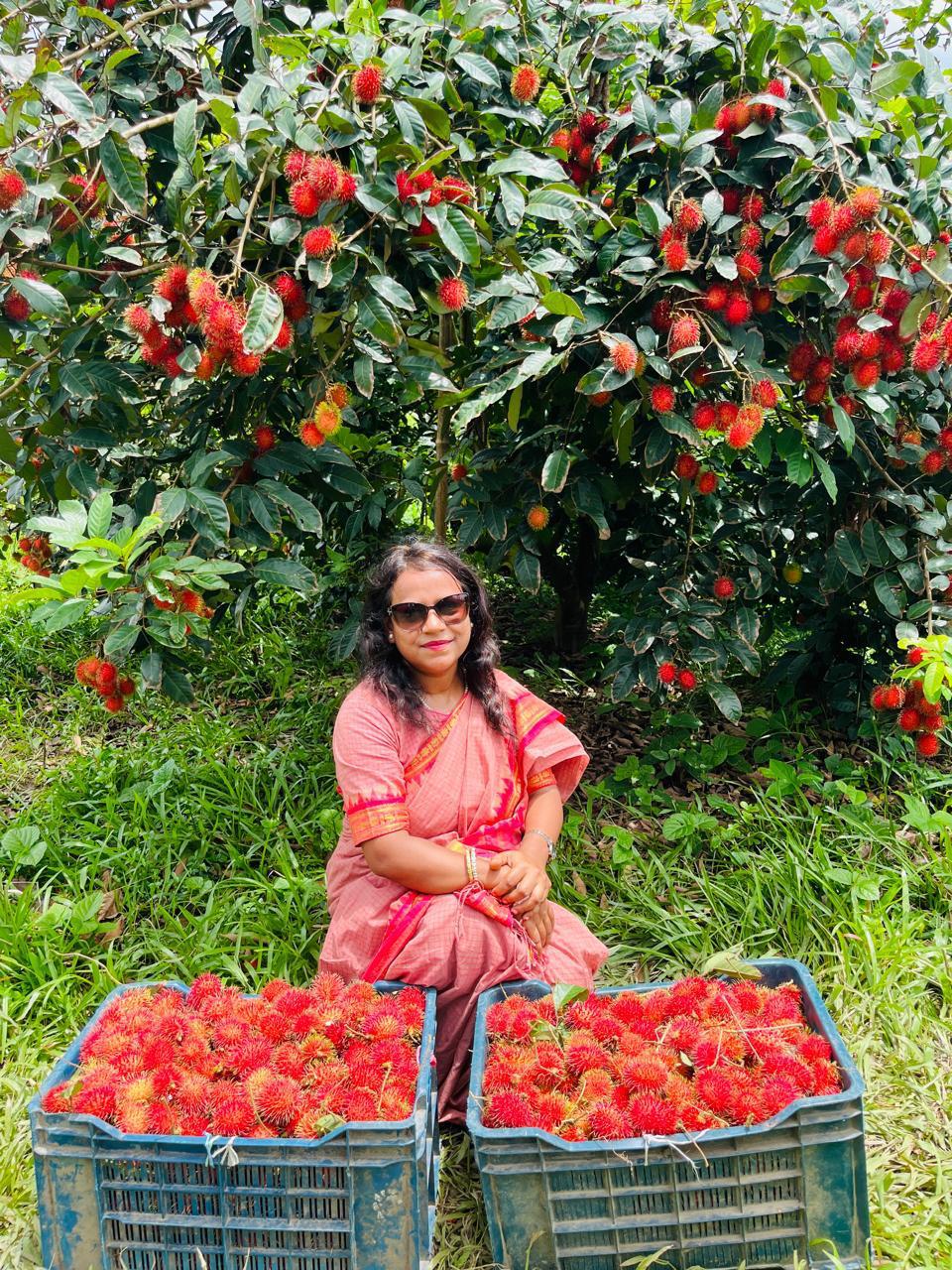
Rambutan from the orchard was sold at wholesale prices ranging from Tk1,200 to Tk1,700 per kilogramme. Local traders and online sellers later sold the fruit at higher prices.
Sohel said rambutan grows well in sandy loam soil and requires around 18 feet of spacing between trees for better production.
A mature rambutan tree can produce around 200 to 250 kilograms of fruit annually, he said. Some trees can bear fruit twice a year.
He added that the fruit is relatively easy to protect as its hard outer skin reduces attacks from birds, except squirrels.
Regular watering, the use of cow dung and organic fertilisers, and proper maintenance are essential for good yields, he said.
Taif Agro is also producing rambutan saplings. A nursery beside the orchard sells each sapling for around Tk2,000, with plants being delivered to different parts of the country through courier and transport services.
To ensure a steady supply of organic fertiliser, the entrepreneurs have established a cattle farm beside the orchard. Cow dung from the farm is used as fertiliser for rambutan trees, reducing costs while helping maintain soil quality.
The entrepreneurs hope to increase annual rambutan sales to Tk1.5 crore in the future.
Mamun’s interest in rambutan cultivation began in 2018, when he saw the fruit during a visit to Thailand. After visiting rambutan orchards there, he felt Bangladesh’s climate and soil conditions could also support the crop.
He said he was initially discouraged because the trees took time to bear fruit. However, the first harvest changed his outlook, and recovering the initial investment encouraged him to expand the orchard further.
Mainul Islam from Rajshahi became interested in rambutan cultivation after watching a YouTube video about Taif Agro. After visiting the orchard in Bhaluka, his interest grew further, and he is now planning to establish a rambutan orchard in Rajshahi.
He believes rambutan could become a new commercial fruit crop in Bangladesh.
Bhaluka Upazila Agriculture Officer Nusrat Zaman told TIMES that rambutan cultivation in Bangladesh is still at an early stage.
“However, acceptance of the fruit is gradually increasing. Many people are becoming interested after seeing Taif Agro’s orchard,” she said.
She said introducing new and promising fruit varieties could diversify Bangladesh’s agriculture while creating new income opportunities for farmers.