


In a remote village in Netrokona, where poverty has long shaped everyday life, a simple idea powered by rice husks and lanterns is quietly transforming the fortunes of hundreds.
Kuthurikona, a village in Madan Upazila, was once known mainly for hardship. Most families depended on agriculture, and many lived below the poverty line. Today, however, the gentle glow of hurricane lamps inside small hatcheries has become a symbol of opportunity — thanks to duck farmer Yasin Mia.
Yasin has revived an old, nearly forgotten egg-hatching technique, turning it into a thriving enterprise and inspiring hundreds to start their own duck farms in pursuit of self-reliance.
The story began nearly five decades ago when his elder brother, Hadis Ullah, developed a method for hatching duck eggs using rice husks and glass-chimneyed lanterns — locally called ‘hurricanes’ because of their wind resistance. Hadis developed the technique around 1975, but was unable to turn it into a commercial success. Following his untimely death, the practice risked disappearing entirely.

Yasin brought the idea back to life.
In the 1990s, he applied his brother’s method on a commercial scale, gradually building a flourishing hatchery. His success soon attracted young entrepreneurs from across Bangladesh, eager to learn this unusual yet effective approach. Instead of guarding his knowledge as a trade secret, Yasin chose to share it openly to help others establish their own businesses.
The technique is straightforward but requires patience and meticulous care. Requiring no electricity or expensive machinery, it relies on rice husks, hurricane lamps, bamboo mats, quilts, blankets, old sarees, bamboo and wood to create a low-cost incubation system.



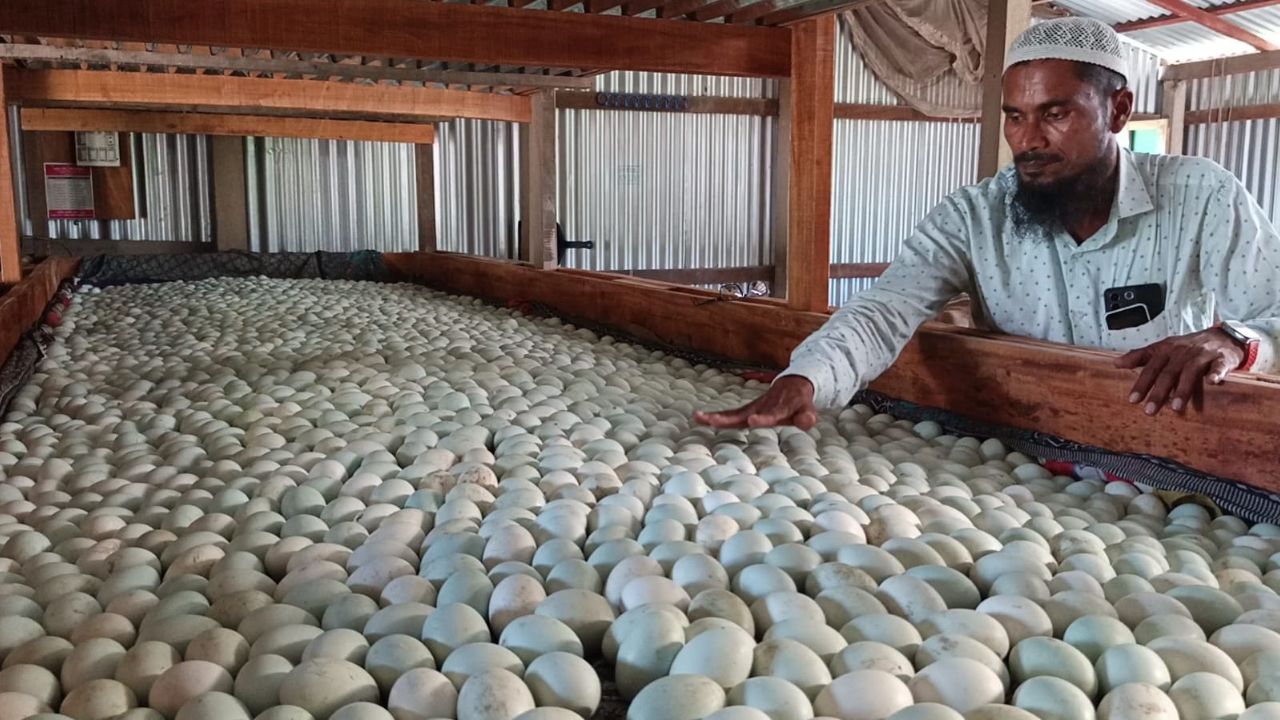
Eggs collected from various farms are carefully selected and sun-dried. They are wrapped in red cloth in bundles of 40 to 50. Inside the incubation room, large cylindrical chambers resembling traditional earthen stoves are prepared with layers of rice husks. Each chamber holds 700 to 1,000 eggs, while hurricane lamps provide the steady heat required for incubation.
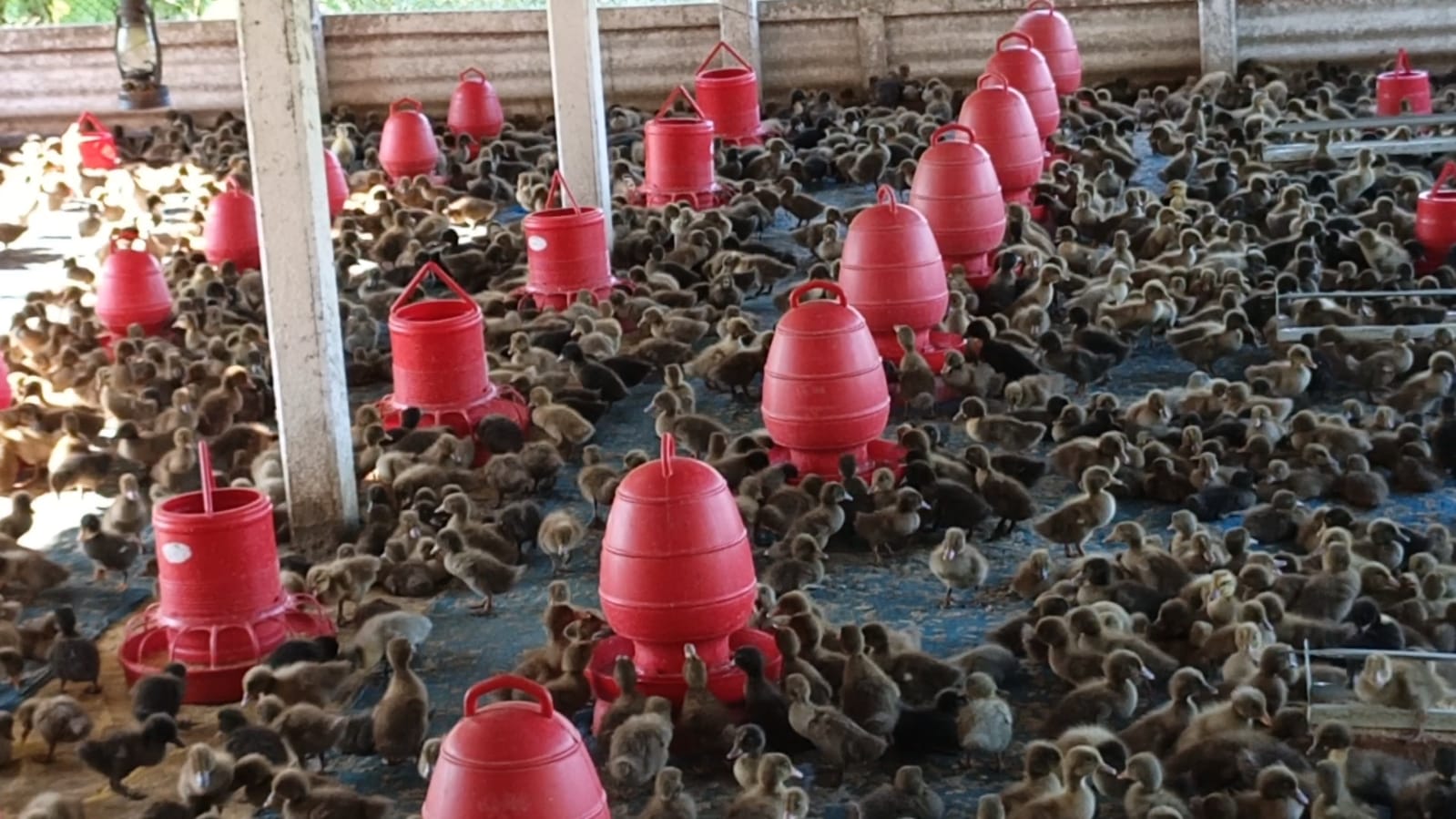
The eggs remain in these chambers for 18 to 20 days, during which the lamps are rotated regularly to maintain uniform heat.They are then transferred to a prepared bed lined with rice husks underneath and covered with quilts above. Within eight to 10 days, ducklings begin to emerge.
According to Yasin, the method achieves an 80 to 90 per cent hatch rate — comparable to electric incubators, which typically yield 75 to 90 per cent.
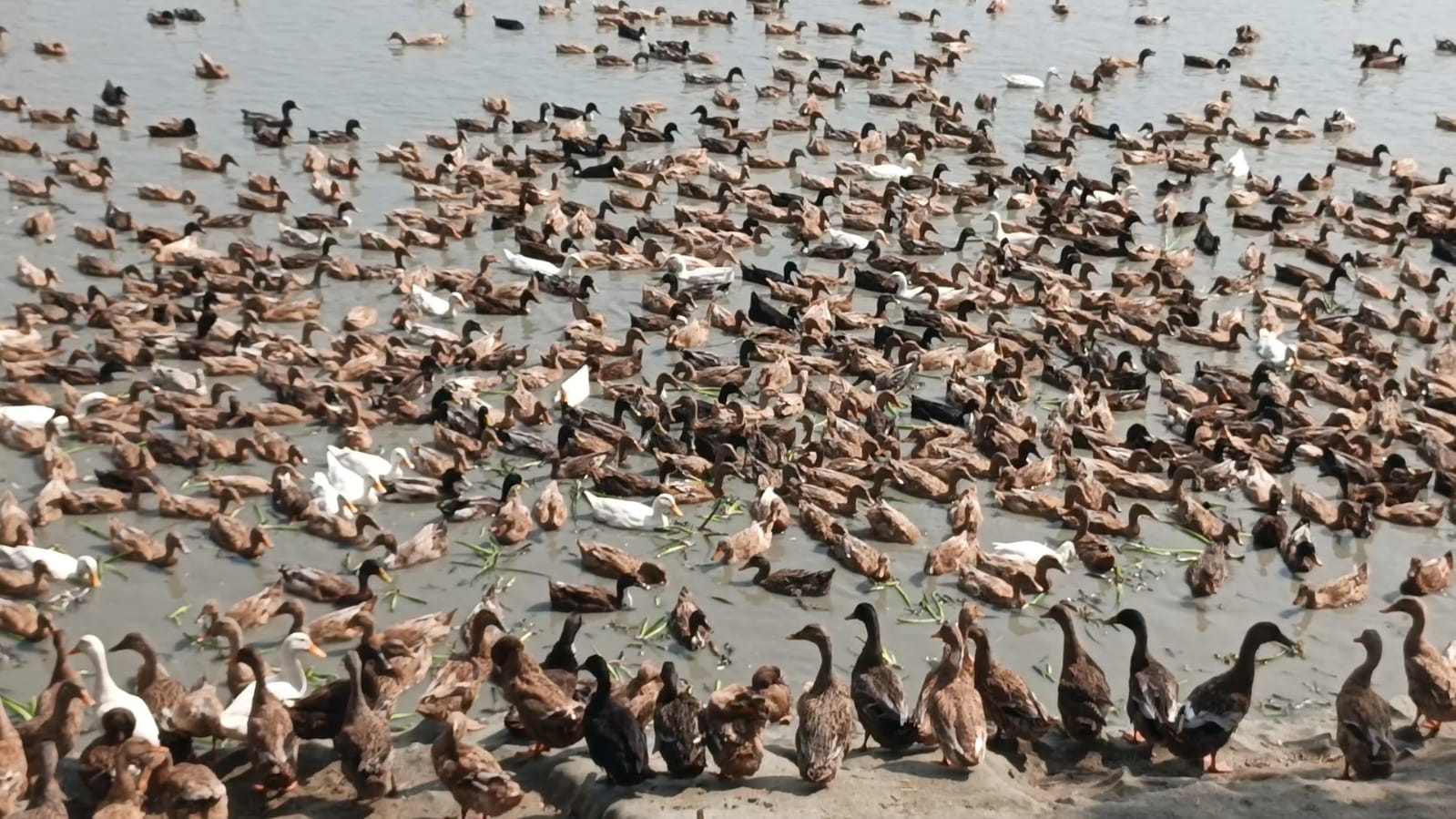
This combination of low cost and high efficiency has helped the technique spread far beyond Kuthurikona. As news spread through word of mouth and social media, farmers arrived from across Bangladesh to purchase ducklings or learn the method themselves.
Yasin has never viewed sharing knowledge as a threat. His training has helped hundreds of farmers establish duck enterprises in Netrokona and neighbouring districts. The technique has even gained international attention, drawing around 500 trainees from India. Consequently, the Bangladesh Livestock Research Institute has formally recognised him as an official trainer.
“I have become self-reliant, and by encouraging unemployed men and women into poultry farming, I have helped address local unemployment. Reflecting on this fills me with immense pride,” Yasin told TIMES of Bangladesh.
His farm has drawn visitors from across the country and abroad, including Netrokona deputy commissioners, senior livestock officials, agricultural scientists and journalists from the European Union. Netrokona District Livestock Officer Md Shahidul Islam praised Yasin’s impact, noting that initiatives are underway to help local farmers construct modern rearing units.
Today, Yasin continues to supply ducks nationwide while offering hands-on training to aspiring entrepreneurs.