
The catechu industry, known locally as Khoyer, once closely tied to Charghat’s identity in Rajshahi, now survives in only a handful of factories, down from over a hundred at its peak, according to local entrepreneurs.
The industry, which once supplied markets across Bangladesh, now struggles with raw material shortages, rising production costs, a lack of skilled workers and limited market management.
The trade has deep roots in the area. Local artisans practised catechu production before partition, and the industry expanded after skilled artisans arrived from India. It developed significantly in the 1960s and 1970s, when numerous factories were established across Charghat.
Catechu’s distinctive taste, colour and quality created demand as an ingredient for betel leaf and areca nut, sustaining many families directly and indirectly.
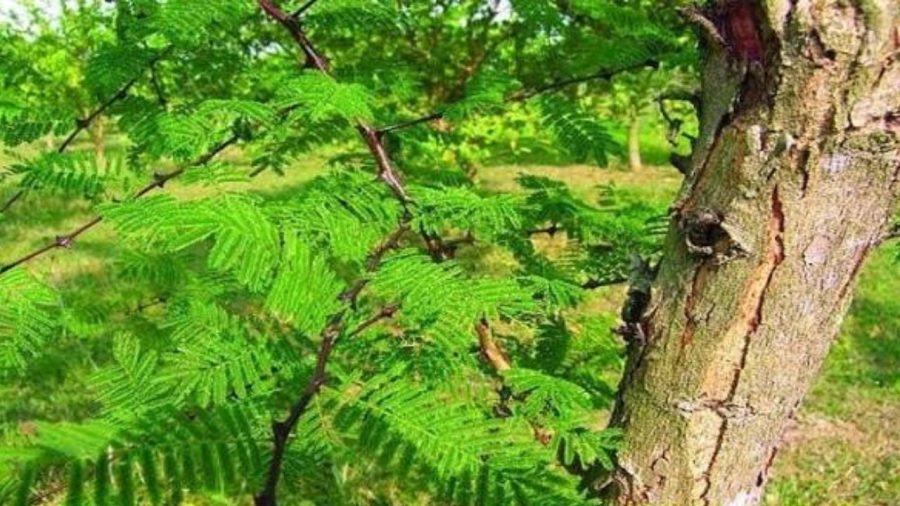
Catechu is made from the wood of the Khoyer tree. The wood is collected, cut into small pieces, boiled or soaked in water to extract the essence, which is then heated and thickened, cooled, solidified and cut or dried as required. Colour, density and quality depend largely on the production method, time and temperature, though traditional methods may vary among local artisans.
According to local entrepreneurs, only a few factories remain operational. Collecting Khoyer tree wood, the main raw material, has become harder than before. Fuel, labour wages and transport costs have risen, increasing production expenses. Many entrepreneurs have been forced to shut down after failing to get expected prices, sources said.

Catechu trader Enamul Haji said demand is fairly good at present, but rising raw material and production costs have driven many to change professions. He emphasised creating a permanent raw material source and providing financial support to entrepreneurs.
Another major problem is the lack of modern technology. Production is still largely done through traditional methods, reducing productivity and requiring more time and labour.
Limited modern processing, quality control and packaging also hinder entry into new markets. The shortage of skilled workers compounds the problem, as many in the new generation are not interested in the trade, leaving reliance on older artisans.



Researchers and entrepreneurs believe the industry can be developed as an agro-based small industry rather than being seen only as a traditional product. Alongside the conventional betel leaf and areca nut market, research into catechu’s potential multi-purpose uses could create opportunities for new products and markets. Quality production and modern packaging could open possibilities for foreign markets.
Researcher and writer Mahbub Siddiqui said viewing catechu only as an ingredient for betel leaf and areca nut limits its potential uses and market expansion. He said further research into catechu extract and ingredients could reveal new ideas for potential uses in natural colours, herbal and health-related products, and cosmetics. Research into multi-purpose use, modern processing and quality control is needed, he said. Assessing these possibilities and creating new products and markets could open opportunities to develop Charghat’s traditional catechu industry anew, he added.
Rajshahi has potential in agriculture and agro-based industries. Just as economic activities have grown around mango, silk and other locally produced goods, planned initiatives could add a new dimension to the local economy through the catechu industry, creating employment opportunities for artisans, workers, small entrepreneurs and raw material producers.
Local entrepreneurs emphasise government support to revive the industry, including easy loans, financial incentives, raw material preservation and supply arrangements, and modern technology. They believe support through institutions such as the Ministry of Industries, BSCIC and SME Foundation could bring closed or inactive small factories back into production.
They also stress planned cultivation of Khoyer trees. Establishing Khoyer orchards in specific areas, providing saplings and technical support to entrepreneurs, and building a long-term raw material supply system could strengthen the industry’s foundation. They also suggest activating catechu producer cooperative societies for integrated production and marketing.
Private investment and branding also hold potential. Modern packaging, quality control, branding and online marketing could introduce Charghat’s catechu to new customers.
Research into its production, heritage and local characteristics could help create new marketable products. Recognition of “Charghat Khoyer” as a geographical indication (GI) product could be considered, though historical, geographical and production-related information and evidence must be verified and necessary research conducted first.
Ibrahim Hossain, president of the Charghat Khoyer Industry Business Association, said the industry is not merely an old profession but has long been linked to the region’s economy, labour and local heritage. With proper planning, government patronage, private investment, technological development and market expansion, Charghat’s catechu industry could get an opportunity to turn around, he said.
According to Charghat Upazila Administration, Upazila Forest Department and Upazila Agriculture Department sources, the Agriculture Department has planted 22,200 Khoyer trees in the past five years. The Forest Department planted 35,550 Khoyer trees during the same period.
The Upazila Administration also planted about 40,000 Khoyer trees through students of various schools, colleges and madrasas. Earlier, since 2014, the departments concerned planted and distributed several lakh Khoyer trees at various times.
Upazila Forest Officer Mahbubur Rahman said more Khoyer saplings are being produced in recent years than other saplings.
He currently has about 2,000 Khoyer saplings, supplied as needed by the Upazila Administration and Agriculture Department.
Mahbubur Rahman said a Khoyer tree becomes suitable for catechu production at 15 to 20 years of age.
Some previously planted trees have already reached production stage and started supplying raw material to the market. The raw material crisis is expected to reduce considerably within the next five years, he said.