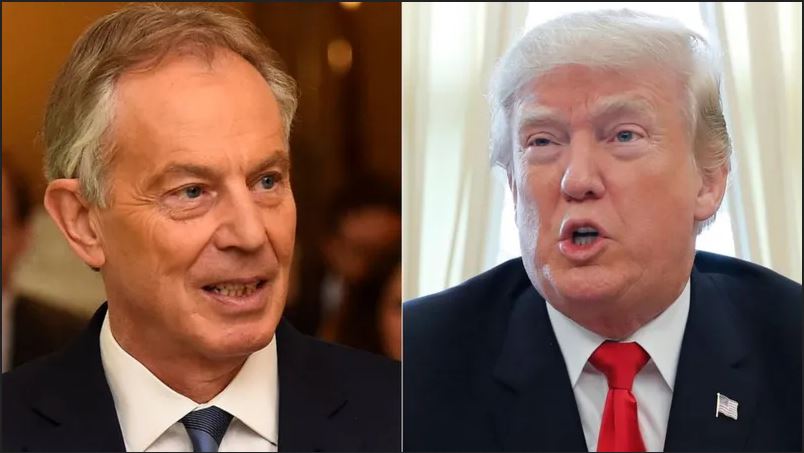

In 2017, Donald Trump handed his son-in-law Jared Kushner the impossible task of brokering peace in the Middle East. “If you can’t produce peace in the Middle East, nobody can,” Trump declared. Now, nine months into his second term, Trump has turned to a more seasoned but far more controversial figure: Tony Blair.
To call Blair’s appointment as Gaza mediator controversial is an understatement. It is an insult. Blair is not a man of peace- he is the architect of one of the most destabilising wars of modern times. His record is not a credential; it is an indictment.
In March 2003, Tony Blair led Britain into a war that would shatter Iraq and destabilise the Middle East for generations. The invasion was sold on the claim that Saddam Hussein possessed weapons of mass destruction. No such weapons existed. Blair presented the case with absolute certainty, brushing aside UN weapons inspectors and peaceful alternatives.
The outcome is etched in history: hundreds of thousands of Iraqis killed, millions displaced, a nation ripped apart, and a power vacuum that fed extremist violence across the region. What Blair called a necessary intervention has been remembered as a reckless act of aggression.

More than a decade later, the truth was laid bare. The Chilcot Inquiry in 2016 delivered a devastating assessment: intelligence was exaggerated, the threat from Saddam overstated, and the war launched before diplomatic options were exhausted. The legal basis for war was described as “far from satisfactory.”
Chilcot did not call Blair a war criminal — but it did everything short of it. The report stripped away his defences and left a clear conclusion: Britain went to war unnecessarily, and Blair drove it there.
When a former Iraqi general sought to prosecute Blair in 2017 for the “crime of aggression,” the UK High Court blocked the case. Judges admitted that while aggression is a crime under international law, it was not incorporated into domestic law. In effect, Blair walked free not because he was innocent, but because Britain had chosen not to make such crimes prosecutable at home.




It was a technicality, a loophole that placed him above accountability. Outside formal courts, symbolic judgments were harsher: in 2011, the Kuala Lumpur War Crimes Tribunal found him guilty of crimes against peace and humanity. But its rulings carried no enforcement power.
Adding bitter irony, Blair was appointed as the Quartet’s Middle East envoy in 2007. For eight years, he claimed to work on Israeli-Palestinian peace. In reality, his tenure produced little beyond photo-ops and frustration. His economic initiatives did nothing to resolve political realities, and his perceived closeness to Israel undermined his credibility.
By the time he stepped down in 2015, Blair was seen not as a mediator, but as a man who had squandered his mandate.
Now, Trump’s decision to reinstall Blair as a central figure in Gaza diplomacy in 2025 is the final absurdity. To Palestinians, Blair represents the Western leader who enabled war, occupation, and the normalisation of impunity. To Iraqis, he is the man who destroyed their country and never faced justice.
To place Blair in charge of Gaza is not just tone-deaf — it is grotesque. It asks the victims of war to accept the architect of another war as their peacemaker.
Each chapter reveals the same story: accountability denied, impunity rewarded. The international system shields him, while the people of Iraq and Palestine live with the wreckage.
If there is any lesson in Blair’s trajectory, it is that powerful leaders can wage catastrophic wars and return, years later, repackaged as elder statesmen. Until Tony Blair faces a genuine war crimes investigation, every new role he is handed is not just a misjudgement — it is a moral failure of the international community.
The writer is a journalist