Last week, as I navigated the late-evening chaos of Farmgate searching for a rickshaw, an incident occurred that shook me deeply; a stark reminder of the dangers women face daily in Dhaka.
I remember the moment vividly. Buses honking, street vendors shouting, pedestrians weaving through traffic. A man walked past me, seemingly unremarkable. Seconds later, I felt something warm hit my back. It soaked through my jeans and penetrated the thick fabric, hitting my skin. By the time I registered what had happened, the perpetrator had vanished into the crowd, just another face lost in the sea of people.
The unidentifiable liquid made me feel violated in a way that goes beyond physical discomfort: dirty to the soul, as if the very act was an attempt to diminish my humanity.
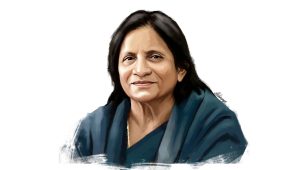
Speaking to Shabana (pseudonym), a gender-rights activist based in Dhaka, about the incident and its broader implications of viewing women as objects of societal degradation, she said, “When we discuss such incidents, it’s important to remember that filing cases rarely leads to significant change. Legal action alone cannot address the deep societal and psychological shifts needed to truly ‘solve’ these problems. What people need most is a change in mindset.”

While the substance itself was probably not harmful to the skin, the fact that he felt entitled to throw something on me just because I am a woman exposes the depth of animosity some men harbour toward women in this city who do not conform to their orthodox societal expectations. It was not just an attack on my body, but an assertion of control and intimidation.
Dhaka, a city of over 20 million, can be unforgiving for women commuting alone. Incidents like mine highlight a broader, systemic issue: public spaces remain largely unsafe, and harassment has evolved into subtler and more disturbing forms.
Despite campaigns and awareness programs, a culture of impunity persists. Most perpetrators go unpunished, emboldened by a society that often dismisses or normalises harassment, shifting the blame onto victims rather than addressing the root causes.




Shabana elaborated on how radical societal change might occur. “Change can happen in two ways. For men, education is the most impactful pathway. Equally important are their upbringing, the values imparted by their parents, their academic learning and how they perceive women. For women, change comes from unlearning the idea that they are the ‘weaker’ gender, a mentality that has been internalised over generations. Ironically, women themselves are often the flagbearers of patriarchy.”
“Ultimately, individual psychology contributes to collective societal behaviours. Legal reforms and policy changes are secondary. If taking a crime to court were enough to stop it, the world would already be free of crime. True change comes from transforming mindsets collectively,” she added.
It is not a secret that women in Dhaka live under a persistent threat. The danger is not only physical. It’s also psychological. Every woman walking alone carries an invisible burden of fear. This is a systemic failure that affects the city’s social fabric through gender-bias notions that are a by-product of mainstream and internalised hyper-patriarchal narratives.
Asked how a society so deeply rooted in patriarchal values can achieve such radical change, she responded, “Reforming education is the first step. Schools often teach children that women should stay at home and manage domestic responsibilities, while men go out to provide for the family. This reinforces male dominance within our societal systems. To achieve meaningful change, these narratives need to be uprooted from the earliest stages of learning.”
The psychological toll outweighs the physical toll. Even after the incident, I find myself scrutinising every passerby, alert to every movement, hyper-aware of every crowded street and borderline terrified of commuting via that neighbourhood. Social media, while useful for exposing harassment, can also amplify misinformation and victim-blaming, compounding the sense of insecurity.
Walking through Dhaka now, I carry both caution and resolve and a determination to live my life, even in a city that too often feels hostile.
My experience is personal, but it is also a reflection of the daily reality for countless women navigating these streets. Without systemic change, half of Dhaka’s population remains at risk every time we step outside.
Yet, life goes on. Despite the fear, women continue to walk Dhaka’s streets out of necessity. We hope for a day when the city allows us to exist freely, without the constant dread of attack or scrutiny.
Until that day, incidents like mine serve as a reminder that women’s safety in Dhaka has reached a critical point and meaningful action, from the societal to policy levels, is urgently needed.