Questions are being raised about whether an albino white buffalo – popularly known as the “Donald Trump” that narrowly escaped sacrifice during Eid—is actually doing well in captivity at the Bangladesh National Zoo in Mirpur, Dhaka.
Social media users have increasingly called for the animal to be returned to its original farm, arguing that it may be stressed and unhappy in its new environment.
The buffalo, which grew up on a farm alongside several other animals, now appears visibly subdued and isolated in the zoo enclosure.
A former zoo official said the animal may be under pressure due to constant human attention, although the current curator insists that it is being properly cared for.
Professor Sayeda Begum of the Department of Zoology at Jahangirnagar University told TIMES of Bangladesh that the decision to keep a domesticated animal in a zoo for display purposes is itself debatable.

Responding to concerns over the buffalo’s behaviour, she said prolonged isolation can alter animal behaviour. “If animals of the same species are present, such risks are usually reduced,” she added.
The buffalo gained national and international attention during this year’s Eid-ul-Adha season.
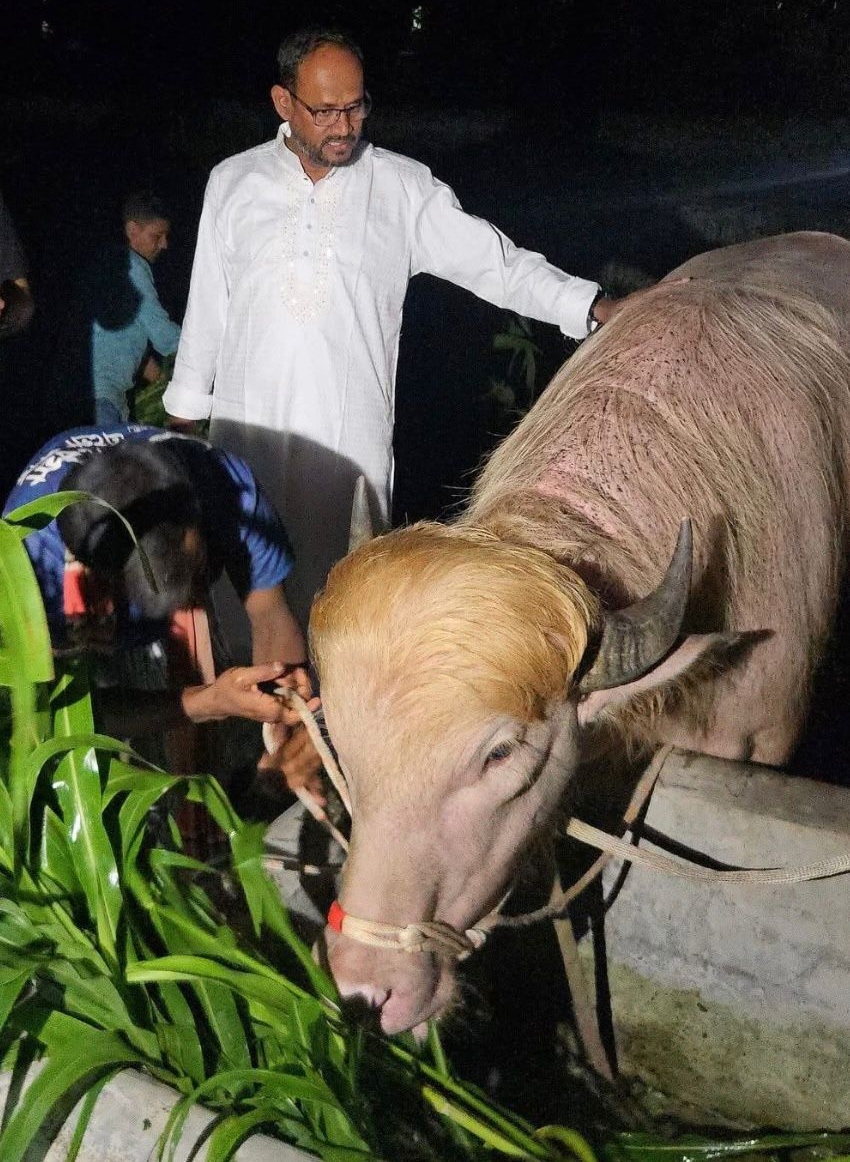
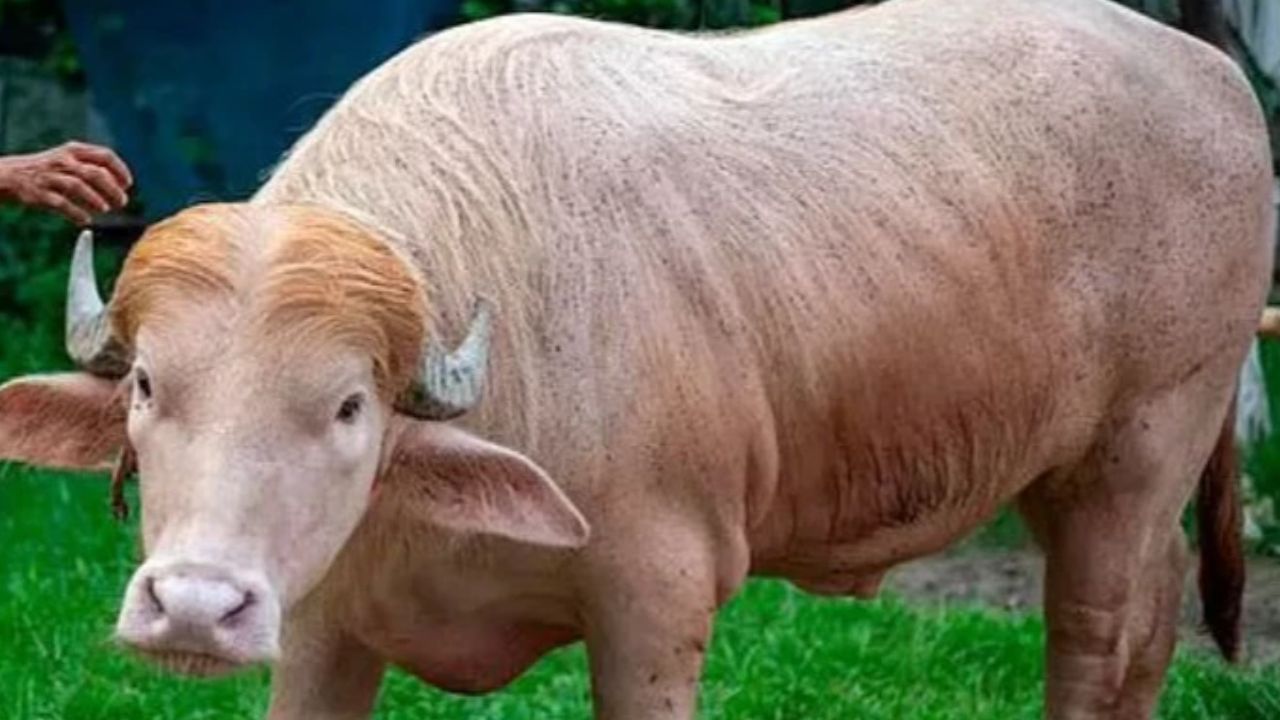
While living at a farm in Narayanganj, it was nicknamed “Donald Trump” due to its white coat, blondish hair-like tuft on its head, and perceived resemblance of its eyes to that of the US president.




The farm owner used to groom its hair in a style similar to Trump’s hairstyle, further popularising the name.

The animal was reportedly sold for sacrifice during Eid, but later moved to police custody before being transferred to the Dhaka zoo.
Authorities described it as a rare breed and decided to keep it under state protection. However, the farm owner, Zia Uddin, told TIMES that around 10 similar buffaloes still remain at his farm in Narayanganj.
Zoo curator Md Habibur Rahman said the animal is being cared for in the same manner as it was at the farm.
“It is being looked after just as it was before. It is bathed three times a day, and its food remains the same as on the farm,” he said.
Professor M Monirul H Khan of Jahangirnagar University said that while animals may show behavioural changes in new environments, there is no immediate evidence of severe distress simply due to isolation.
“The current environment is different from the farm setting, but isolation alone does not necessarily cause immediate serious problems,” he said.
He added that zoo authorities may justify keeping the animal if there is public interest in its display.
Former zoo director Abdul Latif noted that behavioural changes could be temporary due to environmental stress.
“A sudden change of environment, relocation, and the presence of large numbers of visitors can create stress. This may affect behaviour,” he said.
He also emphasised that buffaloes are social animals and ideally should not be kept alone indefinitely.
When asked whether a companion would be arranged for the buffalo, curator Habibur Rahman said, “If higher authorities instruct us, we will bring one.”