Bangladesh and Türkiye have agreed to further strengthen defence cooperation through a series of strategic initiatives, reflecting a shared ambition to expand collaboration beyond traditional sectors.
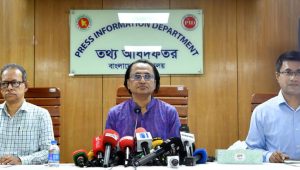
The commitment was reaffirmed at a joint press conference in Dhaka on Friday following talks between Foreign Minister Khalilur Rahman and his Turkish counterpart Hakan Fidan.
Rahman identified defence manufacturing as one of the most promising areas for future cooperation, alongside textiles and apparel, shipbuilding, pharmaceuticals, infrastructure development, renewable energy, information and communication technology, smart technologies, and civil aviation.
Echoing that sentiment, Fidan said Ankara was committed to deepening its longstanding partnership with Bangladesh across a broad range of sectors.
“We are exploring initiatives to increase our bilateral trade volume from $1.3 billion to $2 billion. There are steps we can take to enhance our cooperation in various fields, particularly in the defence industry. We thoroughly reviewed all these matters with my esteemed colleague,” he said.

The growing focus on defence cooperation comes as both countries seek to diversify partnerships and strengthen their positions in an increasingly competitive international environment.
According to the Stockholm International Peace Research Institute (SIPRI), Türkiye is the third-largest supplier of defence equipment to Bangladesh, while Bangladesh ranks among the top buyers of Turkish military hardware.
Between 2009 and 2025, Bangladesh procured a range of Turkish defence systems, including Teber guided bombs, Bayraktar TB-2 armed drones, Boran 105mm towed artillery systems, Cobra armoured personnel carriers, TRG guided rockets, CIRIT air-to-surface missiles, and T-129B ATAK combat helicopters. The total value of these acquisitions exceeded $170 million.
Middle power, minor power
Deeper engagement with Türkiye, a rising middle power with an increasingly sophisticated defence industry, could provide Bangladesh with greater strategic flexibility and bargaining power.




Former ambassador Md Sufiur Rahman said closer ties with Ankara would offer Dhaka additional options in an international system increasingly shaped by competition among major powers.
“Türkiye is a middle power. A minor power like Bangladesh gains more leverage and strategic options when it develops closer relations with middle-power countries,” he told TIMES of Bangladesh.
According to the Lowy Institute’s Asia Power Index, Bangladesh ranks 20th among 27 evaluated countries and territories in the Asia-Pacific region, placing it in the category of a minor power. By contrast, Türkiye possesses one of the strongest military capabilities in its region and maintains Nato’s second-largest standing military force.
Bangladesh currently sources military equipment from a diverse group of suppliers, including China, Russia, the United States, and India. Expanding procurement options strengthens Dhaka’s negotiating position and reduces dependence on any single supplier.
“In economics, the more options a buyer has, the better its bargaining position. Expanding defence partnerships is therefore beneficial for Bangladesh,” Sufiur Rahman added.
Expanding defence cooperation
Over the past two decades, Türkiye has transformed itself from a major importer of military equipment into a significant producer and exporter of advanced defence technologies. The country is particularly known for its combat drones, precision-guided munitions, naval platforms, and indigenous armoured vehicles.
Dhaka and Ankara currently maintain several defence-related memoranda of understanding. Officials from both countries are now considering bringing these arrangements under a broader umbrella framework to streamline cooperation and facilitate long-term collaboration. Bangladesh is reviewing a draft proposal shared by Türkiye, confirmed a foreign ministry official.
Defence ties have expanded considerably in recent years, with Turkish companies participating in a range of projects involving Bangladesh’s armed forces. These engagements have contributed to enhancing the country’s defence capabilities and operational readiness.
A former Bangladeshi diplomat who served in Türkiye said the country’s defence industry offers an attractive combination of quality and affordability.
“Türkiye produces Nato-standard defence equipment at competitive prices. Bangladesh can access high-quality systems at a lower cost compared to many alternatives,” he said, wishing to remain anonymous.
However, he cautioned that any long-term strategic engagement would require careful consideration of geopolitical sensitivities and regional dynamics.
“Bangladesh needs to assess both the opportunities and the challenges before moving towards a deeper long-term defence partnership with Türkiye,” he added.