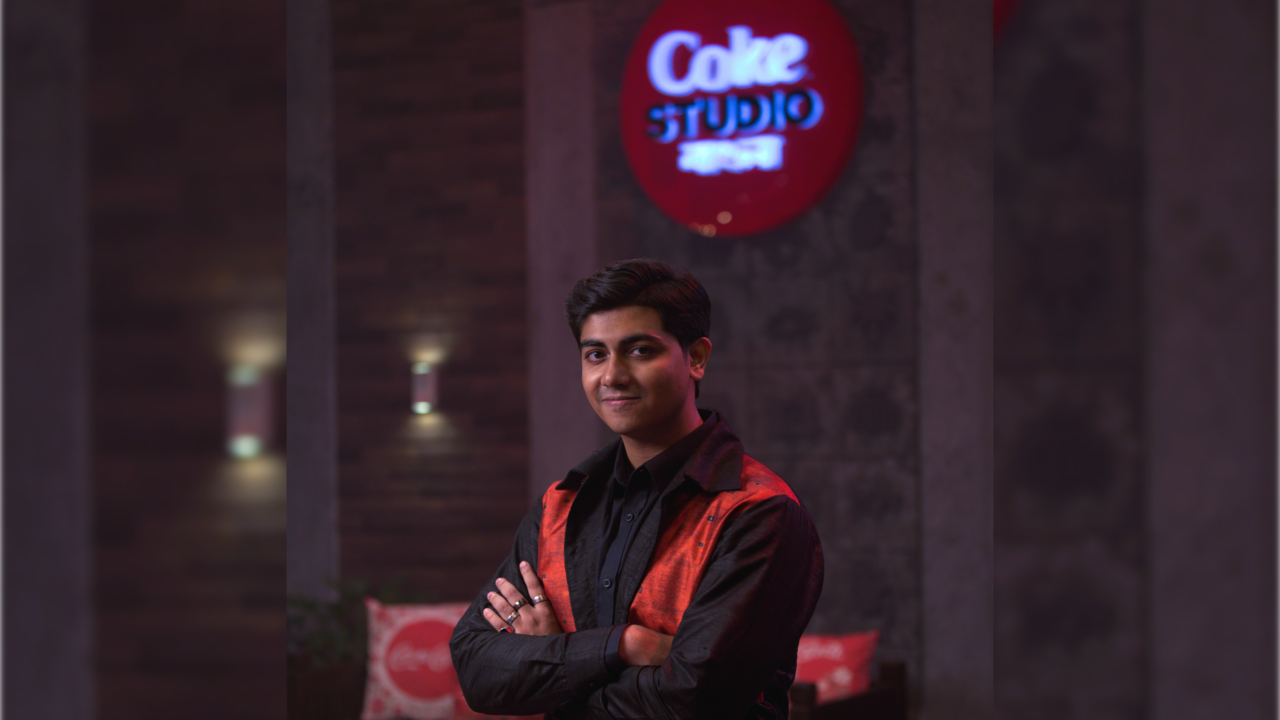

As Coke Studio Bangla returned with its fourth season on May 23, opening with the Nazrul Sangeet-inspired track Room Jhoom, the launch marked not only the birth anniversary of national poet Kazi Nazrul Islam but also singer Mahtim Shakib’s long-awaited debut on the celebrated platform.
In an exclusive conversation with The TIMES of Bangladesh, Mahtim reflected on a journey that began nearly three years before the song’s release.
According to the singer, musicians Amzad Sumon and ZooeL Morshed first contacted him, which eventually led him to Coke Studio Bangla curator and music producer Arnob’s studio without disclosing many details about the project. There he met composer and producer Shuvendu Das Shuvo, whom he had known since 2018.
“We recorded an early version when it was still a rough sketch,” Mahtim recalled. “After that, various circumstances caused delays, and the project remained on hold for a long time.”
The initiative resurfaced after Ramadan this year when he was contacted again through the Coke Studio Bangla team. By then, the concept had evolved significantly and the version audiences hear today was developed only a short time before recording.
For Mahtim, the opportunity carried special emotional weight.
“We’ve grown up listening to this song in many different forms,” he said. “As musicians, we already had an emotional connection to it. Being able to perform a song by our national poet is something I consider a blessing.”
Yet recording the track proved challenging. The arrangement required him to sing in a significantly lower register than he is accustomed to, while recurring seasonal throat issues made matters even more difficult.

The singer admitted that despite the positive reception, he remains somewhat self-critical about his performance.
“There was pressure because the recording, shooting and release schedules were moving quickly,” he said. “Shuvendu da helped me tremendously throughout the process. I managed to get through it, but I wouldn’t say I finished with full marks.”
Mahtim praised the video production unit and the actors in the project (Rawnak Hasan, Syeda Sadia Mehjabin, Rudra Sankar Roy and Afrida Haque Maria) and also praised co-singer Nusrat Jahan, whose appearance on Room Jhoom marks her musical debut.
“She’s much younger than us, but she handled the responsibility very maturely,” Mahtim said. “For a debut performance under this level of pressure, she did an excellent job.”




The singer also spoke fondly about collaborating with Turkish artists Hande Cevgel and Mustafa Ipek, describing the atmosphere on set as vibrant and creatively energising despite language barriers.

“Music made communication easy,” he said. “Everyone was sharing ideas, singing fragments of songs and creating moments together. These kinds of collaborations help artists grow.”
Beyond the music, one of the most intriguing revelations from the interview was Mahtim’s continued absence from social media.
Unlike many contemporary artists, he does not maintain a personal Facebook account. His professional pages are managed by team members, while he remains entirely offline.
The decision, he explained, stems partly from a desire to avoid distractions. Even as a teenager, he preferred focusing on long-term goals rather than spending hours online.
However, another reason is tied to a disturbing experience from his school days.
While preparing for his JSC examinations in Class Eight, Mahtim, a then-student of Dhanmondi Govt. Boys High School, came across a graphic Facebook post showing the aftermath of a brutal crime against a woman. The gory image affected him so deeply that he struggled to sleep for several nights and found it difficult to concentrate on his mathematics examination.
“I somehow managed to get through the exams, but it stayed in my head for days,” he recalled.
The experience prompted him to deactivate his Facebook account immediately after the examination, a decision he has never reversed to date.
As a result, Mahtim remains largely unaware of the online response to Room Jhoom. Instead, feedback reaches him through phone calls, personal conversations and chance encounters.
“People tell me they hear the song while driving or at different places they visit,” he said. “Those are the reactions I get, and I always appreciate them.”
As Coke Studio Bangla embarks on its fourth season with eight new songs planned, Mahtim considers himself fortunate that his debut on the platform came through one of its most ambitious cultural collaborations.
“I feel lucky,” he said. “To be part of the season’s opening song and to do it through a Nazrul composition, that too marking his birth anniversary, makes it even more special.”

Mahtim’s musical journey began at the age of four at Chakrabak Academy. He credits his early training to Nishi Sir, Shuvro Sir and Dipu Sir before going on to study under the late Ustaad Rafiq Mahmud. He is currently learning folk music and the dotara from Fakir Arif Baul.
“There is no end to learning,” Mahtim reflected. “Honestly, I feel I have only just begun.”
As of this report, ‘Room Jhoom’ stands at more than 7.2 million views on YouTube.