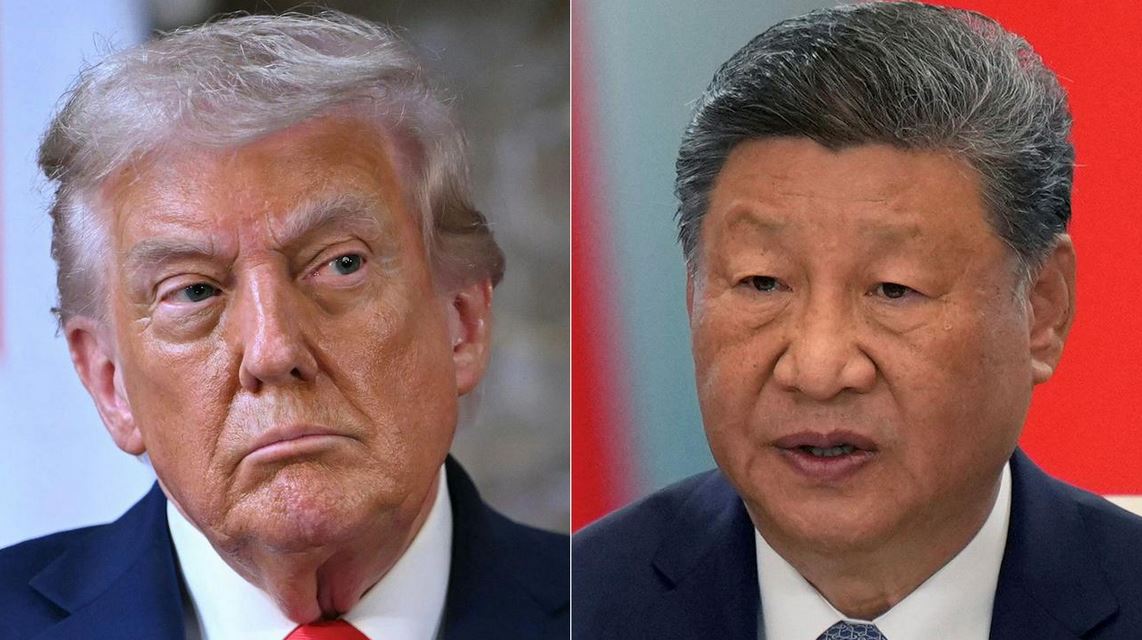

The White House has confirmed that US President Donald Trump will hold a bilateral meeting with Chinese President Xi Jinping in South Korea on 30 October, coinciding with a major regional summit.
The planned engagement — under discussion for several weeks — comes amid heightened friction between Washington and Beijing over trade and technology. It will be the first in-person meeting between the two leaders since Trump returned to power.
Trump has warned that the United States will apply a 100 percent additional tariff on Chinese exports from November unless Beijing reverses its recent tightening of rare earth shipments.

Speaking at a briefing Thursday, White House Press Secretary Karoline Leavitt said the bilateral discussion will take place on the sidelines of the Asia-Pacific Economic Cooperation Summit (APEC), scheduled in Gyeongju from 31 October to 1 November.
“We have a pretty long meeting scheduled,” Trump had said earlier, expressing optimism about resolving “doubts and questions” between the two major economies. “I think something will work out. We have a very good relationship, but that will be a big one.”




The US president will also meet South Korean President Lee Jae Myung and attend a leaders’ working dinner during his visit. His trip includes a stop in Malaysia for the Association of Southeast Asian Nations (ASEAN) summit on Sunday, where he is expected to engage with regional counterparts, including Japan’s new Prime Minister Sanae Takaichi.
Trump and Xi have held multiple phone conversations this year — most recently in September regarding US operations of TikTok — but they have not sat down face-to-face since 2019.
Both countries have maintained a fragile truce since a May pact avoided a surge to triple-digit tariffs. However, China’s recent rare-earth export curbs triggered Trump’s threat of further punitive measures. On social media, he accused Beijing of acting “hostile” and said it was trying to keep the world “captive”.
China holds dominant control of rare earth production used in vehicles, smartphones, and electronics, making the dispute a critical point in the broader economic rivalry.