Bangladesh and China are preparing to launch a new “2+2” dialogue mechanism on diplomacy and defence by November, marking a significant expansion of strategic cooperation between the two countries.
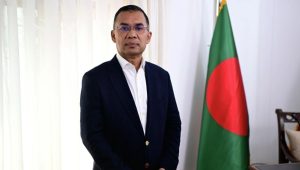
The first meeting is expected to be held at the state minister level, with State Minister for Foreign Affairs Humaiun Kobir and prime minister’s Defence Adviser Brigadier General (retd) AKM Shamsul Islam, likely to lead the Bangladesh delegation.
The two countries agreed during Prime Minister Tarique Rahman’s visit to China in June to explore a diplomacy and defence dialogue mechanism and begin the process this year.
Kobir told journalists on Sunday that preparations were underway for the engagement.
“Look, regarding China’s 2+2 dialogue… As we have previously made you aware, this represents one of the highest levels of strategic cooperation with China. When a bilateral relationship reaches this stage, initiatives like the 2+2 approach, along with the shared community approach they (China) pursue, naturally come to the table,” he said.
“We will engage from a position of strength. The groundwork for the 2+2 engagement is currently being laid for further interactions. So yes, it will commence at a mutually convenient time in the very near future,” he added.

China is an important development partner of Bangladesh, and Dhaka will use the new platform to discuss ways to further strengthen bilateral relations, Kobir said.
The proposed 2+2 dialogue is part of a broader effort to implement the joint communique issued following Tarique’s June visit to China.
The two sides are also preparing to hold a minister-level strategic dialogue as soon as possible.
The final report of a feasibility study on the Teesta River Comprehensive Management and Restoration Project is scheduled to be completed by December. Based on the findings, Bangladesh and China are expected to begin discussions on possible cooperation.




The two countries have also agreed to explore mechanisms to boost regional connectivity through the development of the China-Myanmar-Bangladesh (BCM) Economic Corridor, a project that has drawn the interest of the Chinese leadership.
A framework agreement for the modernisation of Mongla Port and the associated loan proposal have been finalised, with the loan agreement expected to be signed soon.
Meanwhile, the groundbreaking ceremony for the China Economic and Industrial Zone has already been held. Chinese entrepreneurs are expected to begin investing in factories there by December next year.
Teesta study nearing completion
Dhaka and Beijing initially signed an agreement in 2019 for China to conduct a feasibility study on the Teesta River project, with the final report originally scheduled to be handed over by December 2024.
The process was later halted after the then Bangladesh government asked China to stop the study.
Following the fall of the Awami League government, then foreign adviser Md Touhid Hossain visited China in January 2025, and discussions on completing the feasibility study resumed. Bangladesh and China subsequently signed another agreement to complete the study by December 2026.
The issue was also discussed during Tarique’s visit. Beijing agreed to provide support within its capacity for the Teesta project and assist experts from both countries in expediting the feasibility study and related work.
Officials said the two sides would decide on the next course of action after the feasibility study is completed, with any future cooperation to be determined through negotiations.
Beijing pushes regional connectivity
Regional connectivity was another issue discussed as part of the growing Bangladesh-China partnership.
Chinese President Xi Jinping has expressed interest in improving regional connectivity, with the China-Myanmar-Bangladesh Economic Corridor among the projects considered important by Beijing.
Although the BCM corridor was not mentioned in the joint communique issued after Tarique’s visit, it was referred to in a statement issued by the Chinese president’s office following his meeting with the Bangladesh prime minister.
The issue was also discussed when Chinese Ambassador Yao Wen met Kobir on Sunday.
During the meeting, Ambassador Yao briefed Kobir on upcoming high-level exchanges and visits between the two countries.
These include planned visits to Bangladesh by the Vice President of the China International Development Cooperation Agency, the Minister of the International Department of the Communist Party of China Central Committee, and the Executive Vice Governor of Yunnan Province.
Yao also invited Kobir to visit China in October.
The planned exchanges are expected to add momentum to the implementation of agreements reached during Tarique’s June visit and further broaden cooperation between Dhaka and Beijing in diplomacy, defence, infrastructure, trade and regional connectivity.