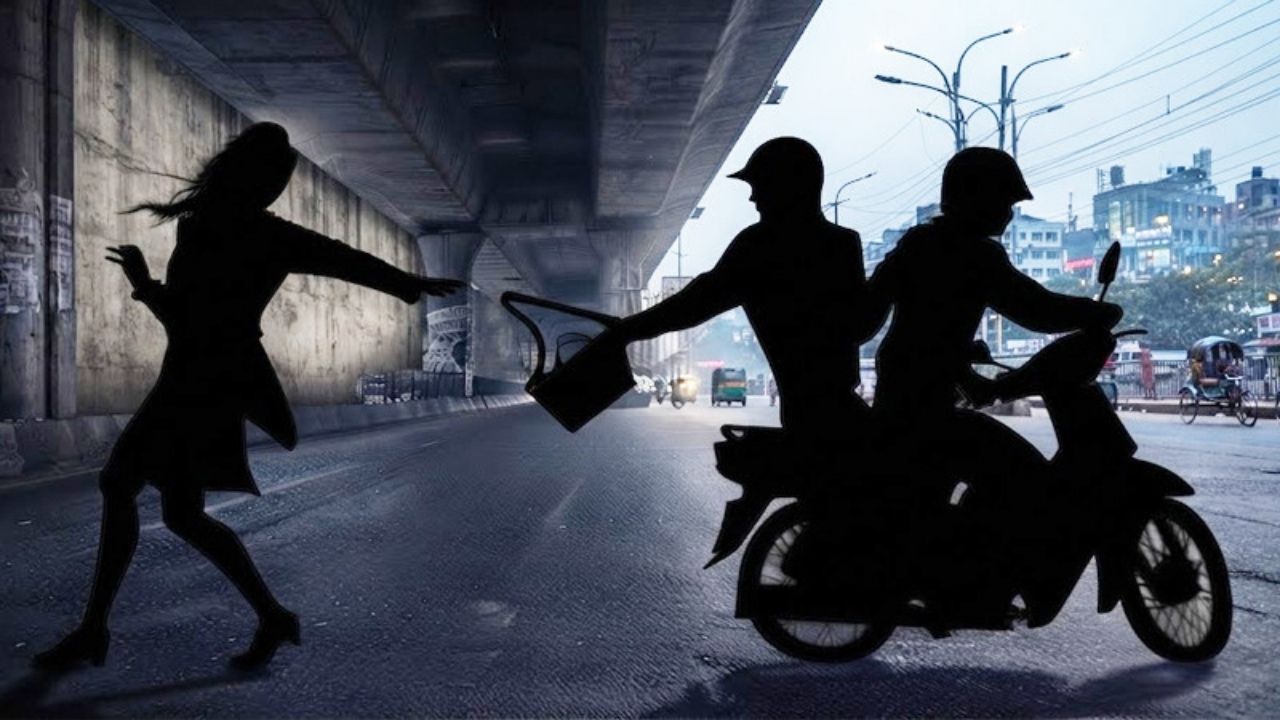



For victims of snatching in Dhaka, arresting suspects is often only the beginning. Many cases remain unresolved for years, while accused persons return to crime after securing bail.
Lawyers and police officials say investigations often gain urgency only when snatching turns deadly. Weak follow-up, lack of witnesses and prolonged trials prevent many cases from reaching verdicts.
A decade after grocery shopkeeper Abdul Kuddus was stabbed to death during a snatching incident in Bangshal, accused Masum Mia alias Kalu was sentenced to life imprisonment on 12 August.
However, the murder case over dental surgeon Ahmed Mahi Bulbul, who was stabbed during a snatching attempt in West Kazipara in 2022, remains unresolved.
Lawyers say snatching cases reach the verdict stage only when they involve murder or serious injuries.
Farzana Yeasmin Rakhi, a Dhaka Judge Court lawyer, told TIMES, “Verdicts in snatching cases are rare. Most cases remain pending because investigations do not progress properly.”
Court data shows police file 60 to 70 percent of snatching cases. Even after arrests, cases often weaken due to a lack of witnesses, while many accused secure bail and return to crime.

Those released on bail frequently fail to appear before courts, leading to fresh warrants. However, re-arrest usually happens only after another offence.
Slow trials also discourage victims from pursuing cases. Police officials say repeated court appearances, delays and uncertainty often lead complainants to lose interest.
Following the August 2024 mass uprising, criticism over rising snatching incidents intensified amid concerns over weakened policing. Yet many victims still avoid filing cases, while those filed often fail to progress.
On Saturday, a schoolteacher from Bogura died after falling from a rickshaw during a snatching attempt in front of the parliament building. Police arrested two suspects within 24 hours.




However, such swift action is rare unless incidents attract major public attention. In many cases, arrests do not translate into timely trials.
Md Tawohidul Haque, associate professor at the Institute of Social Welfare and Research of Dhaka University, said weak enforcement and slow legal processes allow offenders to exploit the system.
“When crimes like snatching are treated as relatively minor offences, criminals take advantage of the weakness,” he told TIMES.
He said some offenders, including drug-dependent individuals, turn to crime after becoming disconnected from education, employment and social support systems.
Dhaka Metropolitan Police Additional Commissioner Mohammad Osman Gani said economic hardship and easy access to bail contribute to repeat offences.
“Many return to crime after getting bail. If professional snatchers are properly presented before courts, the number of repeat offences could be reduced,” he said.
State prosecutor Faruq Hossain Faruki said repeat offenders need closer monitoring and organised snatching networks must be dismantled.
Records of several accused persons show how unresolved cases remain pending while suspects continue appearing in new criminal complaints.
When Mohammad Shafik was arrested on 1 July over an alleged snatching attempt in Shekertek, police found three previous cases against him filed in 2015, 2018 and 2019 involving theft, assault, attempted murder and intimidation. None has reached a verdict.
Similarly, after Mohammad Palash was arrested on 11 May for allegedly preparing for a snatching attempt in Adabar, investigators found three previous cases against him. Reports showed he had secured bail in those cases on Tk5,000 bonds.
One case involved allegations of attempted murder, serious injury and intimidation, while two others were filed under the Narcotics Control Act.
An analysis of snatching incidents in Dhaka shows criminals mainly target busy roads, public transport, markets and residential areas.
Under Section 392 of the Penal Code 1860, robbery carries a maximum punishment of 10 years’ rigorous imprisonment and a fine.
If a victim is injured, Section 394 allows life imprisonment or up to 10 years’ rigorous imprisonment and a fine. More serious charges may apply if the victim suffers severe injuries or dies.
Two arrested in teacher’s death case
RAB-2 arrested the prime suspect in the murder case of schoolteacher Ronjina, who died during a snatching attempt in Dhaka.
The suspect, Mohammad Poni alias “Para Poni”, and his associate were arrested from Basila. RAB also seized the motorcycle allegedly used in the incident.
Ronjina, who came to Dhaka from Bogura for eye treatment, died after falling from a rickshaw when two motorcycle-borne snatchers tried to take her handbag. Her husband filed a case at Sher-e-Bangla Nagar Police Station.