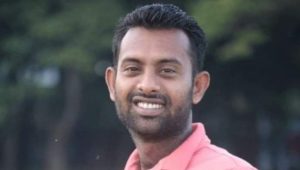




Mustafa Monwar, a cultural warrior and direct witness to the 1971 Liberation War, shares a harrowing yet inspiring account of how art and culture became “effective instruments” of independence.
In an interview with Shahariar Mahi of TIMES of Bangladesh, the veteran artist recalled the transition from silent resistance on television screens to bringing smiles to refugee camps through puppetry.
A silent language of resistance
Monwar’s journey of defiance began long before the first shots were fired. Joining Pakistan Television (PTV) in 1965, his objective was to highlight Bengali culture against the Pakistani rulers’ attempts to label it as a “separate” entity.
By March 1971, during the non-cooperation movement, he was visualising mass songs like “Sangram Sangram Sangram,” which transformed the television screen into an “alternative stage for dissent”.

His most symbolic act of protest occurred on March 23, 1971 – Pakistan Day. As program manager, Monwar single-handedly decided to omit the Pakistani flag from the broadcast.
The decision, relayed to announcer Masuma Khatun, saw the broadcast end at midnight without the flag, an act that instilled “a sense of courage” among Dhaka’s residents as a sign of impending change.
The darkest night and the great escape
The defiance was met with terror on the night of 25 March. As the military emerged from the cantonment, soldiers searched Monwar’s home. In a moment of quick thinking, his wife turned off all the lights; the soldiers, confused by the darkness, assumed the family had fled, muttering “Sab bhag gaya” before leaving.
Forced into hiding, Monwar eventually crossed the border into India via Brahmanbaria alongside Dr Rehman Sobhan and Dr Anisur Rahman. Even in exile, the fear remained as they listened to fragmented radio transmissions of Bangabandhu’s arrest and the declaration of independence.
Puppetry as a tool for healing
Upon reaching Calcutta, Monwar was moved by the dejection he saw in the refugee camps. “I must make them smile,” he recalled thinking. This led to a unique form of cultural resistance: puppet shows.
At the Barrackpore refugee camp, he staged plays where a puppet farmer would beat an effigy of Yahya Khan, prompting refugees to burst forth with enthusiasm to “strike the oppressor”. These moments, capturing the “laughter of puppets” amidst the sounds of guns, were preserved by cameraman Lear Levin for the film “Mukti’r Gaan”.
A profound wound
Decades later, Monwar expressed deep distress over the current state of the nation, particularly the harassment of freedom fighters following the events of 5 August. “Are people forgetting that sacrifice?” he asked, describing the current denial or distortion of history as a “profound wound“.
He noted with regret the election of a war crimes-accused individual to parliament, calling it an “unfortunate” democratic reality that reflects a change in the mindset that once united the people. He lamented that while people once worked selflessly for their country, patriotism has now, in some cases, become “performative”.
Only one independence
Monwar remains firm in his stance regarding the narrative of the nation. Addressing theories of a “second independence,” he stated clearly that “there is only one independence,” which was achieved in 1971.
He argued that subsequent movements, while important, cannot be equated to independence because the nation’s identity and sovereignty were established through the Liberation War.
For the puppeteer of 1971, the core spirit of the war was a blend of fear, excitement, and a “deep urge to liberate the country” – a selfless unity that he believes is often lacking in the present day.